
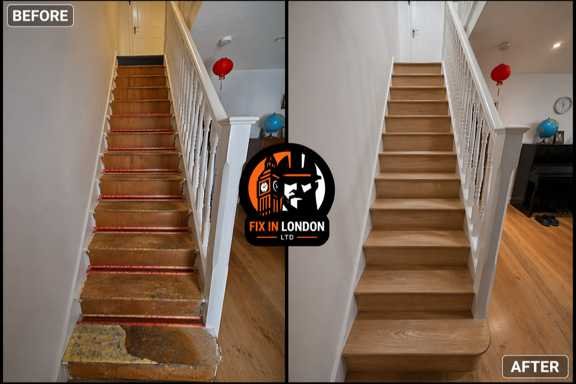
Squeaky, creaky stairs are one of the most common household annoyances in London homes — especially in older Victorian and Georgian properties where timber shrinkage, worn joints, and years of foot traffic can create an orchestra of squeals with every step.
If your staircase sounds louder than the morning rush-hour on the Central Line, you’re not alone. Many homeowners in London put up with noisy stairs for years, assuming it’s “just part of living in an older home”. But squeaks are more than an irritation — in many cases, they’re warning signs of deeper structural issues.
This complete guide explains why stairs squeak, how to diagnose the cause, DIY troubleshooting tips, and when to call a professional. And if you need help fast, Fix in London provides specialist services to Repair Squeaky Stairs in London with safe, durable, quiet results.
Why Are My Stairs Squeaking?
Squeaky stairs are usually caused by loose treads, rubbing wooden components, shrinking timber, worn fixings, or gaps between the staircase parts. When weight is applied, the wood moves and friction create noise.
The Most Common Causes of Squeaky Stairs in London Homes
London houses — especially period homes in areas like Camden, Islington, Fulham, Hampstead, and Clapham — often feature original timber staircases. Over time, temperature fluctuations, humidity, and general wear lead to typical squeaking issues.
Here are the most frequent culprits:
- Loose Treads and Risers
The tread is the part you step on. The riser is the vertical panel beneath it.
When either becomes loose, every step cause movement — and movement = noise.
Read more: Spring Home Maintenance Checklist (2026)
Signs:
- A particular step squeaks every time
- Slight “give” when you press down
- Noise improves when pressure is applied to edge of tread
- Timber Shrinkage
London’s fluctuating humidity and heating cycles cause wood to expand and contract.
Older staircases especially may develop gaps, leading to rubbing between:
- Tread and riser
- Tread and stringer
- Stringers and wall fixings
- Worn or Missing Fixings
Traditional staircases use nails or screws to secure treads and risers.
Over decades, these can loosen, corrode, or even fall out.
This is extremely common in London homes built before the 1970s.
- Friction Between Structural Components
Two wooden parts rubbing together produce the classic creaking sound.
This usually occurs when the staircase shifts or flexes due to:
- Age
- Poor installation
- Subfloor movement
- Heavy foot traffic
- Subfloor or Joist Issues
Sometimes the squeak originates below the staircase — not within it.
This is harder to diagnose without lifting carpet or obtaining access from underneath.
- Carpeted Stairs with Loose Underlay
Carpet does not prevent squeaks — it often hides the source.
Loose underlay or staples pulling free can cause movement underneath the carpet.
Read more: Handyman Licence Requirements in the UK
How to Diagnose Where the Squeak Is Coming From
Before repairing a noisy staircase, you need to identify the exact cause and location.
Here’s a simple process:
Step 1 — Walk Slowly Up and Down
Identify which step squeaks.
Apply pressure in the following areas:
- Centre of the tread
- Left and right edges
- Near the riser joint
Step 2 — Try Pressing the Step While Another Person Walks
If the squeak stops when you apply downward pressure, the tread or riser is loose.
Step 3 — Remove the Carpet (If Practical)
This exposes joints, gaps, and loose fixings.
If you can’t or don’t want to lift the carpet, consider calling Fix in London, as professionals can diagnose the issue without removing flooring unnecessarily.
Step 4 — Check Underside Access
In some London properties, the underside of the staircase is accessible from a cupboard or basement.
This makes diagnosing — and repairing — significantly easier.
DIY Troubleshooting Tips to Silence a Noisy Staircase
(Safe, practical advice for homeowners)
If the stairs are structurally sound and the issue is minor, you may be able to fix the squeak yourself.
Here are the safest, most effective DIY methods:
- Lubricate the Joints (Temporary Fix)
Use:
- Talcum powder
- Graphite powder
- Silicone spray (apply sparingly)
How it helps:
Reduces friction between rubbing wooden parts.
Best for:
Minor squeaks caused by friction, not structural looseness.
Limitations:
This is temporary; squeaks usually return as the lubricant settles.
- Tighten Existing Screws
If screws are visible, tighten them carefully — do not overtighten, as this can split the timber.
Best for:
Moderately loose treads.
- Add New Screws to Reinforce Treads
Where appropriate, adding wood screws can stabilise loose components.
Tips:
- Pre‑drill holes to avoid splitting
- Use wood screws long enough to reach the stringer
- Hide screw heads with wood filler if installing on visible surfaces
- Use Wood Shims to Fill Gaps
Small wooden wedges (shims) can be tapped into visible gaps under or between treads.
Best for:
- Timber shrinkage
- Gaps between tread and riser
- Sloping or shifting treads
- Apply Construction Adhesive
High‑strength wood adhesive can bond loose components together.
Good for:
- Riser/tread joints
- Gaps within hidden areas
Avoid using adhesive on visible surfaces unless finishing the staircase afterwards.
- Replace or Reinforce Brackets Underneath
If accessible, adding L‑brackets or angle brackets can secure loose treads from below.
- Tighten the Banister or Handrail
A wobbly handrail can also cause vibration-related noises.
Important Safety Note
Never attempt DIY repairs if:
- Timber is visibly cracked
- Steps feel unstable
- You hear popping, cracking, or extreme groaning sounds
- The staircase wobbles or shifts noticeably
These are signs of structural failure.
In such cases, Fix in London can assess and repair the staircase safely.
When Should You Call a Professional to Fix Squeaky Stairs?
DIY fixes are fine for minor squeaks — but many London staircases require expert intervention.
You should call a professional if:
- The stairs move when stepped on
Movement indicates failing structural fixings that require professional repair.
- You cannot identify the source of the noise
Hidden issues often require specialised tools and access.
- The staircase is old (Victorian, Edwardian, Georgian)
Older homes often require bespoke techniques to avoid damaging original timber.
- The squeak persists after DIY attempts
Persistent noise = deeper issue.
- You’re planning renovation or selling your home
Quiet, solid stairs significantly improve property value and safety.
- You notice cracks, sagging, or instability
This may be a safety risk — do not delay seeking repairs.
Professional Staircase Repair Services in London
If DIY solutions aren’t enough, Fix in London offers full diagnostic and repair services tailored to London properties.
What Fix in London can do:
- Precision diagnosis using professional tools
- Secure loose treads and risers
- Rebuild worn joints
- Repair or replace damaged timber
- Reinforce staircase structural integrity
- Fix carpeted and uncarpeted staircases
- Work with period and heritage woodwork
- Restore silent stair operation
Why homeowners trust Fix in London:
- For London homes only — local specialists
- Experience with historic and modern properties
- Non‑invasive repair options
- Transparent pricing with no hidden fees
- Friendly, trained technicians
- High-quality materials and guaranteed workmanship
If your stairs keep you awake at night or make guests wince with every step, it’s time to let professionals handle it.
How Professionals Fix a Noisy Staircase (Step-by-Step)
This overview shows what to expect during a professional repair service:
- Inspection & Diagnostics
Technicians identify the exact cause using:
- Acoustic tools
- Underside inspection
- Joint testing
- Moisture and timber checks
- Securing Loose Components
Professionals use industrial-grade fastenings to secure treads, risers, and stringers.
- Precision Woodwork
Custom shims, wedges, and braces are crafted to fit your specific staircase.
- Structural Reinforcement
If joints or stringers are compromised, they are strengthened or rebuilt.
- Finishing & Restoration
Surface repairs, sanding, or refinishing may be applied to restore aesthetics.
FAQ — Fixing Squeaky Stairs in London
FAQ 1: What is the quickest way to silence a squeaky stair?
The fastest temporary solution is applying talcum or graphite powder to reduce friction. For a long-term fix, loose treads must be secured properly.
FAQ 2: Are squeaky stairs a sign of structural damage?
Not always. Most squeaks come from loose joints. However, consistent movement, cracking, or sagging may indicate structural issues that need professional assessment.
FAQ 3: Can carpeted stairs be repaired without removing the carpet?
Yes. Professionals can often access the underside or secure fixings through the carpet using specialized tools.
FAQ 4: How much does it cost to fix squeaky stairs in London?
Costs vary depending on accessibility, severity, timber condition, and staircase age. Minor repairs are affordable; structural repairs cost more. Fix in London provides transparent, itemized quotes.
Conclusion: Get Your Squeaky Stairs Fixed Properly with Fix in London
Living with noisy stairs isn’t just irritating — it can signal deeper problems within your staircase. Whether your stairs creak occasionally or sound like a haunted house every morning, you don’t have to put up with it.
With the right diagnosis, safe repairs, and expert craftsmanship, your staircase can become silent, safer, and more structurally sound. Fix in London specializes in staircase repair for London homes of all ages, offering reliable, long-lasting solutions tailored to your property.
Ready for quiet, safe stairs?
Contact Fix in London today for expert squeaky staircase repair.