
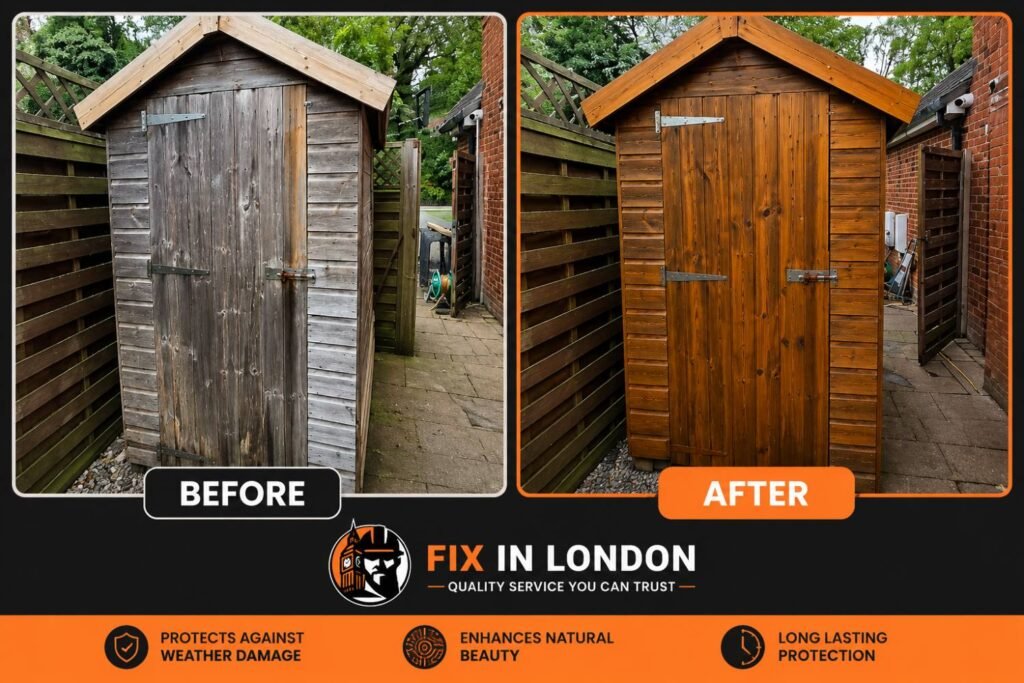
Protect Your Outdoor Wood from London’s Challenging Weather
If you own a garden shed, timber fencing, pergola, or other wooden outdoor structures, you’ll already know how quickly London’s weather can take its toll. Constant exposure to rain, frost, UV rays, pollution, and fluctuating temperatures can leave timber looking tired, weathered, and vulnerable to damage.
Many homeowners invest heavily in quality fencing and garden buildings, only to discover a few years later that the wood has begun to fade, crack, warp, or rot. In most cases, these problems could have been prevented with proper maintenance and professional varnish protection.
That’s where Shed & Fence varnish in London becomes essential.
Applying the right varnish not only improves the appearance of outdoor timber but also creates a protective barrier against moisture, sunlight, mould, and general wear. Whether you’re maintaining an existing shed or restoring an ageing fence, professional varnishing can significantly extend the lifespan of your outdoor structures.
At Fix in London, we provide expert shed and fence varnishing services across London, helping homeowners preserve and enhance their outdoor spaces with durable, high-quality finishes.
In this comprehensive guide, you’ll learn why varnishing matters, the most common causes of timber deterioration, DIY maintenance tips, and when it’s worth calling in the professionals.
What Is Shed and Fence Varnishing?
Shed and fence varnishing involves applying a protective coating to exterior timber surfaces.
The varnish penetrates and seals the wood, creating a layer that helps protect against:
- Rain and moisture
- UV radiation
- Rot and decay
- Mould and algae growth
- Splitting and cracking
- Everyday wear and tear
Unlike paint, varnish often allows the natural beauty and grain of the timber to remain visible while providing long-lasting protection.
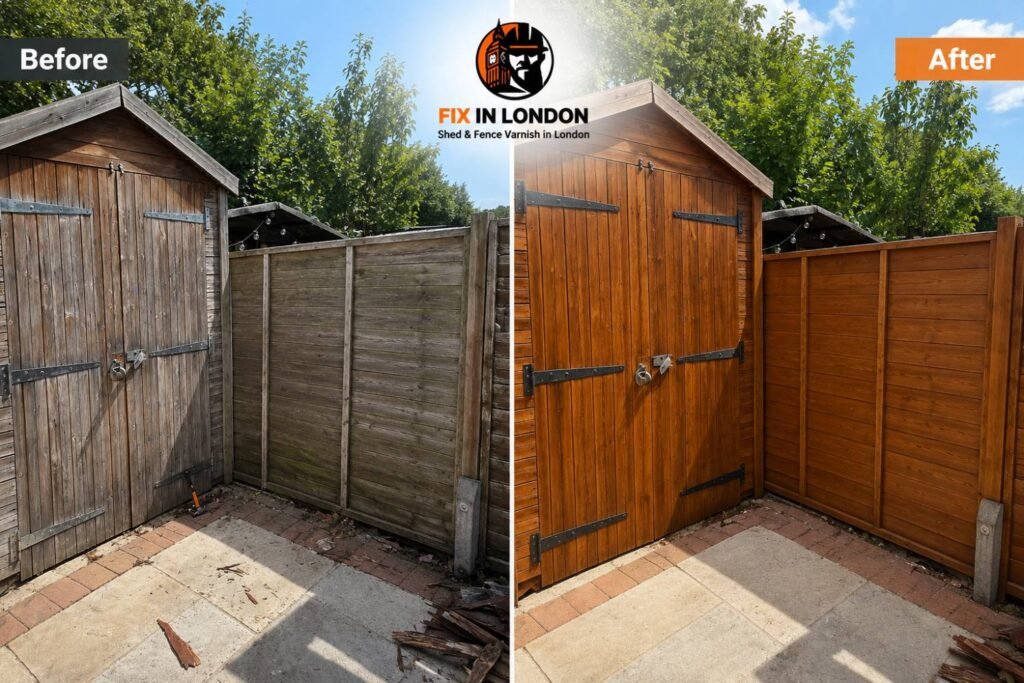
Why Outdoor Timber Needs Protection in London
London’s climate creates several challenges for exterior woodwork.
Throughout the year, timber is exposed to:
Frequent Rainfall
Constant moisture exposure can lead to:
- Water absorption
- Swelling
- Rot
- Structural weakening
UV Damage
Sunlight can break down timber fibres over time, causing:
- Colour fading
- Surface deterioration
- Dryness
- Cracking
Frost and Temperature Changes
Seasonal expansion and contraction place stress on wood surfaces.
This often results in:
- Splits
- Warping
- Joint movement
Pollution and Urban Contaminants
London’s environment exposes outdoor timber to airborne pollutants that can stain and degrade wood surfaces over time.
Professional Fence varnish applications help create a protective barrier against these environmental factors.
Common Problems Affecting Sheds and Fences
Understanding the causes of timber damage helps homeowners prevent costly repairs.
- Rotting Wood
Wood rot remains one of the most common issues affecting outdoor structures.
Causes:
- Prolonged moisture exposure
- Poor drainage
- Lack of protective coatings
- Water pooling near fence posts
Warning Signs:
- Soft timber
- Dark patches
- Crumbling wood
- Musty smells
Early treatment and regular varnishing can significantly reduce the risk of rot.
- Cracking and Splitting
Wood naturally expands and contracts as temperatures fluctuate.
Without adequate protection, this movement can lead to:
- Surface cracks
- Deep splits
- Structural weakness
Varnish helps maintain stable moisture levels within the timber.
- Fading and Discolouration
Sunlight gradually breaks down the natural pigments within wood.
Common symptoms include:
- Grey colouring
- Uneven fading
- Dull appearance
UV-resistant varnishes help preserve the timber’s original colour for longer.
- Mould and Algae Growth
Shaded gardens and damp conditions create ideal environments for:
- Green algae
- Black mould
- Moss growth
These issues affect both appearance and timber health.
Read more: Damp and Mould Specialist London
- Warping
Excessive moisture absorption can cause timber boards to distort.
Warped fencing may:
- Lean
- Twist
- Separate from fixings
Proper sealing reduces water penetration and minimises warping risks.
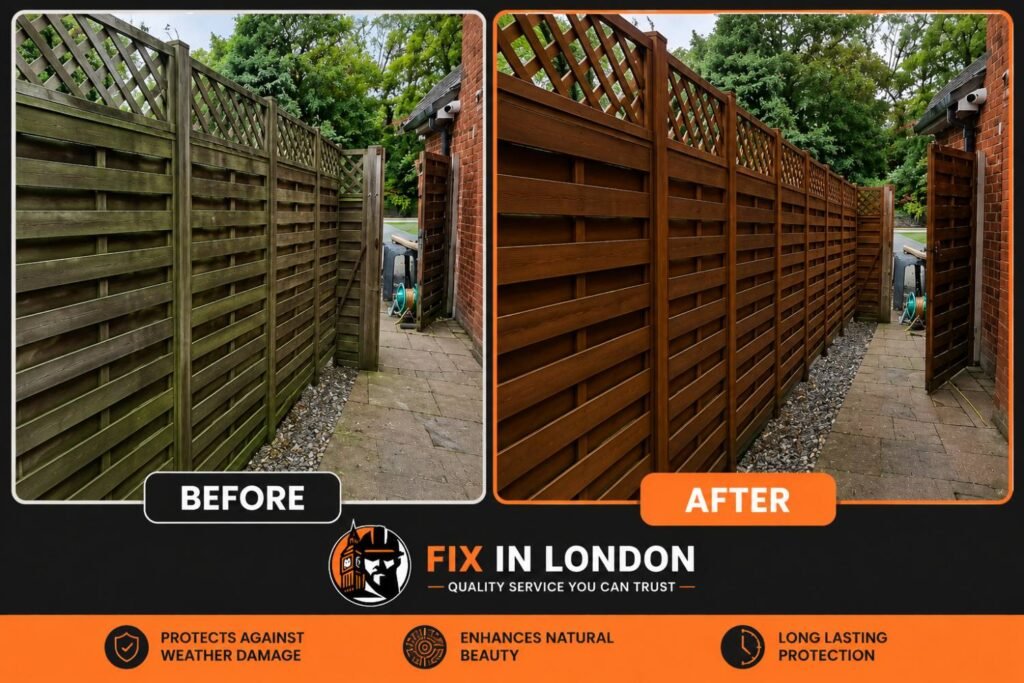
What Happens If You Don’t Varnish or Paint Your Shed and Fence?
Many homeowners underestimate the importance of protecting outdoor timber. A fence or shed may appear strong and durable when first installed, but untreated wood is constantly exposed to London’s wet climate, temperature changes, and UV radiation.
Without regular varnishing or painting, timber gradually absorbs moisture from rain and humidity. Over time, this causes the wood fibres to weaken, creating the perfect conditions for:
- Wood rot
- Fungal growth
- Mould and mildew
- Splitting and cracking
- Warping and twisting
- Structural instability
What often starts as minor surface damage can quickly develop into serious deterioration. Fence panels may become weak and collapse during strong winds, while sheds can suffer from leaking roofs, damaged walls, and compromised structural integrity.
The biggest concern for homeowners is cost. Applying a protective varnish every few years is relatively inexpensive compared to replacing an entire fence or shed. Once extensive rot takes hold, repairs are often no longer practical, and complete replacement may be the only option.
For example, a simple maintenance treatment might cost a fraction of the price of installing a brand-new fence line or replacing a timber shed. Regular varnishing acts as preventative maintenance, helping homeowners avoid major expenses while preserving the appearance and lifespan of their outdoor structures.
This is why professional Shed & Fence varnish in London is not simply about improving appearance—it’s an investment that protects your property, reduces long-term costs, and helps your timber structures last for many years longer.
Benefits of Professional Shed & Fence Varnish in London
Professional varnishing offers advantages beyond simple appearance improvements.
Enhanced Weather Protection
A quality varnish creates a durable barrier against:
- Rain
- Frost
- Sunlight
- Humidity
This reduces long-term maintenance requirements.
Extended Lifespan
Properly maintained timber structures can last many years longer than untreated wood.
Regular varnishing helps delay:
- Rot
- Structural damage
- Costly replacements
Improved Appearance
Freshly varnished timber instantly enhances:
- Garden aesthetics
- Kerb appeal
- Property presentation
Many homeowners choose varnishing as part of wider landscaping improvements.
Cost Savings
Preventative maintenance is almost always cheaper than major repairs or replacement.
Investing in professional varnishing can save significant money over time.
Types of Varnish Used for Outdoor Timber
Different products provide different levels of protection and appearance.
Clear Varnish
Ideal for showcasing natural wood grain.
Benefits include:
- Natural appearance
- UV protection
- Water resistance
Tinted Varnish
Adds colour while maintaining visible timber texture.
Popular shades include:
- Oak
- Walnut
- Cedar
- Mahogany
Marine Grade Varnish
Offers superior moisture resistance.
Suitable for:
- High-exposure areas
- Coastal environments
- Premium timber structures
UV Resistant Exterior Varnish
Designed specifically to minimise sun damage and colour fading.
Particularly beneficial for south-facing gardens.
The Professional Varnishing Process
At Fix in London, every project follows a structured approach to ensure long-lasting results.
Step 1: Inspection
Our team assesses:
- Timber condition
- Existing coatings
- Rot or damage
- Surface contamination
This helps determine the best treatment plan.
Step 2: Cleaning
Before varnishing, surfaces must be thoroughly cleaned.
This removes:
- Dirt
- Mould
- Algae
- Loose coatings
Proper preparation ensures maximum adhesion.
Step 3: Sanding
Sanding smooths rough areas and creates an ideal surface for varnish application.
Benefits include:
- Improved finish quality
- Better penetration
- Enhanced durability
Step 4: Repairs
Minor defects may be addressed before varnishing.
This can include:
- Replacing damaged boards
- Tightening fixings
- Filling cracks
Step 5: Varnish Application
Multiple coats are typically applied for optimal protection.
Each coat is allowed to cure properly before the next is applied.
Step 6: Final Inspection
The completed work is checked to ensure consistent coverage and a professional finish.
Read more: Painting in London
DIY Shed and Fence Maintenance Tips
Many homeowners prefer to carry out routine maintenance between professional treatments.
Inspect Timber Regularly
Check for:
- Cracks
- Rot
- Loose boards
- Discolouration
Early intervention prevents larger problems.
Keep Surfaces Clean
Remove:
- Dirt
- Leaves
- Moss
- Algae
This helps reduce moisture retention.
Read more: To DIY or Not to DIY? When to Call in a Handyman
Trim Nearby Vegetation
Plants growing against timber can trap moisture and accelerate deterioration.
Maintain good airflow around fences and sheds.
Reapply Protective Coatings
Even high-quality varnishes eventually wear down.
Most outdoor timber benefits from re-treatment every few years depending on exposure levels.
Address Drainage Problems
Prevent standing water around:
- Fence posts
- Shed bases
- Timber supports
Good drainage significantly extends timber lifespan.
When Should You Call a Professional?
While basic maintenance is suitable for many homeowners, certain situations require expert assistance.
Extensive Rot Is Present
Large areas of rotten timber may require:
- Structural repairs
- Component replacement
- Specialist treatment
Professional assessment helps prevent further deterioration.
Previous Coatings Are Failing
Peeling, flaking, or uneven coatings often require complete removal before reapplication.
This process can be labour-intensive and time-consuming.
Large Fencing Projects
Treating long fence runs requires:
- Specialist equipment
- Consistent application
- Significant preparation
Professionals achieve superior results more efficiently.
Premium Timber Installations
High-value timber deserves professional care to maximise longevity and appearance.
You Want Long-Term Protection
Professional products and application techniques generally outperform DIY solutions.
Why Choose Fix in London?
When searching for reliable Shed & Fence varnish in London, choosing an experienced provider makes all the difference.
Experienced Exterior Wood Specialists
We understand how London’s climate affects timber and tailor treatments accordingly.
High-Quality Products
We use durable exterior-grade varnishes designed for long-lasting protection.
Attention to Detail
Every project includes thorough preparation and careful application.
Competitive Pricing
Transparent quotations with no hidden costs.
Trusted Local Service
Fix in London has built a reputation for quality workmanship and customer satisfaction across Greater London.
How Often Should Sheds and Fences Be Varnished?
The ideal schedule depends on several factors:
- Timber type
- Exposure to sunlight
- Weather conditions
- Existing protection
- Product quality
As a general guide:
- High-exposure timber: every 2–3 years
- Moderate exposure: every 3–5 years
- Sheltered areas: every 4–6 years
Regular inspections help determine when re-treatment is needed.
Signs Your Fence or Shed Needs Re-Varnishing
Look for:
- Faded colour
- Water absorption
- Surface cracks
- Rough texture
- Dull appearance
- Peeling coatings
Addressing these signs early helps prevent more serious damage.
Conclusion
Outdoor timber structures are constantly exposed to London’s unpredictable weather. Without proper protection, sheds and fences can quickly deteriorate, leading to costly repairs and reduced lifespan.
Professional Shed & Fence varnish in London services provide a practical and cost-effective way to preserve your investment, enhance your garden’s appearance, and protect timber against moisture, UV damage, mould, and general wear.
Whether your fence needs refreshing, your shed requires restoration, or you’re looking for long-term protection for newly installed timber, Fix in London delivers professional results you can rely on.
Contact Fix in London today for expert advice, a free quotation, and professional varnishing services that keep your outdoor wood looking its best for years to come.
Frequently Asked Questions
How long does fence varnish last?
Most exterior varnishes last between 2 and 5 years depending on weather exposure, timber type, and product quality.
Is varnish better than paint for fences?
Varnish protects the timber while preserving its natural appearance. Paint provides colour coverage but may hide the wood grain.
Can I varnish a wet fence or shed?
No. Timber should be completely dry before varnish application to ensure proper adhesion and durability.
How much does professional shed and fence varnishing cost in London?
Costs vary based on timber condition, surface area, preparation requirements, and the type of varnish used. A site inspection provides the most accurate quotation.