
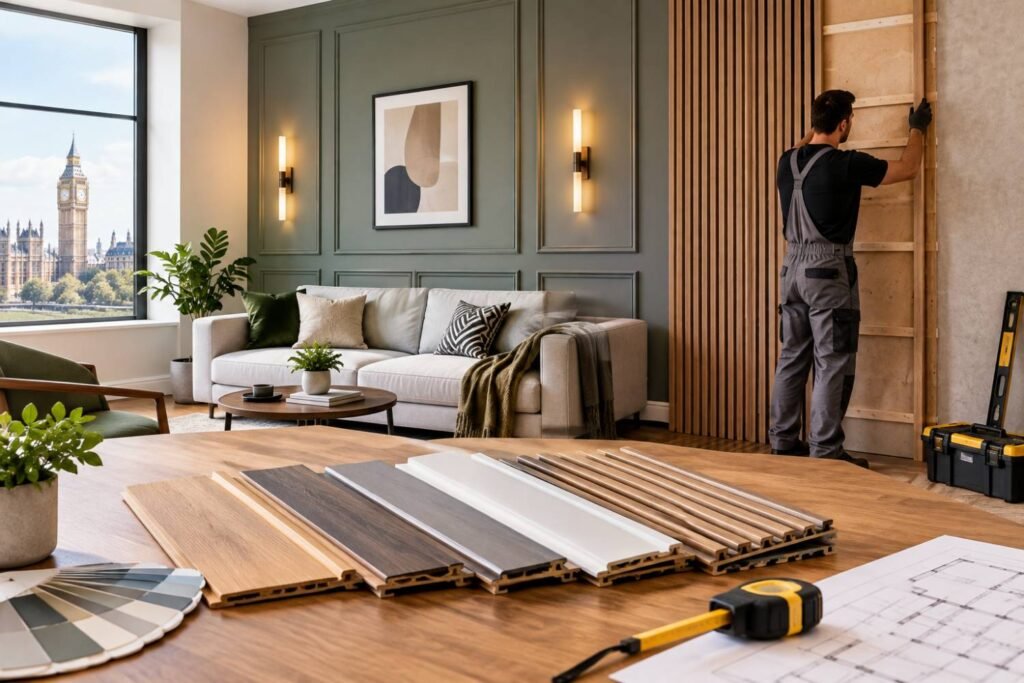
Walk into almost any renovated London home and you’ll notice the same thing: the walls have character again. Victorian terraces in Walthamstow, Edwardian semis in Ealing and new-builds in Canary Wharf all share one problem. Plain, flat walls look dated quickly, they scuff easily, and they do very little to hide uneven plaster or add warmth to a room.
That’s why wall paneling installation in London has become one of the most requested home improvements in the capital. Done well, panelling adds period charm, protects high-traffic areas such as hallways and stairwells, and can lift a property’s appeal without the cost of a full renovation.
This guide explains what panelling is, which designs and materials suit London homes, what you can expect to pay, what you can sensibly tackle yourself, and when it’s worth calling in a professional.
What Is Wall Panelling?
Wall panelling is a decorative or protective wall covering made from timber, MDF or other board materials, fixed in a pattern of panels or vertical boards to a wall’s surface, usually finished with paint. It can cover the full height of a wall, stop at dado height (around 90 to 120 cm), or form a feature section behind a bed, sofa or dining table.
Modern panelling is typically installed by fixing pre-cut MDF or timber sections to the wall using adhesive and pins, then filling, caulking, sanding and painting for a seamless finish.
Why London Homeowners Choose Panelling
Most people don’t wake up wanting panelling for its own sake. They usually have a specific problem in mind. These are the most common reasons we see:
- Scuffed and marked walls. Narrow hallways, stairwells and children’s rooms take a beating. Panelling is far more durable than painted plaster.
- Uneven or cracked plaster. Many London properties have old lath-and-plaster walls or patched finishes. Panelling hides imperfections without a full re-skim.
- Bland, characterless rooms. New-build flats and recent renovations often feel flat. Panelling adds depth and architectural detail.
- Loss of period features. Many homes lost their original dado rails and wall detailing years ago. Panelling restores that look.
- Poor acoustics and warmth. Panels fixed to battens can slightly improve how a room feels, particularly in echoey open-plan spaces.
- Adding value. Well-executed panelling in a living room, hallway or main bedroom can improve a property’s appeal to buyers and renters.
Popular Wall Panelling Designs
Choosing a design is where most projects are won or lost. The right style depends on your property, ceiling height and how the room is used.
Shaker Panelling
Clean rectangular frames with a recessed centre. It’s the most popular choice in London right now because it suits both modern and traditional homes, and it looks excellent in dark, moody colours.
Traditional Raised and Fielded Panelling
A classic, formal look with a raised centre and bevelled edges. It suits period properties, libraries, studies and dining rooms.
Wainscoting / Dado-Height Panelling
Panels that run from the skirting to roughly a third of the wall height, topped with a dado rail. It’s ideal for hallways and stairwells where walls need protection.
Slatted or Fluted Panelling
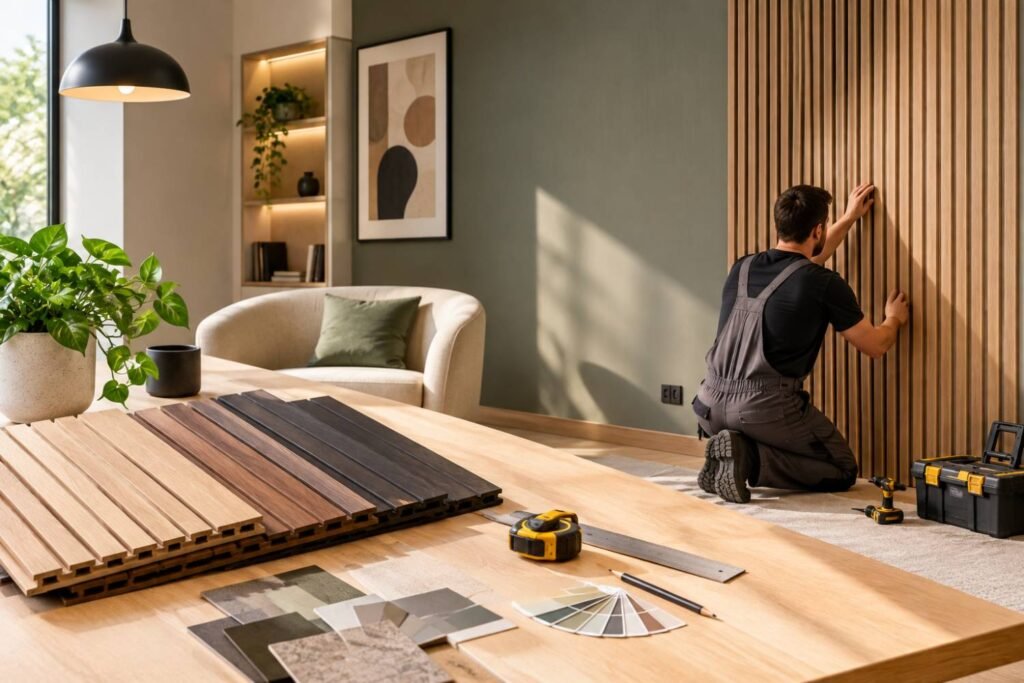
Vertical timber slats, often in oak or walnut veneer, fixed in a rhythm pattern. This is a modern, Scandinavian-inspired look, popular behind TVs and beds.
Beaded Board (Tongue and Groove)
Narrow vertical boards with a bead detail. It works well in bathrooms, utility rooms and country-style kitchens, provided you use moisture-resistant materials.
Read more: How to Repair Plaster Walls: Common Problems in London Homes
Square and Grid Panelling
Evenly spaced square frames, creating a bold geometric effect. It works best on large, tall walls where the pattern has room to breathe.
Half Panelling vs Full-Height Panelling
| Style | Best for | Visual effect |
|---|---|---|
| Half-height (dado) | Hallways, stairs, dining rooms | Traditional, protective |
| Two-thirds height | Living rooms, bedrooms | Balanced, modern-classic |
| Full height | Feature walls, studies, large rooms | Dramatic, immersive |
Best Materials for Wall Panelling
The material you choose affects the finish, the longevity and, of course, the price.
MDF (medium-density fibreboard). The most common choice. It’s smooth, paints beautifully and is cost-effective. Standard MDF isn’t suitable for damp areas, but moisture-resistant (MR) MDF can handle bathrooms and kitchens with good ventilation.
Solid timber (pine, oak, ash). More expensive, but it offers a genuine, durable finish that can be stained or painted. Oak is the premium choice for traditional or natural looks.
Veneered boards and slats. Real timber veneer on a stable core. Popular for modern fluted and slatted designs, usually pre-finished or oiled.
PVC and moisture-resistant boards. Best for wet rooms and bathrooms where waterproofing matters more than a premium finish.
Read more: Shelves Installation London
Plywood. Strong and versatile, often used for contemporary designs with visible edges.
Pre-primed panel kits. Ready-made shaker or square kits that cut installation time. They’re convenient, but they work best on straight, regular walls.
How Much Does Wall Panelling Installation Cost in London?
London labour rates run higher than the UK average, and costs vary with the design, materials, wall condition and how many rooms you’re covering. These are typical guide prices based on current London market rates. Always get a written quote for your specific job.
| Project | Typical size | Estimated fitted cost (London) |
|---|---|---|
| Feature wall (MDF shaker) | 3m × 2.4m | £450 – £900 |
| Hallway half-height panelling | Standard terrace hall | £600 – £1,300 |
| Full bedroom feature wall | One large wall | £700 – £1,500 |
| Stairwell panelling | Stairs and landing | £900 – £2,000 |
| Full-height living room | 2–3 walls | £1,500 – £3,500 |
| Solid oak or veneered slatted wall | 3m × 2.4m | £1,200 – £2,800 |
What Affects the Price?
- Material choice. Oak or veneer costs significantly more than MDF.
- Design complexity. Grid and raised panel designs need more cutting, fixing and finishing.
- Wall condition. Uneven, damp or crumbling walls need preparation first.
- Ceiling height. High Victorian ceilings mean more material and more labour.
- Painting. Check whether your quote includes decorating or just the carpentry.
- Access and parking. In central London, parking restrictions and Congestion Charge zones can affect costs.
- Extras. Working around radiators, sockets, light switches, and alcoves adds time.
As a rough rule, materials make up around a third to a half of the total. The rest is skilled labour, which is where good installation earns its money.
Can You Install Wall Panelling Yourself? DIY Tips
Simple panelling is a realistic DIY project if you’re confident with measuring, cutting and finishing. If you’re going ahead, these tips will save you time and frustration.
Tools and Materials You’ll Need
- Spirit level (or a laser level)
- Tape measure and pencil
- Mitre saw or fine-tooth saw with mitre box
- Stud finder / cable and pipe detector (essential before fixing anything)
- Gripfill or a gap-filling grab adhesive
- Brad nailer or finishing nails
- Decorators’ caulk and wood filler
- Sandpaper (180 to 240 grit)
- Primer, paint and a quality brush or mini roller
Step-by-Step DIY Method
- Check the wall first. Look for damp, flaking paint or crumbling plaster. Panelling must never be fixed over a damp wall.
- Detect hidden services. Scan for cables and pipes before drilling or nailing.
- Plan your layout. Mark your panel positions on paper first, then on the wall. Aim for even, balanced spacing.
- Mark a level baseline. Use a spirit level rather than trusting the skirting board. Few London walls or floors are perfectly level.
- Cut your pieces. Measure twice. Cut once. Label each piece as you go.
- Fix the panels. Apply adhesive and secure with pins into the wall.
- Fill and caulk. Fill nail holes and run caulk along every joint and edge.
- Sand, prime and paint. Use a good-quality primer, then two coats of paint.
Common DIY Mistakes to Avoid
- Skipping the level check, which leaves visibly crooked panels
- Fixing into plaster only, rather than the masonry or battens beneath
- Not allowing for socket and switch positions
- Using standard MDF in a steamy bathroom
- Rushing the caulking, which is what separates amateur from professional work
- Painting before the filler has fully dried
When to Call a Professional Installer
DIY works for a simple feature wall in a regular room. In many other situations, hiring a professional will save you money in the long run. Call a specialist if:
- Your walls are uneven, bowed or damp. A professional will diagnose the cause and correct it before panelling.
- You have a Victorian or Edwardian property with high ceilings. Full-height panelling at that scale needs experience and proper access equipment.
- You’re panelling a staircase. Rising angles and bespoke cuts are notoriously tricky.
- There are sockets, switches or radiators in the way. Some may need an electrician or plumber to adjust.
- You want a premium finish. Spray-painted or hand-finished results are difficult to replicate at home.
- You’re in a leasehold flat. Your freeholder or managing agent may have rules on fixings and noise, and a professional will know how to work around them.
- You’re short of time. A full room can take a skilled installer one to three days, but a first-time DIYer may take much longer.
Why Choose Fix in London for Wall Panelling
Fix in London is a trusted London home improvement and handyman service, working with homeowners, landlords and property managers across the capital. For wall panelling, that means:
- Clear, written quotes with no hidden extras
- Careful surface preparation, which is what makes panelling last
- Clean, tidy working practices that respect your home
- Design advice that suits your property type and budget
- Reliable scheduling that fits around your life
Whether you want a single feature wall or a complete hallway transformation, our team can help you choose a design, source quality materials and deliver a finish that looks as good in five years as it does on day one.
Aftercare: Keeping Your Panelling Looking Good
- Dust regularly with a soft cloth
- Wipe marks with a damp (not wet) cloth and mild soap
- Touch up chips with matching paint
- Keep rooms ventilated to prevent moisture build-up
- Re-caulk any joints that open up over time, especially after the first heating season
Frequently Asked Questions
How much does wall panelling installation cost in London?
Most London homeowners pay between £450 and £900 for a standard MDF feature wall, and £1,500 to £3,500 for a full-height living room. The final price depends on materials, design, wall condition and whether painting is included.
How long does wall panelling installation take?
A single feature wall typically takes one day. A hallway or bedroom usually takes two to three days, including filling, caulking and painting. Drying time between coats can extend this.
Can you put wall panelling on any wall?
Panelling can go on most solid, dry and structurally sound walls, including plasterboard, brick and plastered masonry. It should not be fixed to damp walls. In bathrooms and other wet areas, use moisture-resistant materials.
Is wall panelling worth it?
For many homeowners, yes. Panelling protects walls, hides imperfections and adds lasting character, often at a fraction of the cost of a full redecoration or re-plastering. It’s also one of the most visible upgrades you can make in a small space.
Conclusion: Get Your Panelling Done Properly
Wall paneling installation in London is one of the few home improvements that delivers on looks, practicality and value all at once. The key is making the right choices at the start: a design that suits your home, materials that suit the room, and a clear budget that reflects the real cost of a quality finish.
If you’re confident and the job is simple, DIY can work. If your walls are uneven, your ceilings are high or you simply want it done right the first time, a professional installation is the safer and often more cost-effective route.
Ready to transform your walls? Contact Fix in London today for a free, no-obligation quote on your wall panelling project. Tell us about your room and your ideas, and we’ll help you turn them into a finish you’ll love.