
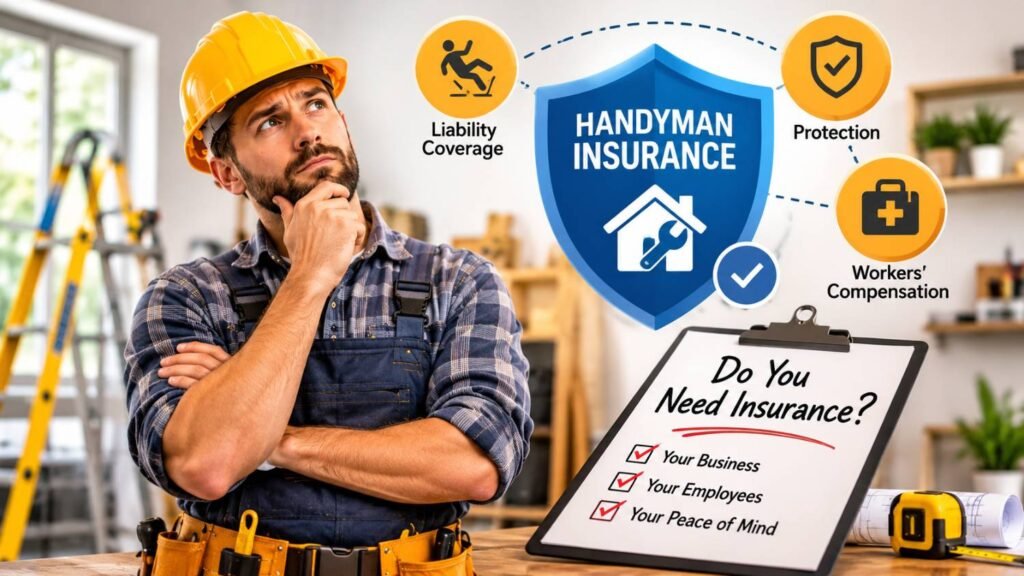
You have booked someone to hang a heavy mirror, replace a tap or put up shelving in your Victorian terrace. Halfway through, a drill bit meets a hidden pipe, and water is running down the wall into the flat below. Who pays?
For many London homeowners, landlords and tenants, that question only comes up once something has gone wrong. This guide answers it before it does. It covers what the law says, which types of cover matter, how to check a handyman’s insurance and what to do if damage happens.
Does a Handyman Need Insurance? The Short Answer
A handyman working alone is not legally required to hold public liability insurance in the UK, but any professional handyman should have it. Without it, you could be left paying for accidental damage to your home or an injury on your property. The only insurance the law compels is employers’ liability cover, which applies once a handyman takes on staff.
That distinction matters. “Not required by law” does not mean “not needed”. Handyman work involves drilling, lifting, cutting and fixing inside homes full of pipes, cables and fragile finishes. One mistake can cost far more than the job itself.
Why Insurance Matters More in London Homes
London properties carry risks that a quiet bungalow in the countryside simply does not.
- Older housing stock. Pre-war buildings often hide lath-and-plaster walls, old lead or galvanised pipework and outdated wiring.
- Flats and shared buildings. A leak or a crack can affect neighbours, communal areas and the freeholder’s property, not just your own.
- Higher repair costs. Replacing a parquet floor, a built-in wardrobe or a damaged ceiling in the capital is rarely cheap.
- Access and parking. Tools and materials moving through narrow stairwells and shared hallways increase the chance of accidental knocks.
In a flat, one slip can mean a claim from the neighbour downstairs as well as a repair bill of your own. An uninsured handyman leaves you to sort that out on your own.
The Main Types of Handyman Insurance Explained
“Insurance” covers several different policies. This table shows the ones you will hear about most often.
| Type of cover | What it protects against | Is it legally required? | Should a handyman have it? |
|---|---|---|---|
| Public liability | Accidental damage to your property or injury to you or a third party caused by the handyman’s work | No | Yes, essential |
| Employers’ liability | Injury or illness to employees working for the handyman | Yes, if they have staff (with limited exceptions) | Yes, if they employ anyone |
| Tools and equipment cover | Theft or damage of the handyman’s own tools | No | Sensible, but it protects them rather than you |
| Professional indemnity | Claims arising from poor advice or design errors | No | Useful where the handyman advises or specifies, less so for basic repairs |
| Contract works / all risks | Damage to the work itself while it is in progress | No | Helpful on larger projects |
For most small domestic jobs, public liability insurance is the one to ask about first.
How Much Cover Is Enough?
Public liability policies are typically sold in tiers such as £1 million, £2 million and £5 million. There is no official minimum for a handyman, but these are practical rules of thumb:
- £1 million may suit very small, low-risk jobs.
- £2 million is a common benchmark and is what many letting agents and managing agents ask for.
- £5 million or more is worth looking for where work involves plumbing, working at height or high-value interiors.
Some freeholders, managing agents and housing associations set their own minimum before they allow any contractor into a building. If you live in a leasehold flat, check your lease or ask your managing agent before work begins.
Read more: How Much Does a Handyman Cost in London in 2026?
Common Situations Where Handyman Insurance Makes the Difference
Insurance sounds abstract until you see how it plays out. These are the scenarios that most often lead to claims in domestic handyman work.
- Drilling into hidden pipes or cables. A burst pipe behind a wall can cause thousands of pounds of water damage in minutes.
- Damaged flooring and finishes. Dropped tools, dragged furniture and spilt paint can ruin timber, carpet or stone surfaces.
- Falling or poorly fixed items. A badly secured shelf, television bracket or wardrobe can injure someone or smash valuables.
- Work at height. Ladders, loft access and exterior jobs such as guttering or fascia work bring a real risk of falls and dropped materials.
- Damage to neighbouring or shared property. Leaks, noise-related damage and blocked communal areas can all trigger third-party claims.
- Fire or electrical faults. Poor workmanship around wiring or heated appliances can have serious consequences.
In each case, a handyman with valid public liability cover can claim through their insurer. Without it, you may be chasing an individual for money they do not have.
Insurance Is Not a Substitute for the Right Qualifications
Insurance protects you financially after something goes wrong. It does not prove that the work is safe or legal. Some tasks should only ever be carried out by registered professionals:
- Gas work (boilers, hobs, gas fires) must be done by someone on the Gas Safe Register. It is illegal otherwise.
- Electrical work such as new circuits, consumer unit changes or work in bathrooms is covered by Building Regulations (Part P). Look for registration with a scheme such as NICEIC or NAPIT, or make sure the work is signed off by a registered electrician.
- Structural alterations often need building control approval and, in some cases, a party wall agreement.
A reputable handyman will tell you when a job falls outside their remit and refer you on, rather than attempting it to win the booking. That honesty is a better sign of quality than any badge on a van.
Read more: Handyman Licence Requirements in the UK
How to Check Whether Your Handyman Is Properly Insured
A friendly “yes, I’m covered” is not enough. Follow these steps before work starts.
- Ask for a copy of the insurance certificate. A professional will send it straight away. Hesitation is a warning sign.
- Check the policy dates. Make sure the cover is current and does not expire mid-job.
- Confirm the type and level of cover. Look for public liability, plus employers’ liability if more than one person is attending.
- Read the trade description. Some policies only cover specific activities. A policy for decorating may not cover plumbing or electrical tasks.
- Check the name on the policy. It should match the person or company you are hiring, not a different business.
- Ask about subcontractors. If the work is passed to someone else, find out whether they are covered too.
- Get the key points in writing. A confirmation by email or text message is better than a verbal assurance.
If the handyman is working under a company, you can also check the business is genuinely trading by looking it up on Companies House.
What Happens If You Hire an Uninsured Handyman?
The risks fall mainly on you.
- You may pay for repairs yourself. If the handyman cannot afford to put things right, your only recourse is legal action, which is slow and not always successful.
- Your home insurance may be affected. You may be able to claim on your buildings or contents policy, but you could face an excess, a loss of no-claims discount or higher premiums at renewal. Insurers can also query claims linked to unqualified work.
- You could be liable for visitors. If someone is injured on your property because of the work, you may find yourself part of the dispute.
- Landlords and tenants can fall out. A landlord’s insurer may refuse to pay if an uninsured contractor caused the damage, leaving costs to be argued over.
- Leaseholders risk a dispute with the freeholder. Unapproved or uninsured contractors can breach lease terms.
For work in a rented property, always check what the tenancy agreement says about repairs and contractors before anyone picks up a drill.
DIY Checks Before You Hire (and Tips If Something Goes Wrong)
You do not need any technical knowledge to protect yourself. These practical checks take only a few minutes.
Before the job
- Locate your stopcock and consumer unit so you can isolate water or power in seconds.
- Use a cheap pipe and cable detector, widely available from DIY shops, to check walls before any drilling, and share the results with your handyman.
- Photograph the area you are about to have worked on, so any damage can be compared with the “before” state.
- Clear the work area and protect floors and furniture with dust sheets.
- Agree the scope, price and timings in writing.
If damage does occur
- Make it safe. Turn off the water at the stopcock or the power at the consumer unit if necessary.
- Stop the work and keep the handyman on site to explain what happened.
- Take dated photos and videos of the damage and surrounding area.
- Ask for their insurance details and tell them to notify their insurer promptly.
- Contact your own insurer if the damage is serious, and ask whether you should wait before arranging repairs.
- Keep all paperwork, including quotes, receipts, messages and the insurance certificate.
- Do not pay in full until the matter is resolved, if payment is still outstanding.
Red Flags to Watch Out For
Think twice about a handyman who:
- will not share an insurance certificate or gets vague when asked
- insists on cash only, with no invoice or paperwork
- has no website, reviews or traceable business details
- quotes far below every other local price
- claims to do gas or electrical work without being able to show registration
- pressures you into agreeing on the spot
Any one of these should prompt more questions. Several together are a good reason to walk away.
What a Trustworthy London Handyman Looks Like
A dependable handyman is open about their insurance, qualifications and limits, and treats your home carefully. In practice that means:
- a clear written quote before work begins
- proof of public liability cover on request
- honesty about which jobs need a specialist
- tidy, careful working habits
- a straightforward process for putting things right if something goes wrong
This is the standard Fix in London aims to meet. As a handyman service for homeowners, landlords and tenants across the capital, Fix in London works on the basis that you should know exactly who is in your home, what they are covered for and what happens if a job does not go to plan. If you want the reassurance of cover alongside practical, well-organised workmanship, that is the right starting point.
Quick Checklist: Is Your Handyman Properly Covered?
- ☐ Public liability insurance certificate received and in date
- ☐ Cover level suits the job (many people look for £2 million or more)
- ☐ Employers’ liability in place if more than one person is working
- ☐ Policy covers the type of work you need
- ☐ Gas Safe or electrical registration shown where relevant
- ☐ Written quote and scope of work agreed
- ☐ Landlord, managing agent or freeholder consulted if required
Frequently Asked Questions
Is it a legal requirement for a handyman to have insurance in the UK?
No, not for a sole trader. Public liability insurance is optional by law, although most reputable handymen carry it. Employers’ liability insurance is a legal requirement when a handyman employs staff, and operating without it can lead to significant fines. Whatever the law says, it is sensible to hire only someone who can show valid cover.
What insurance should a handyman have?
At a minimum, public liability insurance, which covers accidental damage to your property and injury to others. A handyman with employees also needs employers’ liability insurance. Tools cover and professional indemnity are useful extras, but public liability is the one that protects you most directly.
Can I claim on my home insurance if an uninsured handyman damages my property?
Often you can, depending on your policy, but it is not guaranteed. You may have to pay an excess, and a claim could affect your premium. Insurers may also query claims involving unqualified work. Check your policy wording or speak to your insurer before work starts if you are unsure.
How can I check that a handyman’s insurance is valid?
Ask for a copy of the certificate and check that the policy is in date, names the right person or business and covers the type of work you need. If anything looks unclear, contact the insurance provider named on the certificate to confirm that the policy is active.
Conclusion: Protect Your Home Before the First Screw Goes In
So, does your handyman need insurance? Legally, often not. Practically, always. A handyman without public liability cover leaves you exposed to costs you cannot predict, whether it is a burst pipe, a damaged floor or a disagreement with your freeholder.
Ask for the certificate, check the details, confirm the right registrations for gas and electrical work and keep everything in writing. A few minutes of checking can save you months of stress.
If you would like a handyman you can book with confidence, get in touch with Fix in London today for a clear quote and a straightforward, professional service for your home.