

If you own or rent a property in London, the chances are you’ve battled damp or mould at some point. London’s notoriously wet winters, ageing Victorian housing stock, and densely packed terraces create the perfect breeding ground for moisture problems. Left unchecked, damp and mould don’t just ruin your décor — they can seriously damage your property’s structure and trigger respiratory problems for everyone living inside.
The good news is that most damp and mould issues are entirely preventable. Whether you’re in a period conversion in Hackney, a new-build flat in Canary Wharf, or a semi-detached in Croydon, this guide will walk you through everything you need to know to keep your home dry, healthy, and protected — and when it’s time to stop DIYing and call in the experts.
Why London Properties Are Especially Vulnerable to Damp
London presents a unique combination of challenges that makes damp prevention more critical here than almost anywhere else in the UK:
- Older building stock: A huge proportion of London homes were built before 1919, meaning many lack adequate damp-proof courses (DPCs), cavity wall insulation, or modern vapour barriers.
- High rainfall and humidity: London receives around 600mm of rain annually, and the urban heat island effect keeps humidity elevated year-round.
- Poor ventilation in conversions: Many Victorian houses split into flats suffer from blocked original chimneys, sealed fireplaces, and inadequate extractor systems — all major contributors to condensation.
- Dense terraced housing: Terraces limit air circulation on side walls, which can encourage moisture build-up.
- Basement flats: London has thousands of basement conversions, many of which are prone to rising damp and groundwater ingress.
Understanding why your property type is vulnerable is the first step to preventing problems from taking hold.
The Most Common Causes of Damp and Mould in London Homes
To prevent damp and mould problems in London, you first need to know what’s causing them. There are three distinct types of damp, and each has different causes and solutions.
- Condensation (The Most Common Culprit)
Condensation forms when warm, moist air meets a cold surface — think bathroom mirrors after a shower, or cold exterior walls in winter. In London flats with poor ventilation, condensation is by far the most common cause of black mould growth.
Common triggers include:
- Cooking without extractor fans on
- Drying laundry indoors
- Breathing and bathing in poorly ventilated rooms
- Blocking air bricks or ventilation grilles
- Overfilling rooms with furniture pushed against external walls
- Rising Damp
Rising damp occurs when groundwater travels upwards through the walls or floor by capillary action. It’s identifiable by a “tide mark” on lower walls, flaking plaster, and salt deposits (efflorescence). This type is common in older London properties with a failed or absent damp-proof course.
- Penetrating Damp
Penetrating damp enters the property from outside — through cracked render, faulty pointing, damaged roof tiles, blocked gutters, or defective window seals. In London’s older terraces, penetrating damp is frequently caused by:
- Crumbling mortar joints in brick walls
- Broken or overflowing guttering
- Poorly maintained flat roofs
- Gaps around window frames
- Plumbing Leaks
A slow leak from a pipe behind a wall or under a floor can create hidden damp patches that only become obvious once mould starts appearing. Given London’s ageing pipe infrastructure, concealed leaks are a more common cause of unexplained damp than many homeowners realise.
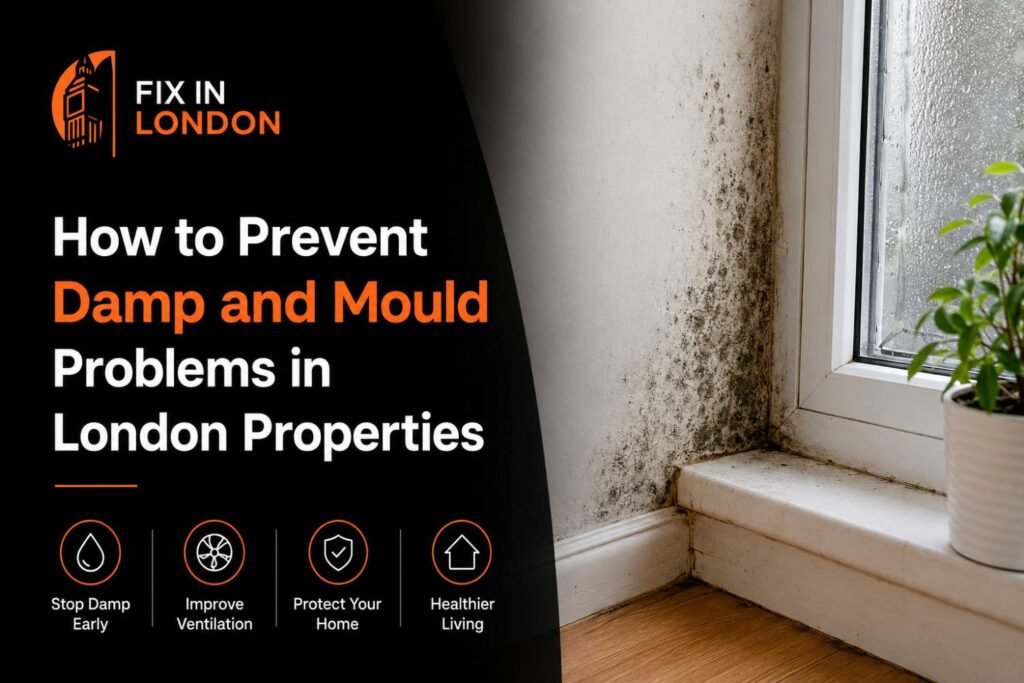
How to Prevent Damp and Mould Problems in London: A Room-by-Room Guide
Kitchen
The kitchen generates enormous amounts of moisture through cooking and boiling water. Here’s how to keep it under control:
- Always use your extractor fan when cooking — and leave it running for 10–15 minutes after you finish.
- Keep lids on pots and pans to reduce steam output significantly.
- Check under the sink regularly for slow drips from the waste pipe or tap connections.
- Ensure the extractor fan vents externally — recirculating models filter grease but do nothing for moisture.
Bathroom
Bathrooms are the number-one source of condensation damp in London flats.
- Install or upgrade your extractor fan — it should be rated for at least 15 litres per second for a standard bathroom.
- Open a window after bathing for at least 20 minutes if you have one.
- Wipe down tiles and glass after showering to reduce standing moisture.
- Check grout and sealant around the bath and shower tray annually — cracked sealant allows water to penetrate the wall behind tiles.
- Don’t hang wet towels over heated towel rails in rooms without ventilation — it pumps moisture directly into the air.
Bedroom
Bedrooms are often overlooked, but they generate significant moisture — a sleeping adult exhales around a pint of water every night.
- Ventilate the room daily — even opening a window for 10 minutes on a cold morning helps cycle out humid air.
- Keep furniture slightly away from external walls — leave a 50mm gap to allow air to circulate and prevent cold spots where mould thrives.
- Use a dehumidifier in rooms where ventilation is limited, particularly basement bedrooms.
Living Room and Hallways
- Don’t dry clothes indoors unless you have a tumble dryer that vents externally. A single load of laundry releases approximately 2 litres of water into your home’s air.
- Keep trickle vents open on double-glazed windows — many people seal them closed in winter, which starves rooms of fresh air.
- Check behind radiators for signs of moisture on external walls, which can indicate a cold bridging problem.
DIY Damp Prevention: Practical Tips That Actually Work
You don’t need to spend thousands on specialist treatments to prevent damp and mould in a London property. These practical DIY measures make a significant difference:
Improve Ventilation Throughout the Property
Good airflow is the single most effective way to prevent condensation mould. If your property has sealed chimney breasts, consider fitting a ventilation insert to allow passive airflow. Ensure all extractor fans are clean and functioning — a fan clogged with dust and grease is working at a fraction of its capacity.
Use Anti-Mould Paint in High-Risk Areas
Anti-mould paint contains a fungicide that inhibits mould spore growth on wall surfaces. It won’t fix an underlying damp problem, but it provides a useful additional layer of protection in bathrooms, kitchens, and north-facing rooms.
Check and Clear Your Gutters Every Autumn
Blocked gutters are one of the leading causes of penetrating damp in London terraces. Leaves, moss, and debris accumulate over summer and cause water to overflow and saturate the walls below. Clear gutters every autumn before the wet season begins.
Inspect and Repoint Exterior Brickwork
Walk around the exterior of your property and look for crumbling mortar joints — particularly on chimney stacks and at the base of walls. Repointing with appropriate mortar (lime mortar for older properties, not cement) prevents water ingress through the brickwork.
Apply Exterior Waterproof Masonry Treatment
A breathable, water-repellent masonry sealant applied to exposed brick or render dramatically reduces the amount of rainwater absorbed by your walls. This is particularly useful for London properties with no cavity walls. Ensure you use a product that is “breathable” — impermeable coatings can trap moisture inside the wall and worsen problems.
Use a Hygrometer to Monitor Indoor Humidity
A digital hygrometer costs around £10–15 and tells you the relative humidity in any room. Aim to keep indoor humidity between 40% and 60%. If readings consistently exceed 65%, you need to either increase ventilation or use a dehumidifier.
Treat Mould Promptly When It Appears
Surface mould (the black spotting on bathroom sealant and window frames) can be treated effectively with a diluted bleach solution (one part bleach to four parts water) or a proprietary mould spray. Scrub affected areas, allow to dry fully, and ensure the ventilation issue causing the mould is also addressed — otherwise it will return within weeks.
Warning Signs You Should Never Ignore
Some signs of damp require immediate professional attention. Don’t delay calling a specialist if you notice:
- A persistent musty smell even after airing out rooms — this indicates hidden mould growth behind walls or under floors.
- Bubbling or peeling plaster on lower walls — a classic symptom of rising damp.
- Unexplained wet patches appearing on ceilings or walls after rainfall — active penetrating damp.
- Staining or tide marks on lower walls, often yellow or brown in colour.
- Structural cracks in external brickwork that allow water to enter.
- Mould returning rapidly after cleaning — persistent recurrence suggests the root cause is a structural damp problem, not just condensation.
Read more: Fix Squeaky Stairs in London
When to Call a Professional: Stop DIYing and Get Expert Help
DIY measures work well for condensation prevention and basic maintenance, but there are clear situations where you need a qualified professional to assess and resolve the problem.
Call a professional immediately if:
- You suspect rising damp — installing or repairing a damp-proof course requires specialist equipment and expertise.
- You have penetrating damp from a roof, chimney, or structural issue that you cannot safely access or repair yourself.
- There’s evidence of a hidden plumbing leak — water damage behind walls or ceilings requires a plumber to locate and repair the source before any redecoration work begins.
- Mould covers an area larger than 1 square meter — at this scale, it should be treated by a specialist to avoid spreading spores throughout the property.
- You’re a landlord with tenants experiencing damp-related health issues — under the Homes (Fitness for Human Habitation) Act 2018, you have a legal obligation to address damp that makes a property uninhabitable.
This is where Fix in London comes in. As a trusted local property maintenance and plumbing service operating across London, Fix in London has extensive experience diagnosing and resolving damp problems in all types of London properties — from period conversions to modern flats. Whether it’s a concealed pipe leak driving hidden damp, or a failed damp-proof course in an older terrace, their qualified engineers can identify the source and carry out the right repair efficiently and affordably.
Read more: Damp and Mould Specialist London
Damp Prevention for London Landlords: Your Legal Responsibilities
If you let a property in London, preventing damp and mould isn’t just good practice — it’s a legal obligation. Under the Homes (Fitness for Human Habitation) Act 2018 and the Housing Health and Safety Rating System (HHSRS), landlords must ensure their properties are free from conditions that pose a serious health risk. Damp and mould that affects air quality and causes respiratory problems fall squarely into that category.
Practical steps landlords should take:
- Carry out annual property inspections to identify early signs of damp.
- Provide adequate ventilation in bathrooms and kitchens — extractor fans should be installed where windows are absent or inadequate.
- Respond promptly to tenant reports of damp — delays can result in council enforcement action and civil liability.
- Keep records of all maintenance carried out relating to damp and moisture issues.
How Much Does Damp Treatment Cost in London?
Costs vary widely depending on the type and severity of the problem:
| Problem | Typical Cost Range (London) |
| Damp survey | £150 – £400 |
| Condensation treatment (ventilation improvement) | £200 – £600 |
| Rising damp / DPC injection | £800 – £3,000+ depending on wall length |
| Replastering after damp treatment | £300 – £800 per room |
| Gutter repair/replacement | £100 – £500 |
| Repointing brickwork | £20 – £50 per m² |
| Leak detection and repair | £150 – £600 depending on access |
Getting a professional assessment before committing to expensive treatment is always advisable — not every case of mould is rising damp, and misdiagnosis leads to wasted money and recurring problems.
Conclusion: Take Action Before Damp Takes Hold
Damp and mould problems in London properties are common, but they are not inevitable. With the right combination of ventilation, regular maintenance, and prompt action when warning signs appear, you can protect your home, your health, and your property’s value.
The key is to act early. A damp patch caught today is a relatively minor fix. Left for another winter, it can become a significant structural problem requiring thousands of pounds to resolve.
If you’ve noticed any of the warning signs described in this guide, or if you simply want a professional eye on your property before problems develop, get in touch with Fix in London. Their experienced team serves homeowners, tenants, and landlords across the capital, providing honest assessments and reliable repairs — no jargon, no unnecessary upselling.
Don’t wait for a small damp patch to become a costly disaster. Contact Fix in London today and get your property properly protected.
Frequently Asked Questions (FAQs)
Q1: What is the most common cause of damp in London flats?
The most common cause of damp in London flats is condensation. This occurs when warm, humid air from cooking, bathing, and breathing meets cold surfaces — typically external walls and windows. Poor ventilation, which is widespread in converted Victorian properties and basement flats, allows moisture to accumulate and leads to black mould growth on walls, ceilings, and window frames. Improving ventilation through extractor fans, trickle vents, and regular airing of rooms is the most effective solution.
Q2: How do I know if I have rising damp or just condensation?
Rising damp and condensation produce different symptoms. Rising damp typically causes damage to the lower sections of walls (up to around 1 metre high), leaves a distinctive tide mark or salt staining, causes plaster to bubble and flake, and feels damp to the touch even in dry weather. Condensation mould, by contrast, tends to appear at cold spots anywhere on walls or ceilings — often in corners, behind furniture, or around window frames — and is worse in winter when temperature differences are greatest. If in doubt, a professional damp survey will confirm the cause definitively.
Q3: Can a landlord be held responsible for damp and mould in a rental property?
Yes. Under the Homes (Fitness for Human Habitation) Act 2018 and the Housing Health and Safety Rating System (HHSRS), landlords in England are legally required to keep rental properties free from conditions that are hazardous to health — and severe damp and mould qualify. If a landlord fails to address damp after being notified by a tenant, the tenant can pursue a claim in the county court, and the local council can also serve an improvement notice. Landlords should respond promptly to any damp-related complaints and keep records of all repairs.
Q4: Does a dehumidifier get rid of damp and mould permanently?
A dehumidifier reduces the moisture level in the air, which helps prevent condensation forming on cold surfaces and can slow mould growth. However, it does not address the underlying cause of damp — whether that’s rising damp, penetrating damp, or a plumbing leak. For condensation-related mould in a poorly ventilated room, a dehumidifier used alongside improved airflow can be very effective. For structural damp problems, a dehumidifier alone is not sufficient and professional treatment is needed. Think of it as a management tool rather than a cure.