
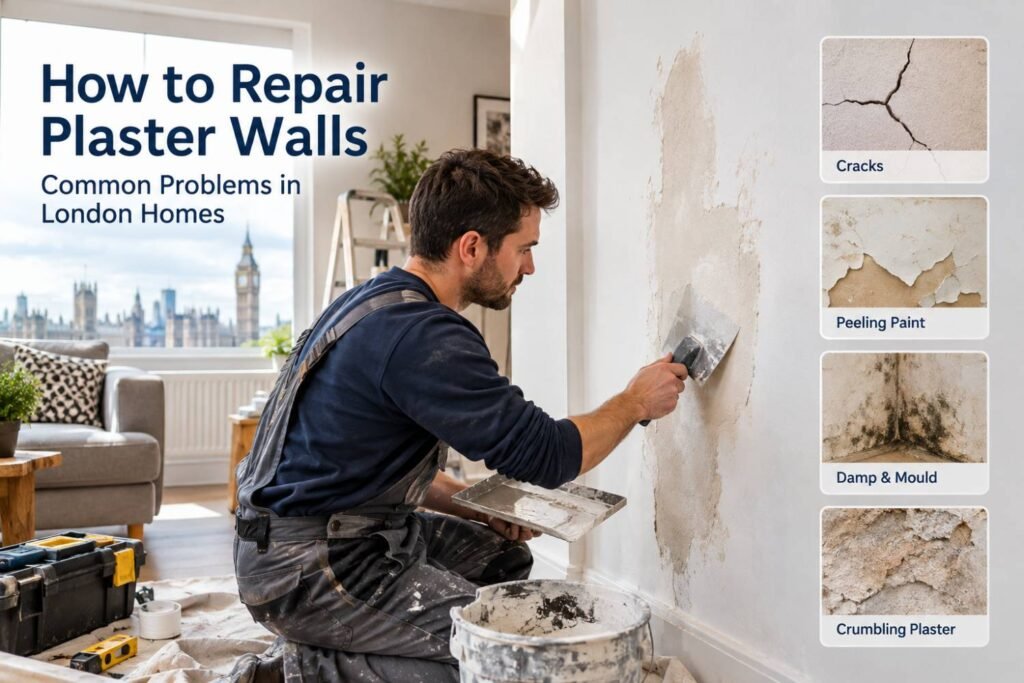
Cracked plaster, bubbling paint, small holes and crumbling patches are familiar problems in many London homes. Whether you live in a Victorian terrace, a converted flat, a modern apartment or an older townhouse, plaster walls can deteriorate for several reasons. Age, movement in the building, moisture, condensation, poor previous repairs and everyday wear can all leave walls looking tired or damaged.
Knowing how to repair plaster walls can help you deal with minor defects before they become more expensive problems. However, not every crack or damaged patch should simply be filled and painted over. In London properties, plaster damage can sometimes be a visible symptom of damp, a leaking pipe, poor ventilation or movement within the building.
This guide explains the most common plaster wall problems found in London homes, what causes them, which repairs you can potentially handle yourself and when it makes sense to bring in a professional.
What Causes Plaster Walls to Become Damaged?
Plaster is durable, but it is not completely resistant to moisture, impact, movement or age. Before repairing a damaged wall, it is important to understand why the problem has occurred.
Common causes include:
General ageing and deterioration
Hairline cracks caused by minor movement
Settlement or movement within the property
Damp and water ingress
Condensation and poor ventilation
Leaking pipes or plumbing faults
Impact from furniture, doors or everyday use
Poor-quality previous repairs
Nails, screws and wall fixings
Changes in temperature and humidity
Defective external pointing, gutters or roofing
A simple surface crack may require little more than filling and repainting. Persistent bubbling, staining or crumbling plaster requires a different approach because repairing the surface without dealing with the underlying cause will usually result in the damage returning.
Read more: Painting in London
Common Plaster Wall Problems in London Homes
Different types of plaster damage require different repair methods. Identifying the problem correctly is the first step.
| Plaster problem | Common cause | Typical repair |
|---|---|---|
| Hairline cracks | Age, drying or minor movement | Flexible filler and repainting |
| Small holes | Picture hooks, screws or impact | Fill, sand and decorate |
| Larger cracks | Movement or damaged plaster | Rake out, reinforce and replaster |
| Bubbling plaster | Moisture or damp | Identify moisture source and replace damaged plaster |
| Crumbling plaster | Age or prolonged damp | Remove loose material and replaster |
| Peeling paint | Moisture or poor preparation | Resolve cause, prepare and repaint |
| Water stains | Leak or water ingress | Repair source before redecorating |
| Detached plaster | Loss of adhesion or movement | Remove loose areas and resecure/replaster |
1. Hairline Cracks in Plaster
Small hairline cracks are among the most common problems homeowners notice.
They can develop naturally as a property ages. Minor settlement, changes in temperature, drying of plaster and normal building movement can all contribute.
If a crack is narrow, stable and purely superficial, it may be possible to repair it yourself.
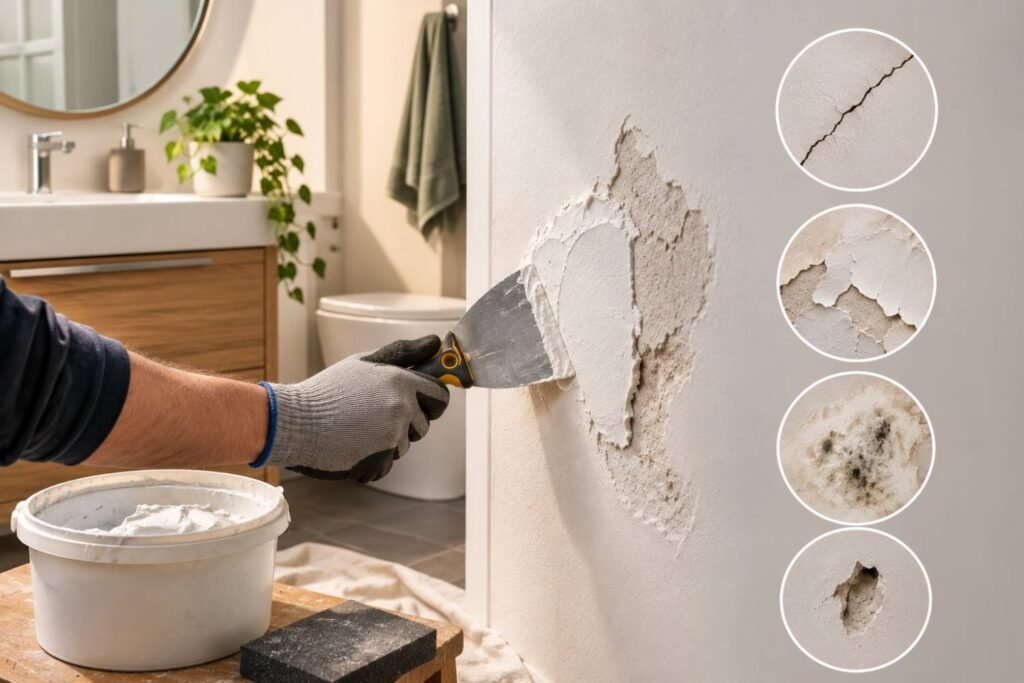
How to repair a small plaster crack
Clean away loose dust and paint around the crack.
Open the crack slightly if necessary so the filler can properly grip the surface.
Apply a suitable filler.
Allow it to dry according to the manufacturer’s instructions.
Sand the repaired area until smooth.
Apply a suitable primer if required.
Repaint the wall.
Do not simply paint over a visible crack. The underlying line may remain visible and could reopen.
When is a crack more concerning?
A professional assessment is advisable if a crack is:
Wide or rapidly increasing in size
Diagonal and prominent
Running through several areas of the property
Accompanied by sticking doors or windows
Associated with visible movement
Appearing repeatedly after previous repairs
Not every large crack indicates a serious structural problem, but persistent or unusual cracking should not automatically be treated as a cosmetic defect.
2. Holes and Small Damaged Areas
Holes from picture hooks, shelves, screws and wall fixings are usually straightforward to repair.
For a small hole, remove loose material, clean the area and apply an appropriate interior filler. Once completely dry, sand it smooth and repaint.
For deeper holes, you may need to apply filler in stages rather than filling the entire void at once. Larger damaged sections can require backing material or a patch before finishing with plaster or filler.
The biggest mistake is rushing the finishing stage. Even if the hole has been filled correctly, an uneven surface can remain obvious once light falls across the wall.
3. Crumbling or Powdery Plaster
If plaster feels soft, loose or powdery when touched, there may be more going on than normal wear and tear.
Older London properties can experience plaster deterioration because of prolonged moisture exposure. Leaks, condensation and penetrating damp can weaken plaster over time.
Before repairing crumbling plaster, identify the cause.
If the moisture problem is ignored, fresh plaster may also deteriorate.
A basic repair process may involve:
Removing loose and unstable plaster.
Cleaning the exposed surface.
Investigating the source of moisture.
Allowing the area to dry where appropriate.
Applying suitable backing or bonding material.
Replastering the damaged section.
Allowing adequate drying time.
Preparing and decorating the surface.
For extensive deterioration, professional plastering is usually preferable to repeated patch repairs.
4. Bubbling or Blistering Plaster
Bubbling walls are often a warning sign that moisture is present behind or within the surface.
You may notice:
Raised areas
Blisters beneath paint
Soft plaster
Discolouration
Peeling paint
A musty smell
Damp patches
There are several potential sources, including leaking plumbing, condensation, penetrating damp and water entering through defective external areas.
Simply cutting away the bubble and filling it may provide a temporary cosmetic improvement, but it does not solve the moisture problem.
This is particularly important in bathrooms, kitchens, basements and rooms against external walls.
Rea more: Bathroom Refurbishment in London
5. Water-Damaged Plaster
Water damage can occur after a plumbing leak, roof problem, overflowing gutter or water penetration through an external wall.
The first priority is to stop the source.
For example, if a pipe has leaked behind the wall, repairing the plaster before fixing the plumbing problem is the wrong order of work.
Once the source has been dealt with, damaged plaster can be assessed. Some areas may dry successfully, while heavily damaged plaster may need to be removed and replaced.
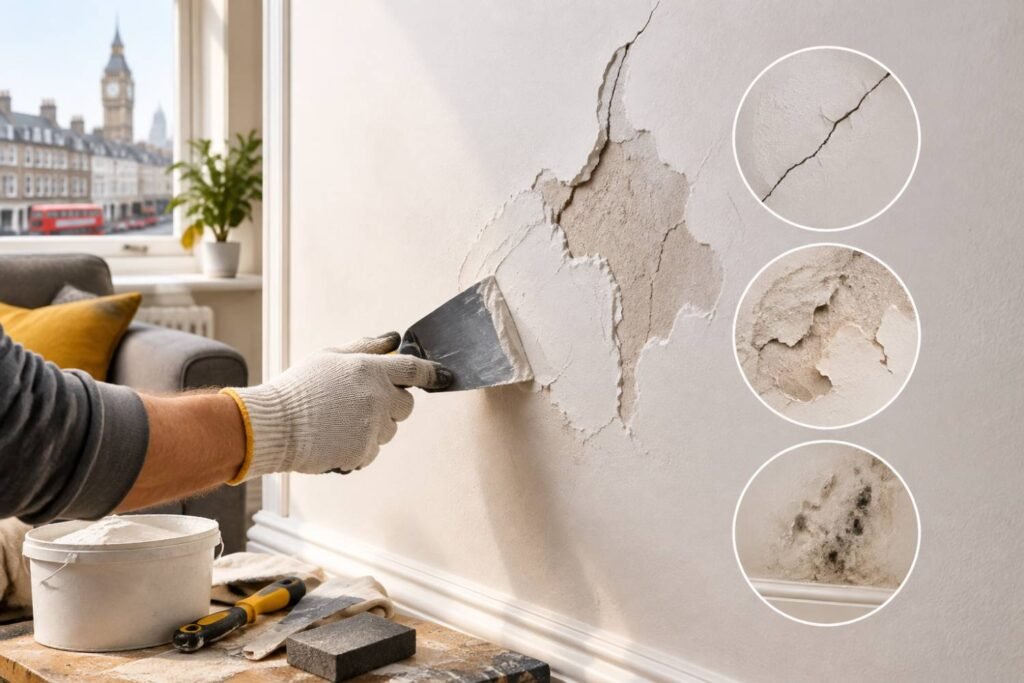
What should you do after discovering water damage?
Stop the source of water if it is safe to do so.
Check whether the affected area is still damp.
Investigate where the water came from.
Allow appropriate drying time.
Remove unstable or badly damaged material.
Repair or replace the affected plaster.
Treat any associated mould or staining appropriately.
Prime and redecorate once the surface is ready.
DIY Plaster Repairs: What Can You Safely Do Yourself?
Many small cosmetic plaster repairs are suitable for a reasonably confident DIY homeowner.
You can often tackle:
Small nail holes
Minor surface imperfections
Small hairline cracks
Light dents
Small areas of chipped plaster
Minor preparation before painting
For a better finish, use the right materials and do not rush between stages.
Basic tools you may need
Filling knife
Fine-grit sandpaper
Interior filler
Dusting brush
Clean cloth
Primer
Paint and appropriate rollers or brushes
Protective sheets
Masking tape
Always follow the instructions supplied with the filler, plaster or other repair material you are using.
When Should You Avoid DIY Plaster Repairs?
DIY can become problematic when the visible damage is actually a symptom of a larger issue.
Professional help is sensible when:
Plaster is extensively loose or detached.
Damp keeps returning.
There are substantial cracks.
Water damage is widespread.
A ceiling is affected by a leak.
You suspect a plumbing fault behind the wall.
Mould is repeatedly returning.
You need a large area replastered.
Previous repairs have repeatedly failed.
You are unsure whether the damage is cosmetic or structural.
The objective should not simply be to make the wall look good for a few weeks. A proper repair should address the reason the damage occurred.
When Do You Need a Plumber?
Although plaster problems are generally dealt with by a plasterer or building professional, plumbing can sometimes be responsible for the damage.
You should consider contacting a professional plumber if you suspect:
A leaking pipe behind the wall
A leaking radiator connection
A faulty bathroom pipe
A leaking washing machine connection
Persistent water staining with no obvious external source
Water appearing around plumbing fixtures
A ceiling or wall becoming wet after using a bathroom or kitchen
Read more: Bathroom Renovations in London
For example, if a newly repaired wall develops another damp patch whenever the shower is used, plastering it again will not solve the underlying problem.
In these situations, the plumbing or water source needs to be investigated first. Once the leak has been repaired and the area is suitable for restoration, the damaged plaster can be dealt with.
How to Repair Plaster Walls After Damp
Damp-related plaster repairs require more care than ordinary cosmetic filling.
First, establish whether the problem comes from condensation, penetrating damp, a plumbing leak or another source.
Condensation
Condensation is common in rooms with poor ventilation, particularly kitchens and bathrooms. Warm, moisture-laden air can settle on cooler surfaces and contribute to damp and mould.
Improving ventilation, controlling indoor humidity and maintaining adequate heating can help reduce the problem.
Penetrating damp
Penetrating damp can occur when water enters through the external fabric of the building. Potential causes include defective gutters, damaged render, failed pointing, cracks in external walls or problems around windows.
In this situation, repairing only the interior plaster is unlikely to provide a lasting solution.
Plumbing leaks
A hidden plumbing leak can saturate plaster and surrounding materials. The source must be repaired before restoration work begins.
How Much Plaster Should Be Removed?
There is no universal depth or area that should be removed. The important consideration is whether the remaining material is sound and firmly attached.
Tap the surrounding plaster gently and inspect for:
Hollow sounds
Soft sections
Crumbling edges
Visible damp
Loose material
Separation from the underlying surface
Only unstable material should generally be removed as part of a localised repair, while extensive deterioration may justify replacing a larger section.
If you are uncertain, a professional assessment can prevent unnecessary removal or repeated patching.
How to Get a Smooth Finish When Repairing Plaster
Even a technically sound repair can look poor if the finishing work is rushed.
For a professional-looking result:
Remove loose material carefully.
Keep the repair area clean and dry where appropriate.
Apply the repair material evenly.
Avoid leaving a raised edge around the patch.
Allow sufficient drying time.
Sand carefully rather than aggressively.
Remove all dust before decorating.
Prime where appropriate.
Paint the repaired area using compatible products.
Remember that strong natural light can make even minor surface imperfections much more noticeable, particularly on large uninterrupted walls.
Should You Repair or Replaster the Entire Wall?
This depends on the condition of the existing surface.
A localised repair can make sense when the majority of the plaster remains sound. However, if the wall contains widespread cracking, multiple failed patches, extensive damp damage or large detached sections, repeatedly repairing individual areas may not be the most practical approach.
Full or partial replastering may provide a more consistent and durable surface.
The decision should take account of:
The extent of damage
The condition of the existing plaster
The cause of the problem
The age and construction of the property
Previous repair attempts
The desired decorative finish
Common Mistakes When Repairing Plaster Walls
Some repair mistakes are surprisingly common.
Painting over damp
This can hide the stain temporarily but does not resolve the moisture source.
Filling a moving crack
If the underlying movement continues, a rigid filler may crack again.
Repairing before fixing a leak
Any new plaster or decoration can be damaged again if water continues to enter the wall.
Using too much filler
Large amounts of filler can shrink, crack or leave an obvious raised patch.
Sanding too aggressively
Excessive sanding can damage surrounding plaster and make the repair larger than necessary.
Ignoring recurring damage
If the same patch repeatedly becomes damaged, look for an underlying cause rather than continuing to repair the surface.
When to Call a Professional
Professional assistance is particularly useful when plaster damage is extensive, recurring or connected to damp or water damage.
A professional can assess the condition of the wall, identify areas that require removal and determine whether additional work is needed before replastering.
For London homeowners who need help with property repairs and maintenance, Fix in London provides professional home improvement services designed to address problems properly rather than simply covering visible defects.
Getting professional advice can be particularly worthwhile when you are preparing a property for sale or letting, renovating an older London home or dealing with damage that has already returned after a previous repair.
Final Thoughts
Learning how to repair plaster walls can help you deal with minor cracks, holes and surface imperfections before they become bigger problems. Small cosmetic defects can often be repaired with basic DIY materials, provided the underlying wall is sound and dry.
However, plaster damage should not always be treated as a purely cosmetic issue. Bubbling, crumbling, recurring stains and persistent cracks can indicate moisture, leaks, building movement or another underlying problem.
The most effective approach is to identify the cause first, choose the appropriate repair method and avoid covering up symptoms that are likely to return.
If your London property needs more than a simple DIY patch, professional assistance can save time and prevent repeated repairs. Whether you are dealing with damaged plaster, damp-related deterioration or a property that needs wider maintenance work, Fix in London can help you assess the work required and arrange the appropriate solution.
Frequently Asked Questions
1. How do you repair damaged plaster walls?
Small holes and hairline cracks can often be repaired by cleaning the area, applying suitable filler, allowing it to dry, sanding it smooth and repainting. Larger or damaged areas may require sections of plaster to be removed and replaced. If the damage is caused by damp or a leak, the underlying issue should be resolved before repairing the plaster.
2. Can I repair plaster walls myself?
Yes, minor cracks, dents and small holes can often be repaired as a DIY project. However, extensive cracking, loose plaster, significant water damage or recurring damp should be assessed professionally. Attempting to repair a symptom without addressing its cause can lead to the problem returning.
3. Why does plaster keep cracking after I repair it?
Repeated cracking can happen because of ongoing building movement, unstable plaster, incorrect repair materials or changes in temperature and humidity. If the same crack repeatedly reappears, investigate the underlying cause rather than continually filling and repainting it.
4. When should I call a professional for damaged plaster?
Contact a professional if plaster is extensively cracked, crumbling, detached or affected by persistent damp or water damage. If you suspect a leaking pipe or another plumbing fault, a qualified plumber should investigate the water source before plaster restoration takes place.