
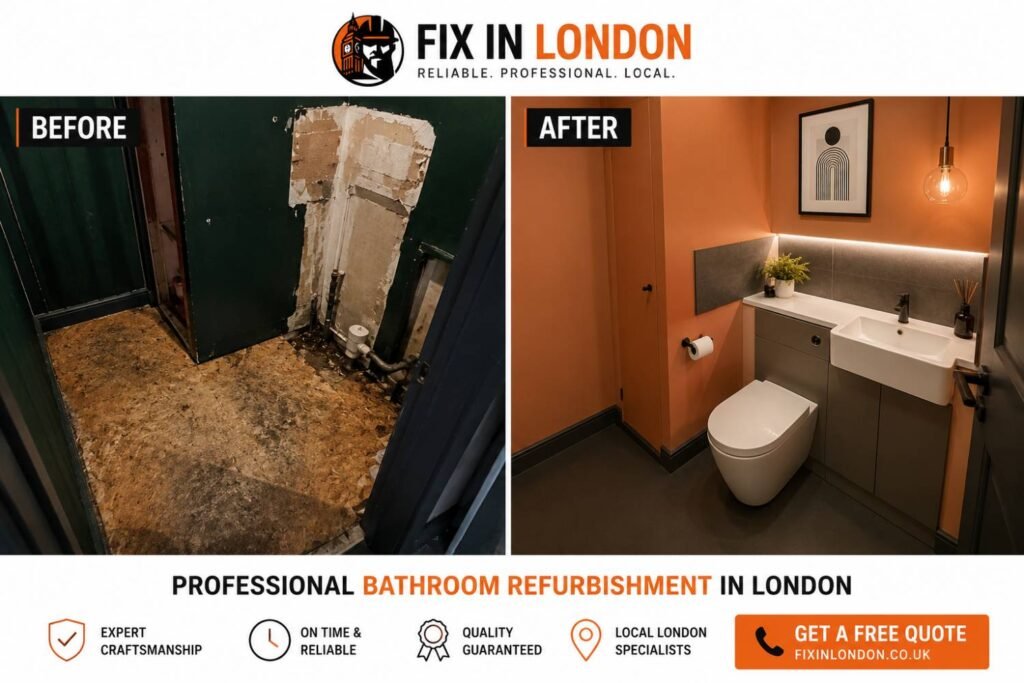
Whether you live in a Victorian terrace, a period conversion, a modern flat or a family home, a well-planned bathroom refurbishment in London can improve both the appearance and functionality of your property. Refurbishment may involve anything from replacing a few worn components to upgrading the entire room, including sanitaryware, tiling, plumbing fixtures, lighting and ventilation.
At Fix in London, we understand that bathroom work can feel disruptive, particularly when it involves the only bathroom in your home. That is why careful planning, practical solutions and professional workmanship are essential. This guide explains what bathroom refurbishment involves, the most common problems London homeowners face, when DIY repairs may be suitable and when it is time to call a professional.
What Is Bathroom Refurbishment?
Bathroom refurbishment is the process of improving, repairing or upgrading an existing bathroom without necessarily rebuilding the entire room from scratch. The exact scope of work depends on the age and condition of the bathroom, your budget and the improvements you want to achieve.
A bathroom refurbishment can range from a simple cosmetic upgrade to a more extensive project involving plumbing and structural work.
Typical bathroom refurbishment services may include:
- Replacing baths, showers, toilets and basins
- Installing new taps and shower fittings
- Repairing or upgrading plumbing
- Replacing damaged tiles
- Regrouting and resealing surfaces
- Installing bathroom cabinets and storage
- Improving lighting
- Upgrading ventilation
- Repairing leaks and water damage
- Replacing worn flooring
- Modernising the overall design and layout
Bathroom Refurbishment vs Complete Bathroom Renovation
Although the terms are sometimes used interchangeably, bathroom refurbishment and bathroom renovation can involve different levels of work.
| Bathroom Refurbishment | Complete Bathroom Renovation |
|---|---|
| Focuses on improving the existing bathroom | May involve redesigning the entire space |
| May retain the existing layout | Can involve changing the layout significantly |
| Often includes replacing worn fixtures and finishes | May include extensive plumbing and electrical changes |
| Can be a more targeted improvement project | Usually involves more extensive building work |
| Suitable for updating a bathroom in reasonable condition | Suitable for severely outdated or poorly designed bathrooms |
If you are considering a more extensive transformation, you may also want to explore our guide to Bathroom Renovations in London.
Why Do London Homeowners Refurbish Their Bathrooms?
Bathrooms experience more moisture, temperature changes and daily wear than many other rooms in the home. Over time, even a well-designed bathroom can begin to show signs of deterioration.
1. Persistent Leaks
A dripping tap may appear to be a minor inconvenience, but leaks can also develop around pipes, toilets, shower trays and waste connections. Hidden leaks can cause moisture damage behind walls or beneath flooring before they become obvious.
2. Damaged or Mouldy Sealant
Bathroom sealant is designed to prevent water from reaching vulnerable areas around baths, showers and basins. When sealant becomes cracked, loose or mouldy, water may penetrate behind fixtures and cause more significant problems.
3. Cracked or Loose Tiles
Tiles can crack because of impact, movement in the building structure or problems beneath the tiled surface. Loose or damaged tiles may also allow water to reach the wall or floor behind them.
4. Poor Ventilation
Condensation is a common problem in London bathrooms, particularly in properties with limited natural ventilation. Without adequate airflow, moisture can remain in the room and encourage mould growth.
5. Outdated Fixtures
Older toilets, taps and shower fittings may become inefficient, difficult to repair or simply unsuitable for modern household needs. Refurbishment provides an opportunity to replace worn fixtures with more practical alternatives.
6. Lack of Storage
Many older bathrooms were not designed with modern storage requirements in mind. A refurbishment can improve the use of available space through wall-mounted units, vanity furniture and carefully planned storage.
7. Water Damage
Long-term leaks or poor waterproofing can cause damage to flooring, walls and surrounding structures. Before cosmetic improvements begin, the source of the moisture must be identified and resolved.
Common Signs Your Bathroom Needs Refurbishment
You do not always need to wait for a major failure before improving your bathroom. Early action can prevent minor maintenance issues from developing into expensive repairs.
- Recurring leaks or dripping taps
- Cracked, loose or missing tiles
- Persistent mould growth
- Damaged silicone sealant
- Peeling paint caused by excess moisture
- Unpleasant smells from drains
- Water stains on ceilings or walls
- Poor water pressure
- Outdated or damaged bathroom fittings
- Insufficient storage
- Uneven or damaged flooring
If several of these problems are affecting the same bathroom, a planned refurbishment may be more practical than carrying out repeated individual repairs.
What Does a Professional Bathroom Refurbishment Involve?
Every property is different, so there is no single process that applies to every bathroom project. However, a professional refurbishment often follows a structured sequence to reduce mistakes and avoid unnecessary delays.
Step 1: Assessing the Existing Bathroom
The first stage is understanding the current condition of the room. This may include checking plumbing, drainage, ventilation, walls, flooring and the condition of existing fixtures.
It is important to identify hidden issues before installing new finishes. For example, placing new tiles over a wall affected by an unresolved leak can lead to further damage later.
Step 2: Planning the New Layout
A refurbishment does not always require a new layout, but planning how the available space will be used is essential. London homes can have compact bathrooms where every centimetre matters.
Planning may consider:
- The position of the bath or shower
- Toilet and basin placement
- Existing plumbing locations
- Storage requirements
- Door opening space
- Ventilation
- Lighting requirements
Step 3: Removing Old Fixtures
Depending on the scope of the project, existing sanitaryware, cabinets, tiles or flooring may need to be removed. Careful removal is important, particularly in older London properties where hidden pipework or building materials may be present.
Step 4: Plumbing and Repair Work
Before finishing surfaces are installed, any necessary plumbing repairs or upgrades should be completed. This may include replacing damaged pipes, repairing leaks or installing new connections for bathroom fixtures.
Step 5: Preparing Walls and Floors
Walls and floors must be properly prepared before tiling or installing new finishes. Any damaged or uneven surfaces may need to be repaired first.
Step 6: Installing New Bathroom Fixtures
The next stage may involve installing the bath, shower, toilet, basin and other fittings. Proper installation is particularly important in bathrooms because even a small leak can cause significant damage over time.
Step 7: Tiling and Finishing
Once the main work is complete, tiling, grouting, sealing and finishing details can be carried out. These finishing elements have both visual and practical importance because they help protect the underlying surfaces from moisture.
DIY Bathroom Troubleshooting Tips
Some small bathroom problems can be identified or temporarily managed by homeowners. However, DIY work should never involve taking unnecessary risks or attempting specialist work without the appropriate knowledge and equipment.
Check for Visible Leaks
If you notice water around a basin or toilet, first check whether the moisture appears after using a specific fixture. Dry the area thoroughly and observe where water reappears.
Look for obvious signs around:
- Tap connections
- Waste pipes
- Toilet bases
- Shower doors and trays
- Bath edges
Inspect Bathroom Sealant
Damaged silicone can often be identified visually. Look for gaps, cracking, lifting or black mould. If you decide to replace sealant yourself, the old material should be removed carefully and the surface must be clean and completely dry before new sealant is applied.
Improve Everyday Ventilation
To reduce condensation, open windows where practical and use an extractor fan during and after showering. Wiping down excessively wet surfaces can also reduce the amount of moisture left in the room.
Clear Simple Drain Obstructions Carefully
Hair and soap residue can cause slow drainage in basins and showers. Removing visible debris from an accessible drain cover may help.
Avoid repeatedly pouring harsh chemicals into pipes, especially if you do not know the cause of the blockage. Persistent or recurring drainage problems may indicate an issue further within the system.
When Should You Call a Professional Plumber?
While small maintenance tasks may be manageable, some bathroom problems require professional diagnosis. Plumbing issues that are ignored can lead to hidden water damage, higher repair costs and disruption to your home.
You should consider calling a professional plumber if you experience:
- A persistent or unexplained leak
- Water pressure problems affecting multiple fixtures
- Repeated drain blockages
- Water leaking through a ceiling
- A damaged or leaking toilet connection
- Problems with pipework behind walls or beneath flooring
- A major failure involving a bathroom fixture
- Signs of significant water damage
If the situation is urgent and there is a risk of significant water damage, acting quickly is particularly important. You can also learn more about the warning signs by reading Signs You Need Emergency Plumbing Services in London.
Choosing the Right Fixtures for Your Bathroom
The right bathroom fixtures depend on your available space, household needs and the existing plumbing system. A larger fixture is not always the best option, particularly in a compact London bathroom.
Showers
Showers can be a practical choice for smaller bathrooms. The available space, water pressure and drainage system should all be considered before installation.
Baths
A bath may be important for families or homeowners who want a more traditional bathroom. However, the available floor space and access requirements should be carefully considered.
Wall-Mounted Furniture
Wall-mounted basins and vanity units can create a cleaner visual appearance and may make a compact room feel more spacious.
Storage Solutions
Good storage can significantly improve everyday usability. Recessed shelving, mirrored cabinets and vanity units may help reduce clutter without taking up unnecessary space.
How to Prevent Bathroom Problems After Refurbishment
A newly refurbished bathroom still requires regular maintenance. Small preventative steps can help protect your investment and reduce the risk of avoidable repairs.
- Check sealant regularly for cracks or lifting.
- Use adequate ventilation during and after bathing.
- Repair minor leaks as soon as they are identified.
- Keep shower and basin drains free from visible hair and debris.
- Inspect tiles and grout for signs of damage.
- Monitor unusual changes in water pressure.
- Investigate recurring damp patches promptly.
Why London Properties Can Present Unique Bathroom Challenges
Bathroom refurbishment in London can involve challenges that are less common in newer, purpose-built homes. The capital has a diverse housing stock, including Victorian houses, Georgian properties, converted flats and modern developments.
Older properties may have ageing pipework, uneven walls or unusual room dimensions. Flats can also present access restrictions and shared plumbing considerations.
For these reasons, a refurbishment should be based on the specific condition of the property rather than a one-size-fits-all approach.
Do You Need a Licensed Handyman for Bathroom Work?
The type of professional required depends on the work involved. Some general maintenance and installation tasks may be suitable for an experienced handyman, while specialist plumbing, electrical or structural work should be completed by appropriately qualified professionals.
If you are unsure about which requirements may apply to a particular job, our guide to Handyman Licence Requirements in the UK can provide useful background information.
Why Choose Fix in London for Bathroom Refurbishment?
A bathroom refurbishment involves more than simply choosing attractive tiles and new fittings. The quality of preparation, installation and finishing can have a significant impact on how well the bathroom performs over time.
Fix in London provides reliable support for homeowners who need professional help with bathroom maintenance, repairs and refurbishment projects. Whether you are dealing with an outdated bathroom, damaged fittings or a combination of plumbing and maintenance issues, working with experienced professionals can help ensure the project is approached in a practical and organised way.
Professional assistance can be particularly valuable when a project involves multiple elements, such as plumbing repairs, fixture installation, tiling and general property maintenance.
Frequently Asked Questions About Bathroom Refurbishment in London
How much does bathroom refurbishment in London cost?
The cost depends on the size and condition of the bathroom, the amount of plumbing work required, the fixtures selected and the complexity of the project. A simple cosmetic refurbishment will generally cost less than a complete redesign involving major plumbing or structural changes.
How long does a bathroom refurbishment take?
The duration varies depending on the scope of work. Minor upgrades may take only a short period, while more extensive bathroom refurbishment projects can take longer because of plumbing, preparation, tiling and installation work.
Can I use my bathroom during refurbishment?
This depends on the extent of the work. If major fixtures or plumbing are being replaced, the bathroom may be temporarily unavailable. Planning is particularly important for households with only one bathroom.
Is bathroom refurbishment worth it?
Bathroom refurbishment can be worthwhile when the existing space has become outdated, damaged or impractical. Improving plumbing, ventilation, fixtures and finishes can enhance everyday comfort and help prevent future maintenance issues.
Transform Your Bathroom with Professional Help
A bathroom should be more than a visually attractive room. It should be functional, well-maintained, properly ventilated and protected against water damage. Whether your bathroom needs a simple update or a more comprehensive refurbishment, identifying existing problems before starting work can help achieve a more durable result.
Small DIY maintenance tasks may help resolve minor issues, but persistent leaks, drainage problems, hidden water damage and complex installation work should be assessed by experienced professionals.
If you are looking for dependable bathroom refurbishment in London, Fix in London can help you improve your bathroom with practical maintenance and professional refurbishment solutions. Get in touch today to discuss your requirements and take the next step towards a more comfortable, functional and refreshed bathroom.
I’m thinking about refurbishing a small bathroom in a London flat, but I’d like to keep the existing layout if possible. Can a bathroom be updated without completely changing the plumbing positions?
Yes, in many cases a bathroom can be refurbished while keeping the existing layout and plumbing positions. This can sometimes make the project more straightforward and help control costs. However, the best approach depends on the current condition of the bathroom, plumbing and existing fittings. We can assess the space and discuss the most practical refurbishment options.