
Owning a home in London comes with plenty of advantages, but older buildings, changing weather and busy urban conditions can create a steady list of maintenance jobs. A Victorian terrace may need attention to its roof, brickwork and timber, while a modern flat can still develop problems with plumbing, ventilation, condensation or heating systems.
The challenge for many homeowners is knowing what needs checking, how often it should be checked and which jobs can safely be handled yourself. Small issues such as a dripping tap, blocked gutter or cracked sealant can appear insignificant, but leaving them unattended can sometimes lead to damp, water damage, mould or more expensive repairs.
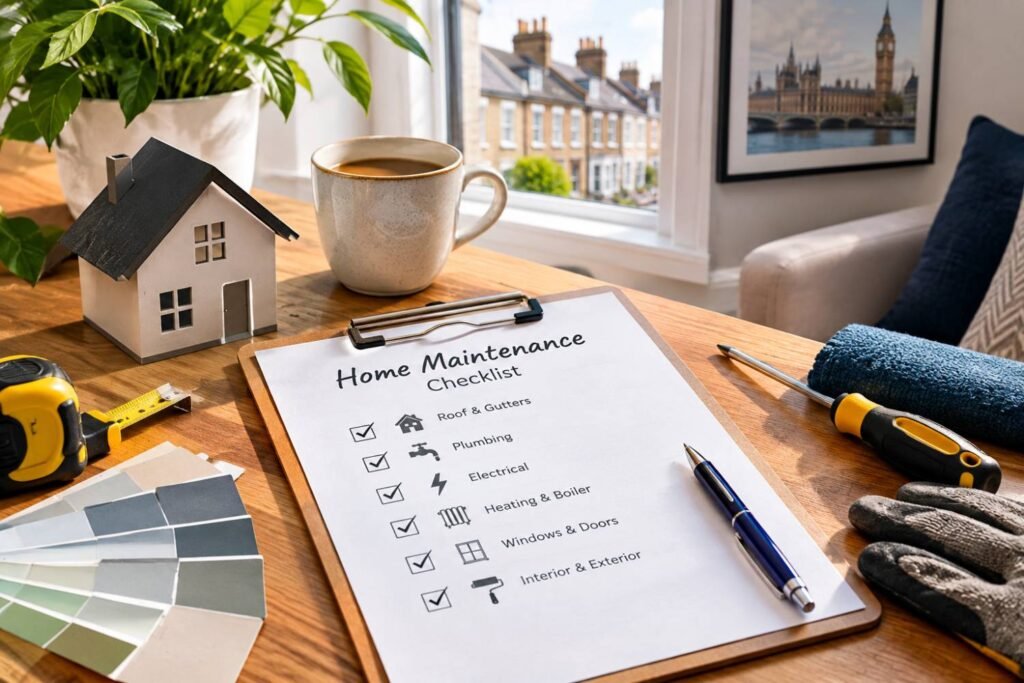
A practical Home Maintenance Checklist for London Homeowners helps you stay ahead of these problems. Rather than waiting for something to break, you can divide maintenance into monthly, seasonal and annual tasks, making it easier to protect your property and manage repair costs.
This guide covers the essential areas of a London home, including plumbing, roofing, damp prevention, heating, windows, electrics, drainage and exterior maintenance. It also explains which jobs are suitable for DIY and when it is better to call a qualified professional.
Why Regular Home Maintenance Matters in London
London properties vary enormously in age and construction. Some homes date back more than a century, while others are relatively new. Older properties can have traditional brickwork, timber sash windows, ageing plumbing and original roof structures that require particular attention.
Regular maintenance can help you:
Detect leaks before they cause significant water damage.
Reduce the risk of damp and mould.
Extend the life of roofing and exterior materials.
Improve energy efficiency.
Prevent minor plumbing faults from becoming emergencies.
Maintain the appearance and value of the property.
Identify potential safety issues.
Avoid unexpected repair bills.
Maintenance is particularly important during seasonal changes. Heavy autumn rain can expose roof and gutter problems, while cold winter temperatures can put additional pressure on plumbing and heating systems.
London Home Maintenance Checklist at a Glance
The following schedule provides a practical starting point for homeowners.
| Maintenance task | Recommended frequency | DIY or professional? |
|---|---|---|
| Check for leaking taps and pipes | Monthly | DIY for minor issues; professional for persistent leaks |
| Inspect gutters and downpipes | Twice yearly | DIY if safely accessible; professional where needed |
| Check boiler and heating system | Annually | Professional servicing recommended |
| Inspect roof for visible damage | Annually and after storms | Professional inspection for repairs |
| Check bathroom sealant and grout | Every few months | DIY for minor deterioration |
| Test smoke and carbon monoxide alarms | Monthly | DIY |
| Inspect windows and door seals | Twice yearly | DIY/minor repairs |
| Check for damp and mould | Monthly | DIY for minor condensation; professional for persistent damp |
| Clear outdoor drains | Regularly | DIY if accessible; professional for blockages |
| Check exterior brickwork | Annually | Professional for significant defects |
| Inspect loft or roof space | Annually | DIY visual inspection where safe |
| Review insulation and ventilation | Annually | Professional advice may help |
Monthly Home Maintenance Tasks
You do not need to spend an entire weekend maintaining your home every month. A short inspection can help identify problems while they are still manageable.
1. Look for Plumbing Leaks
Check under kitchen sinks, bathroom basins and around visible pipework.
Look for:
Drips
Damp patches
Water stains
Corrosion
Musty smells
Swollen cabinet panels
Unexplained moisture
A small leak can gradually damage cupboards, flooring, plaster and other materials.
Pay particular attention to areas around toilets, washing machines, dishwashers and radiators.
Read more: How to Fix Damp and Water Damage in London Homes
2. Check Taps and Toilets
A dripping tap may seem like a minor annoyance, but it can indicate a worn washer, cartridge or another component.
A toilet that continues running after flushing can also waste water and may indicate a faulty internal mechanism.
Minor components can sometimes be replaced as a DIY task, but persistent leaks or concealed plumbing faults should be investigated professionally.
3. Inspect for Damp and Mould
Check corners, ceilings, window reveals and areas behind large pieces of furniture.
Early warning signs include:
Black or green mould spots
Peeling paint
Bubbling wallpaper
Discoloured plaster
Musty odours
Persistent condensation
Damp-feeling walls
Condensation is particularly common in kitchens, bathrooms and bedrooms where moisture levels can rise.
However, recurring damp should not automatically be blamed on condensation. Penetrating damp, plumbing leaks and other building defects can produce similar symptoms.
4. Test Smoke and Carbon Monoxide Alarms
Test your alarms regularly and replace batteries or units when necessary.
Never ignore an alarm that repeatedly sounds or shows signs of malfunction. Carbon monoxide is odourless and potentially dangerous, so appropriate detection equipment is an important part of household safety.
Seasonal Maintenance for London Homes
Breaking maintenance down by season makes the overall workload much easier to manage.
Read more: Why Regular Home Maintenance Saves You Thousands in London
Spring Home Maintenance Checklist
Spring is an excellent time to inspect your property after the colder months.
Check the Roof
From ground level, look for obvious signs of:
Missing or damaged tiles
Sagging areas
Damaged flashing
Moss accumulation
Water staining around ceilings
Do not climb onto a roof unless you have the appropriate equipment and experience. A professional inspection is safer for anything that cannot be assessed from ground level.
Clean and Inspect Gutters
Leaves and debris can obstruct gutters and downpipes.
Blocked gutters can cause rainwater to overflow against walls, windows and foundations. Over time, this may contribute to damp or deterioration of external surfaces.
If gutters are safely accessible, remove debris and check that water can flow freely.
For high or difficult-to-access gutters, professional cleaning is a safer option.
Check External Brickwork
London’s traditional brick properties can develop damaged mortar joints, cracks and areas of weathering.
Inspect external walls for:
Cracked mortar
Missing pointing
Damaged bricks
Vegetation growing from joints
New cracks around windows and doors
Significant masonry defects should be assessed by an appropriate professional.
Inspect Windows
Check timber or uPVC windows for:
Damaged seals
Rot
Cracked glass
Sticking mechanisms
Gaps around frames
Condensation between panes
Repairing failed seals early can improve comfort and help reduce draughts.
Summer Home Maintenance Checklist
Summer is a useful time to tackle exterior and improvement projects.
Inspect Exterior Paintwork
Look for peeling, flaking or cracked paint on:
Window frames
Doors
Fascias
Exterior timber
Other painted surfaces
Repairing small areas before they deteriorate further can protect the underlying material.
Check Outdoor Drainage
Make sure water drains away effectively from patios, paths and other external surfaces.
Standing water may indicate a blocked drain or inadequate drainage.
Do not ignore repeated pooling, particularly close to the property.
Inspect the Bathroom
Summer can be a convenient time to check bathroom sealant and grout.
Look for gaps around:
Baths
Shower trays
Basins
Wall junctions
Damaged sealant can allow water to reach areas that are not designed to remain wet.
Replacing deteriorated silicone can be a straightforward DIY project if the underlying surface is sound and dry.
Read more: Bathroom Fitting in Finchley
Autumn Home Maintenance Checklist
Autumn is one of the most important seasons for preparing a London property for winter.
Clear Gutters Before Heavy Rain
Falling leaves can quickly block gutters.
A blocked gutter may cause water to overflow down exterior walls, potentially contributing to damp and staining.
Clean gutters before periods of prolonged rainfall and inspect them again after particularly windy weather.
Prepare the Heating System
Before temperatures fall significantly, check that your heating system is operating correctly.
If radiators remain cold at the top, they may need bleeding. If your boiler shows fault codes, loses pressure repeatedly or stops working, avoid repeatedly resetting it without investigating the reason.
Annual boiler servicing should be carried out by an appropriately qualified professional.
Check External Doors
Inspect door seals and draught excluders.
Gaps around external doors can make rooms feel colder and increase heat loss.
Replacing a worn seal may be a simple improvement with noticeable benefits.
Inspect the Loft
Where safe and accessible, check the loft for:
Damp patches
Water staining
Damaged insulation
Signs of pests
Condensation
Problems around the roof structure
Never interfere with electrical installations or other potentially hazardous systems.
Winter Home Maintenance Checklist
Winter places additional demands on plumbing, heating and the building envelope.
Protect Against Frozen Pipes
During prolonged cold weather, exposed pipes can freeze.
Frozen water expands, which can place pressure on pipework and potentially cause a burst when the pipe thaws.
Practical precautions include:
Keeping vulnerable areas adequately heated.
Insulating exposed pipework where appropriate.
Knowing where your internal stopcock is located.
Checking vacant properties regularly.
Addressing dripping or damaged pipework before severe cold weather.
If a pipe bursts, turn off the water supply if it is safe to do so and seek professional assistance.
Read more: Seasonal Home Maintenance Checklist from a London Handyman
Monitor Condensation
Cold surfaces combined with warm, humid indoor air can create condensation.
To reduce condensation:
Use extractor fans when cooking or showering.
Keep rooms adequately ventilated.
Avoid drying excessive amounts of laundry indoors without ventilation.
Keep furniture slightly away from cold external walls where practical.
Maintain consistent heating rather than allowing rooms to become extremely cold.
Consider humidity control if condensation remains persistent.
If mould continues despite sensible ventilation and moisture control, investigate whether another source of damp exists.
Plumbing Maintenance Every London Homeowner Should Know
Plumbing deserves a dedicated place on your maintenance checklist because water-related problems can quickly cause secondary damage.
Check the following regularly:
Taps
Toilets
Sinks
Waste pipes
Radiators
Visible water pipes
Washing machine connections
Dishwasher connections
Boiler pressure
External taps
Stopcock access
Know Where Your Stopcock Is
Every homeowner should know how to shut off the property’s main water supply.
The stopcock is commonly located beneath the kitchen sink, although its position varies between properties.
Knowing its location before an emergency occurs can save valuable time.
If you discover a major leak, shutting off the water supply may help limit damage while you arrange professional assistance.
When Should You Call a Professional Plumber?
Some plumbing problems are not appropriate DIY projects.
Call a qualified plumber if you experience:
A burst pipe
Persistent water leaks
Low or fluctuating water pressure
Repeatedly blocked drains
Water coming from behind walls
A leaking boiler
Persistent loss of boiler pressure
Sewage smells or wastewater problems
Unexplained damp patches
A leak that returns after a temporary repair
Trying to dismantle complex plumbing systems without the right experience can turn a manageable repair into a much larger problem.
If water is reaching electrical equipment, treat the situation as urgent and avoid contact with potentially dangerous electrical components.
Roof and Gutter Maintenance
Your roof protects almost every other part of the property, so preventative maintenance matters.
After periods of heavy rain or strong winds, look for visible signs of damage from ground level.
Common roof-related warning signs include:
Water stains on ceilings
Damp patches in loft spaces
Missing tiles
Blocked gutters
Overflowing downpipes
Damaged flashing
Persistent mould near ceilings
If you discover water entering the property, deal with the source before repairing internal decoration.
Repainting a stained ceiling without resolving a roof leak is unlikely to provide a lasting solution.
Bathroom Maintenance Checklist
Bathrooms experience high levels of moisture, making regular inspection particularly important.
Check:
Silicone sealant
Grout
Extractor fan
Shower tray
Bath edges
Toilet connections
Basin waste
Visible pipework
Ventilation
A slow leak under a bath or shower may remain hidden for some time. If you notice a musty smell, soft flooring, staining or unexplained damp, investigate promptly.
Kitchen Maintenance Checklist
The kitchen contains several potential sources of water damage.
Inspect:
Sink waste
Tap connections
Dishwasher hoses
Washing machine connections
Appliance supply pipes
Under-sink cabinets
Sealant around worktops
Extractor ventilation
Open the cupboard below the sink periodically rather than waiting until a leak becomes obvious.
Windows, Doors and Ventilation
Well-maintained windows and doors contribute to comfort, energy efficiency and moisture control.
Check for:
Draughts
Cracked seals
Condensation
Rot
Damaged locks
Gaps around frames
Sticking mechanisms
Good ventilation is equally important. Modern homes can be relatively airtight, while older London properties may have their own ventilation challenges.
The objective is not to eliminate ventilation but to maintain a sensible balance between fresh air, humidity control and heat retention.
DIY Maintenance vs Professional Repairs
Knowing what you can safely handle yourself is an important part of responsible home maintenance.
Suitable DIY tasks may include:
Replacing simple sealant
Cleaning accessible gutters
Replacing alarm batteries
Bleeding radiators
Cleaning showerheads
Replacing basic tap components
Filling small wall holes
Touching up paint
Clearing accessible debris from drains
Professional help is advisable for:
Major plumbing leaks
Boiler faults
Electrical work
Significant roof repairs
Structural cracks
Extensive damp
Gas-related work
Major drainage blockages
Extensive plaster damage
Serious masonry deterioration
When safety, specialist equipment or regulated work is involved, professional assistance is usually the sensible option.
Read more: To DIY or Not to DIY? When to Call in a Handyman
A Simple Annual Home Maintenance Schedule
If you prefer a straightforward routine, use this four-stage schedule.
January to March
Check for winter damage.
Inspect pipes for leaks.
Monitor condensation.
Test alarms.
Check the heating system.
Inspect the loft.
April to June
Clean gutters.
Inspect roof and exterior walls.
Check windows.
Review drainage.
Inspect bathroom sealant.
Address minor exterior repairs.
July to September
Complete exterior maintenance.
Check paintwork.
Inspect outdoor drainage.
Review insulation and ventilation.
Deal with outstanding repairs.
October to December
Clear gutters again.
Prepare heating systems.
Protect vulnerable pipework.
Check doors and windows for draughts.
Inspect for damp.
Make sure you know where the stopcock is.
How Much Does Home Maintenance Cost?
There is no single price for maintaining a London property because costs depend on the property’s age, size, condition and the type of work required.
A small repair may be inexpensive, while replacing damaged plaster after a long-term leak can involve several stages of work.
The most useful approach is to prioritise maintenance according to risk:
Safety issues – address immediately.
Active water leaks – deal with quickly to prevent secondary damage.
Roof and exterior defects – repair before they allow water ingress.
Heating and plumbing maintenance – address faults before they become emergencies.
Cosmetic issues – schedule when practical.
Preventative maintenance is generally easier to budget for than an unexpected emergency repair.
Why London Homeowners Should Not Ignore Small Problems
One of the biggest mistakes homeowners make is assuming that a small visible defect will remain small.
A tiny water stain may indicate a concealed leak. A patch of mould may be related to persistent moisture. A damaged gutter can allow water to reach external walls. A small crack can sometimes indicate movement that deserves investigation.
This does not mean every minor defect is a serious problem. It means homeowners should monitor changes and investigate recurring issues rather than repeatedly covering them up.
Final Thoughts
A well-maintained London home does not require constant attention, but it does benefit from a consistent routine. By checking plumbing, roofing, gutters, heating, ventilation, windows, drainage and exterior surfaces throughout the year, you can identify many problems before they become expensive repairs.
The most effective approach is simple: inspect regularly, deal with small problems promptly and bring in a professional when the repair involves safety risks, hidden faults or specialist work.
If your property needs more than routine DIY maintenance, Fix in London can help with professional home improvement and repair services. Whether you have discovered water damage, deteriorating surfaces or a maintenance issue that requires specialist attention, getting the problem assessed early can help protect your home and prevent further damage.
Use this checklist throughout the year, keep a record of completed maintenance and do not ignore recurring problems. A few preventative checks today can save considerable time, disruption and expense later.
Frequently Asked Questions
1. How often should a London home be maintained?
Basic checks should be carried out monthly, while larger inspections are best completed seasonally or annually. Gutters, roofing, plumbing, heating, ventilation and exterior surfaces should all form part of a regular maintenance routine.
2. What home maintenance should be done every year?
Annual maintenance should include checking the roof, gutters, external walls, plumbing, heating system, windows, ventilation, drainage and loft. Homeowners should also inspect for damp, mould, leaks and signs of deterioration.
3. What home repairs should I not DIY?
Avoid DIY work involving gas, complex electrical systems, major plumbing leaks, significant structural defects and extensive roofing repairs unless you have the appropriate qualifications and experience. A professional should assess potentially dangerous or specialist work.
4. When should I call a plumber for a home maintenance problem?
Contact a professional plumber for burst or persistent leaks, hidden water damage, recurring drainage problems, boiler-related plumbing issues, unexplained damp patches and problems that return after a temporary DIY repair.