
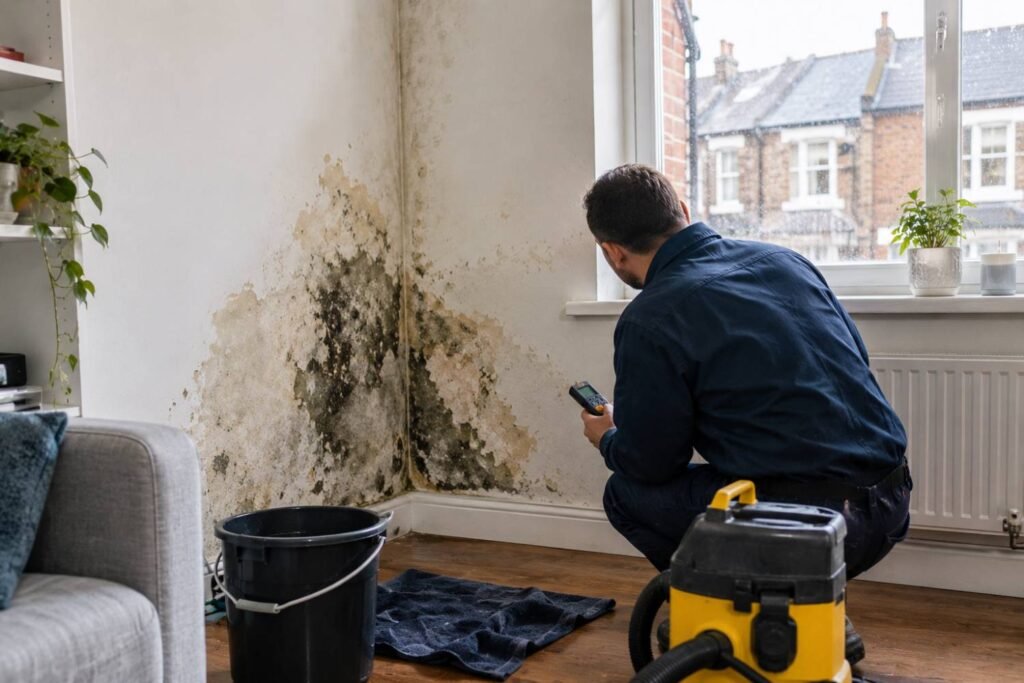
Damp and water damage are common problems in London homes, particularly in older properties, flats and houses with ageing roofs, gutters, plumbing systems or inadequate ventilation. A small damp patch may initially look like a cosmetic issue, but if the underlying cause is ignored, it can lead to mould growth, damaged plaster, peeling paint, unpleasant smells, timber deterioration and more expensive repairs.
The first step in fixing damp is not simply cleaning the visible mark. You need to identify where the moisture is coming from and why it is entering or accumulating inside the property. Government guidance in England distinguishes between several forms of damp, including condensation damp, penetrating damp, rising damp and water damage caused by leaks or flooding.
This guide explains how to identify the most common causes of damp and water damage in London homes, what you can do yourself, when professional repairs are necessary and how to prevent the problem from returning.
What Causes Damp and Water Damage in London Homes?
Damp does not have a single cause. The correct repair depends on the source of the moisture.
Some of the most common causes include:
Condensation from excessive indoor humidity
Leaking pipes and plumbing
Roof leaks
Blocked or damaged gutters
Defective external walls or render
Damaged window frames and seals
Poor bathroom ventilation
Rising damp
Flooding or accidental water leaks
Poor insulation
Defective roofing or rainwater drainage
Cracked seals around baths, showers and sinks
London properties can be particularly vulnerable because many homes are older and may have experienced years of wear and tear. Victorian and Edwardian properties, converted flats and older terraced houses may require careful inspection to determine whether moisture is coming through the building fabric or being generated inside the home.
How to Identify the Type of Damp
Before starting repairs, look carefully at where the damp appears and how it behaves.
Condensation Damp
Condensation is one of the most common causes of damp and mould in homes. It occurs when warm, moisture-rich air comes into contact with colder surfaces such as windows, external walls and poorly ventilated corners.
Typical signs include:
Water droplets on windows
Black mould around window frames
Damp corners
Mould behind wardrobes
Moisture around bathroom ceilings
Musty smells
Peeling wallpaper
Repeated condensation during colder months
Cooking, showering, washing clothes and drying laundry indoors all add moisture to the air. If ventilation is insufficient, that moisture can settle on cold surfaces and eventually contribute to mould growth.
Penetrating Damp
Penetrating damp occurs when water enters the property from outside.
Potential causes include:
Damaged roof tiles
Cracked external render
Defective brickwork
Damaged pointing
Blocked gutters
Leaking downpipes
Defective window seals
Damaged flashing
Penetrating damp often produces a localised damp patch and may become more noticeable after heavy rainfall. Water entering through roofs, walls or defective rainwater systems should be dealt with at the source rather than simply repainting the affected area.
Rising Damp
Rising damp occurs when moisture from the ground travels upwards through parts of a building. It is more commonly associated with older properties and can sometimes be incorrectly diagnosed.
Possible signs include:
Damp patches near the bottom of walls
Peeling or damaged plaster
Flaking paint
Salt deposits on walls
Deteriorating skirting boards
A visible tide mark
Because rising damp can be confused with other forms of moisture damage, professional assessment may be necessary before deciding on a treatment.
Traumatic Damp and Water Leaks
Sometimes the problem is much more direct: water is escaping from a pipe, boiler, radiator, bathroom fitting, washing machine or other plumbing system.
This type of water damage can develop quickly.
For example, a small plumbing leak inside a wall or beneath a floor may remain unnoticed until you see:
A sudden brown or yellow stain
Swollen flooring
Bubbling paint
Damaged plaster
A damp smell
Water collecting around skirting boards
Ceiling stains below a bathroom
The quicker the source is identified, the lower the risk of secondary damage.
Step 1: Find and Stop the Source of the Water
The most important rule when dealing with water damage is simple: stop the source before repairing the visible damage.
If a pipe is leaking, repair the pipe.
If a roof is allowing rainwater inside, repair the roof.
If a gutter is overflowing against an external wall, clear or repair the gutter.
If a shower is allowing water through damaged sealant or grout, repair the affected area.
Painting over a damp patch without fixing the source may only hide the problem temporarily. Government guidance similarly emphasises that removing visible mould without addressing the underlying cause will not prevent damp and mould from returning.
If the leak is serious, turn off the water supply where appropriate and address electrical safety concerns before entering areas affected by significant water penetration.
Step 2: Dry the Affected Area
Once the source has been controlled, the next priority is drying the affected area.
Open windows where practical and improve air circulation. Depending on the severity of the damage, a dehumidifier can help remove moisture from the air.
However, drying should not be considered a substitute for repairing the source.
If water has entered:
Plasterboard
Insulation
Timber
Flooring
Carpets
Ceiling materials
Wall cavities
the affected materials may require further inspection.
Some porous materials can retain moisture long after the visible surface appears dry. If they remain damp, mould can develop and materials can deteriorate.
Step 3: Check for Mould
Mould often appears after prolonged moisture exposure, particularly in poorly ventilated areas.
Common locations include:
Bathroom ceilings
Around windows
Behind furniture
External wall corners
Wardrobes
Areas behind appliances
Under sinks
Around damaged plaster
Small areas on suitable hard surfaces may sometimes be cleaned using an appropriate mould and mildew product. Larger or persistent mould growth should be approached more carefully, particularly where the source of moisture has not been identified.
The UK Government recommends addressing mould promptly while also investigating the cause of the damp rather than treating surface mould as the entire problem.
If mould keeps returning after cleaning, this is an important warning sign. It may indicate that moisture is still entering or accumulating within the property.
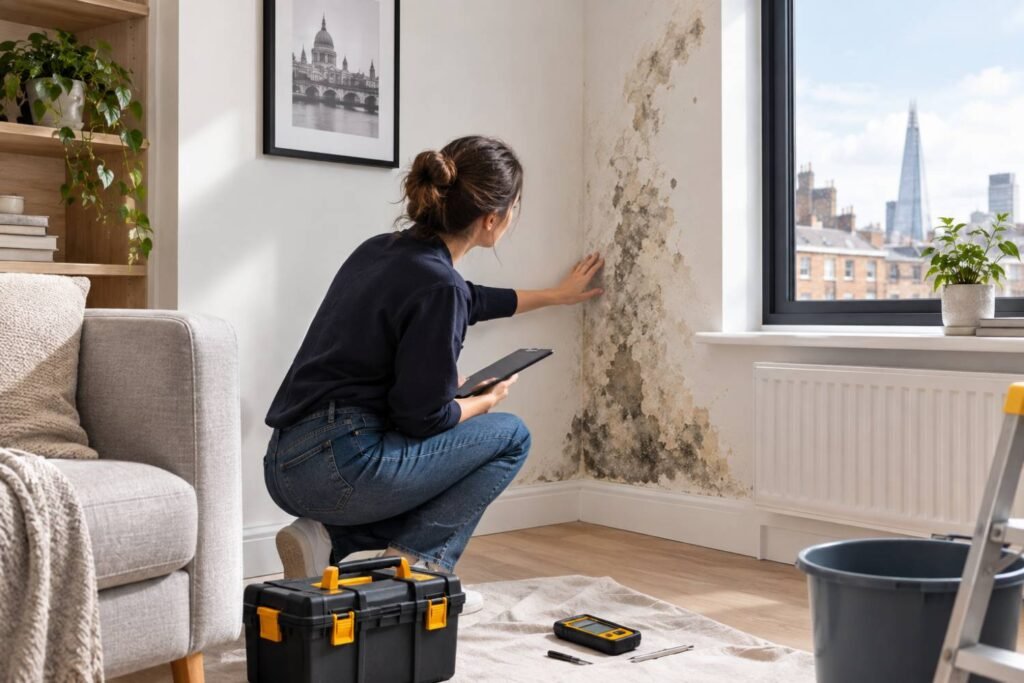
Step 4: Repair Damaged Plaster and Walls
Water can significantly affect plaster and wall finishes.
Depending on the severity of the damage, you may notice:
Crumbling plaster
Bubbling paint
Loose wallpaper
Cracks
Staining
Salt deposits
Soft areas of wall
Do not immediately cover damaged plaster with fresh paint.
The wall should first be properly dried and the moisture source eliminated. Severely damaged sections may need to be removed and replaced before decorating.
This approach provides a more durable solution and reduces the chance of the same defect becoming visible again.
Step 5: Improve Ventilation to Prevent Condensation
Good ventilation is one of the most effective ways to reduce condensation-related damp.
Bathrooms and kitchens are particularly important because they generate significant amounts of moisture.
Consider:
Using bathroom extractor fans
Keeping ventilation systems maintained
Opening windows when appropriate
Using cooker hoods while cooking
Avoiding excessive indoor clothes drying
Leaving space between furniture and external walls
Keeping air circulating around colder areas
The Government’s current guidance specifically highlights ventilation in moisture-producing rooms such as bathrooms and kitchens.
If your bathroom repeatedly develops condensation, mould or peeling paint, the issue may require more than cleaning. Improving ventilation or carrying out suitable bathroom repairs can address the underlying conditions.
For larger renovation requirements, Bathroom Refurbishment in London can also provide an opportunity to improve waterproofing, ventilation, seals, surfaces and the overall condition of the room.
Step 6: Inspect Gutters, Roofs and External Walls
Not every damp problem originates inside the house.
After heavy rainfall, inspect external areas where practical.
Look for:
Overflowing gutters
Blocked downpipes
Damaged roof tiles
Cracked render
Damaged pointing
Water marks around windows
Defective flashing
Standing water close to walls
Blocked gutters are particularly easy to overlook. When rainwater cannot flow correctly, it may overflow against walls and create persistent moisture problems.
Keeping external surfaces clean and rainwater systems maintained can therefore play an important role in preventing water damage.
For properties that require thorough exterior cleaning, professional Jet Wash Cleaning Services in London can help restore heavily soiled external areas and improve the condition and appearance of suitable outdoor surfaces.
Step 7: Check the Loft and Roof Space
The loft is another area that should not be ignored when investigating damp.
Look for:
Water stains on rafters
Damp insulation
Mould growth
Condensation
Damaged roof coverings
Poor ventilation
Leaks around roof penetrations
Wet timber
A loft can also suffer from condensation when warm, humid air enters the roof space and meets colder surfaces.
At the same time, homeowners sometimes use lofts for storage without considering whether the existing flooring is suitable for regular loading.
If additional storage space is required, properly planned Loft Floor Boarding Services in London can help make better use of the loft while allowing the area to be assessed and improved as part of wider home maintenance.
How to Prevent Damp and Water Damage in Winter
London homes can become more vulnerable to condensation during colder months because there is often a greater temperature difference between indoor air and cold surfaces.
A practical prevention routine includes:
Keep Moisture Under Control
Try to reduce unnecessary moisture inside the property.
When showering or cooking, use appropriate extraction and ventilation. Avoid drying large amounts of laundry indoors where possible.
Keep Air Moving
Do not push large wardrobes, sofas or beds tightly against cold external walls. Leaving a small gap allows air to circulate and can reduce moisture accumulation.
Maintain Heating
A consistently maintained heating system can help maintain more stable indoor temperatures. However, heating alone will not solve a ventilation or water-ingress problem.
Inspect Regularly
Check your home periodically for:
Damp patches
Mould
Musty smells
Peeling paint
Water stains
Damaged sealant
Blocked gutters
Roof problems
Plumbing leaks
Early detection can prevent a small repair from becoming a major renovation.
When Should You Call a Professional?
Some damp problems can be managed with straightforward maintenance, but professional assistance is appropriate when the cause is unclear or the damage is extensive.
Consider arranging a professional inspection if:
Damp keeps returning
You cannot identify the source
There is extensive mould
Walls or ceilings are severely damaged
A roof is leaking
There is suspected rising damp
Water has entered electrical areas
Timber appears damaged
A leak has affected flooring or insulation
Several rooms are affected
The property has suffered significant water damage
A proper inspection can help establish whether the problem is related to condensation, plumbing, roofing, external water penetration, rising damp or a combination of causes.
This is particularly important because damp problems can have more than one contributing factor. Official guidance recommends identifying the underlying causes rather than relying solely on surface mould removal.
How Much Does Damp Repair Cost in London?
The cost of repairing damp and water damage varies considerably depending on the cause and extent of the problem.
A small condensation issue may only require improved ventilation, cleaning and minor redecoration. A leaking roof, damaged plumbing system or extensive wall damage can require considerably more work.
The final cost may depend on:
Size of the affected area
Source of the moisture
Accessibility
Type of property
Extent of structural or cosmetic damage
Materials that need replacing
Mould remediation requirements
Plumbing or roofing repairs
Redecoration requirements
For this reason, it is difficult to give an accurate price based only on the appearance of a damp patch.
A professional assessment can provide a clearer understanding of the work required before repairs begin.
Why Ignoring Damp Can Become More Expensive
A small stain on a wall may appear harmless, but continued moisture exposure can gradually affect multiple parts of a property.
Potential consequences include:
Mould growth
Damaged plaster
Peeling paint
Damaged wallpaper
Rotting timber
Damaged flooring
Deteriorated insulation
Persistent musty smells
Increased repair requirements
Damp and mould can also affect indoor air quality and may pose health risks, particularly for vulnerable occupants. Current UK Government guidance states that damp and mould can affect the airways, lungs, eyes and skin and recommends prompt action to address both mould and its underlying cause.
A Practical Damp and Water Damage Checklist
If you discover damp in your London home, work through the following checklist:
Locate the affected area.
Look for the source of moisture.
Check plumbing, bathrooms, roofs and gutters.
Determine whether condensation could be contributing to the issue.
Stop any active leak as soon as possible.
Dry the affected area thoroughly.
Check for mould and damaged materials.
Repair damaged plaster, flooring or other surfaces where necessary.
Improve ventilation in moisture-prone rooms.
Monitor the area after repairs.
If the damp returns, do not simply clean and repaint the area again. Recurring damp usually means the underlying problem has not been properly resolved.
Professional Home Repairs for Damp and Water Damage in London
Damp and water damage should be treated as a property maintenance issue rather than simply a decorating problem. Identifying the source, stopping water penetration, drying affected materials and repairing damaged areas are all important parts of achieving a lasting result.
For homeowners looking for professional property maintenance and repair support across London, Fix in London provides a range of home improvement and maintenance services designed to help keep residential properties safe, functional and well maintained.
Whether the issue involves water damage, damaged surfaces, bathroom problems, exterior maintenance or other household repairs, dealing with the underlying problem early can help prevent more extensive and costly work later.
Final Thoughts
Knowing how to fix damp and water damage in London homes starts with identifying the cause rather than treating only the visible symptoms.
Condensation requires better moisture control and ventilation. Leaks require plumbing repairs. Penetrating damp may require roof, gutter, window or external wall repairs. Rising damp requires appropriate investigation and treatment.
The most important principle is simple: remove the source of moisture before repairing the damage it has caused.
Regular inspections, good ventilation, properly maintained roofs and gutters, and prompt repairs can significantly reduce the risk of recurring damp. If the problem is persistent, widespread or difficult to diagnose, getting professional help is usually the safest way to establish the cause and determine the appropriate repair.
Frequently Asked Questions
1. What is the most common cause of damp in London homes?
Condensation is one of the most common causes of damp and mould. It occurs when moisture in warm indoor air meets colder surfaces. Poor ventilation, inadequate heating and high indoor humidity can make the problem worse.
2. Can I simply paint over a damp patch?
It is not recommended to simply paint over damp damage. The source of moisture should first be identified and repaired, and the affected surface should be allowed to dry properly. Otherwise, staining, peeling paint and mould may return.
3. How can I prevent mould caused by condensation?
Improve ventilation, particularly in bathrooms and kitchens, use extractor fans when generating steam, avoid excessive indoor drying of clothes and allow air to circulate around furniture. These measures can help reduce moisture accumulation and condensation.
4. When should I get professional help for water damage?
Professional assistance is advisable when the source of the leak cannot be identified, damp keeps returning, extensive mould is present, walls or ceilings are significantly damaged, or water has affected flooring, insulation, timber or electrical areas.