
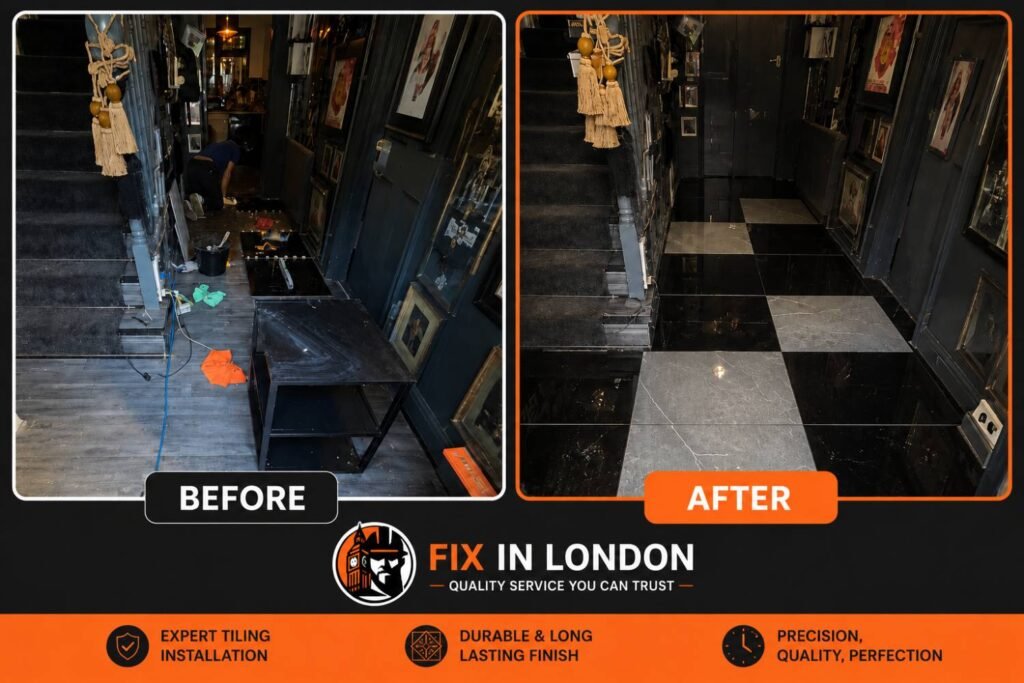
Finding reliable floor tiling in London can be challenging, especially when you want a finish that looks exceptional, lasts for years, and adds value to your property. Whether you’re renovating a Victorian home, modernising a flat, upgrading a bathroom, or fitting out a commercial space, professional tiling plays a major role in the appearance and durability of your floors.
Many London homeowners encounter common flooring problems such as cracked tiles, uneven surfaces, loose grout, water damage, and poor-quality installations carried out by inexperienced tradespeople. These issues can quickly turn an exciting renovation project into an expensive repair job.
At Fix in London, we provide professional floor tiling solutions designed to deliver long-lasting results. Our experienced tilers work with all tile types and property styles across Greater London, helping homeowners and businesses achieve beautiful, practical, and durable floors.
This guide explains everything you need to know about floor tiling, including common problems, DIY advice, installation considerations, and when it’s best to hire a professional tiler.
Why Professional Floor Tiling Matters
Floor tiles are one of the most durable flooring options available. However, even premium tiles can fail if they’re installed incorrectly.
Professional tiling ensures:
- Perfect alignment and spacing
- Proper floor preparation
- Long-lasting adhesion
- Water resistance
- Improved property value
- Easier maintenance
- Enhanced visual appeal
A professionally tiled floor not only looks better but also performs better under daily wear and tear.
Common Floor Tiling Problems in London Properties
London properties vary greatly in age and construction. From period houses to new-build apartments, each presents unique challenges for tilers.
- Uneven Subfloors
One of the most common issues encountered during tiling in London is an uneven subfloor.
This can be caused by:
- Settlement of older properties
- Poor previous installations
- Water damage
- Structural movement
An uneven surface often leads to:
- Lippage (uneven tile edges)
- Cracking
- Adhesive failure
- Premature wear
Professional floor levelling is often required before tiles can be installed correctly.
- Cracked Floor Tiles
Cracked tiles are usually a symptom rather than the root problem.
Common causes include:
- Improper substrate preparation
- Heavy impacts
- Structural movement
- Incorrect adhesive use
- Expansion and contraction
Replacing cracked tiles without addressing the underlying issue often results in repeated failures.
- Loose Tiles
Tiles that sound hollow or move underfoot may indicate adhesive failure.
Potential causes include:
- Inadequate adhesive coverage
- Moisture penetration
- Poor installation practices
- Subfloor movement
Loose tiles should be inspected promptly before larger areas become affected.
- Grout Deterioration
Over time, grout can become:
- Cracked
- Discoloured
- Loose
- Mouldy
This issue is especially common in kitchens, bathrooms, and entrances exposed to moisture and foot traffic.
- Water Damage
Water ingress is a significant concern in both floor tiling and bathroom tiling London projects.
Signs include:
- Lifting tiles
- Damp patches
- Mould growth
- Grout staining
- Soft flooring beneath tiles
Professional waterproofing and proper sealing are essential for wet areas.
Types of Floor Tiles We Install
At Fix in London, we work with a wide range of tile materials to suit every property style and budget.
Porcelain Tiles
Porcelain remains one of the most popular choices because it offers:
- High durability
- Low maintenance
- Water resistance
- Modern appearance
Ideal for:
- Kitchens
- Hallways
- Bathrooms
- Commercial spaces
Ceramic Tiles
Ceramic tiles are cost-effective and available in countless styles.
Benefits include:
- Affordable pricing
- Easy cleaning
- Large design selection
- Good durability
Suitable for most residential applications.
Natural Stone Tiles
Natural stone creates a premium finish and timeless appearance.
Popular options include:
- Marble
- Limestone
- Travertine
- Slate
- Granite
Natural stone requires specialist installation and sealing.
Wood Effect Tiles
Wood-look porcelain combines the warmth of timber with the practicality of tile flooring.
Advantages include:
- Moisture resistance
- Scratch resistance
- Low maintenance
- Authentic appearance
A popular choice for modern London homes.
Areas of the Home That Benefit from Floor Tiling
Kitchen Floor Tiling
Kitchens experience constant foot traffic, spills, and temperature changes.
Tiled floors offer:
- Easy cleaning
- Water resistance
- Durability
- Modern styling
Porcelain tiles are particularly popular for kitchen renovations.
Bathroom Floor Tiling
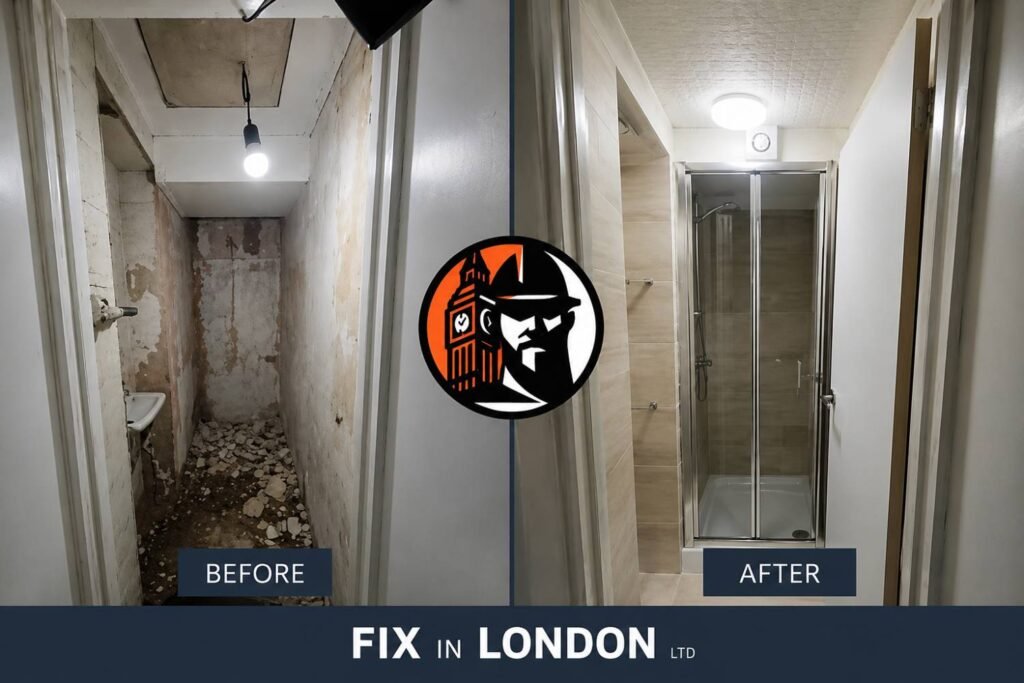
Professional bathroom tiling London services are essential for creating waterproof and visually appealing spaces.
Bathroom floor tiles provide:
- Slip resistance
- Moisture protection
- Hygiene
- Easy maintenance
Proper waterproofing beneath the tiles is critical.
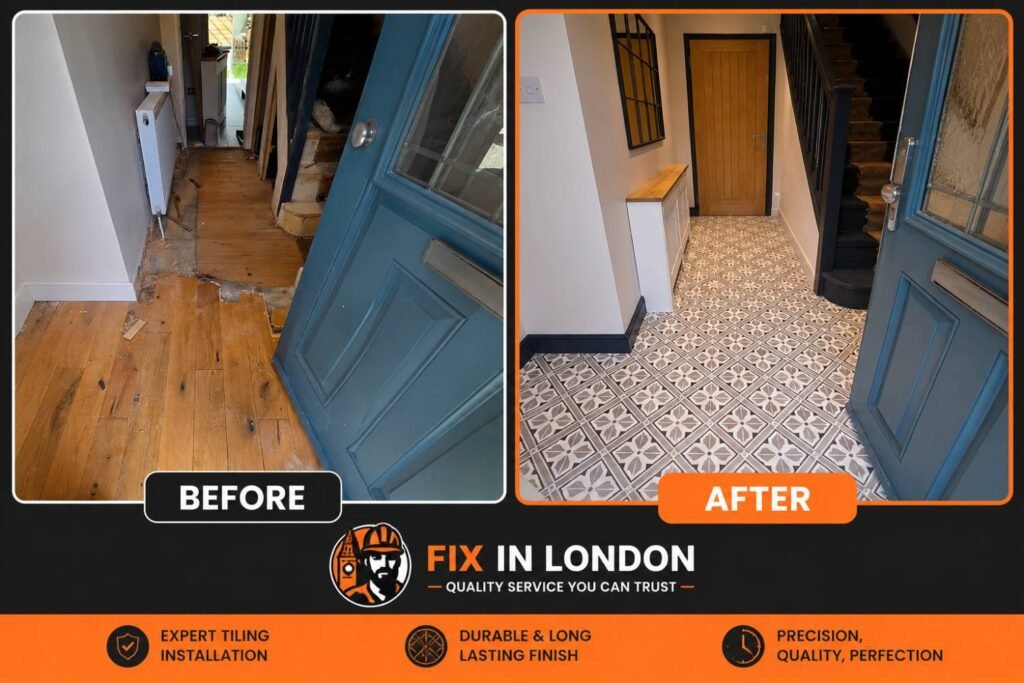
Hallways and Entrances
These areas receive the highest foot traffic in many homes.
Durable floor tiles help:
- Reduce wear
- Improve cleanliness
- Enhance first impressions
- Protect against muddy footwear
Living Areas
Modern open-plan homes increasingly use large-format floor tiles to create seamless living spaces.
Benefits include:
- Contemporary appearance
- Easy maintenance
- Compatibility with underfloor heating
The Professional Floor Tiling Process
A quality installation follows several important stages.
Step 1: Initial Assessment
Professional tilers inspect:
- Existing flooring
- Floor levels
- Moisture issues
- Structural conditions
This helps identify potential problems before work begins.
Step 2: Surface Preparation
Proper preparation is often the most important stage.
Tasks may include:
- Removing old flooring
- Levelling uneven surfaces
- Applying primer
- Installing backer boards
- Waterproofing wet areas
Step 3: Tile Layout Planning
Careful planning ensures:
- Balanced tile cuts
- Symmetrical appearance
- Professional finish
Experienced tilers calculate layouts before installation begins.
Step 4: Tile Installation
Tiles are installed using professional-grade adhesives suitable for:
- Tile type
- Floor material
- Room conditions
Accurate spacing and alignment are maintained throughout.
Step 5: Grouting and Finishing
After curing, grout is applied and cleaned.
The final stage may include:
- Silicone sealing
- Stone sealing
- Edge finishing
- Quality inspection
DIY Floor Tiling Tips
Some homeowners attempt smaller tiling projects themselves.
Before starting, consider these practical tips.
Measure Carefully
Always order extra tiles.
A common recommendation is:
- 10% extra for standard layouts
- 15% extra for complex patterns
Prepare the Surface Properly
Never tile directly onto damaged or uneven floors.
Ensure the surface is:
- Clean
- Dry
- Level
- Stable
Use Quality Materials
Cheap adhesives and grout often lead to future problems.
Invest in professional-grade products for better results.
Plan the Layout First
Dry-lay tiles before applying adhesive.
This helps identify:
- Awkward cuts
- Alignment issues
- Pattern adjustments
Work Slowly
Rushing a tiling project usually leads to visible mistakes.
Take time to:
- Check levels
- Maintain spacing
- Clean excess adhesive
When Should You Call a Professional Tiler?
While DIY tiling may work for small projects, many situations require professional expertise.
Consider hiring specialists if:
The Area Is Large
Large floor areas require:
- Precise levelling
- Accurate layout planning
- Consistent installation
Mistakes become far more noticeable over bigger spaces.
The Floor Is Uneven
Subfloor correction often requires specialist equipment and experience.
Attempting DIY repairs can worsen existing problems.
Natural Stone Is Being Installed
Stone tiles require:
- Special cutting tools
- Proper sealing
- Expert handling
Installation mistakes can be extremely costly.
Bathrooms and Wet Rooms Are Involved
Waterproofing failures can cause severe property damage.
Professional bathroom tiling London services help ensure compliance with best practices and long-term protection.
Existing Tiles Are Failing
If tiles are cracking, lifting, or becoming loose, underlying structural or moisture issues may exist.
A professional inspection can identify the root cause.
Why Choose Fix in London?
When searching for trusted london tiling specialists, experience and attention to detail matter.
Fix in London offers:
Skilled Tiling Experts
Our team has extensive experience working across London properties of all ages and styles.
High-Quality Workmanship
We focus on precision, durability, and flawless finishes.
Comprehensive Service
We handle:
- Floor tiling
- Bathroom tiling
- Kitchen tiling
- Tile repairs
- Re-grouting
- Surface preparation
Transparent Pricing
Clients receive clear quotations with no hidden surprises.
Reliable Project Delivery
We aim to complete projects efficiently while maintaining the highest standards.
How Much Does Floor Tiling Cost in London?
Several factors affect pricing.
These include:
- Tile material
- Floor condition
- Room size
- Complexity of layout
- Preparation requirements
- Accessibility
Premium materials and intricate patterns generally increase installation costs.
Obtaining a professional survey is the most accurate way to receive a tailored quotation.
Maintaining Your Newly Tiled Floor
Proper maintenance helps maximise lifespan.
Recommended practices include:
- Sweeping regularly
- Cleaning spills promptly
- Using suitable cleaning products
- Avoiding harsh chemicals
- Inspecting grout periodically
- Resealing natural stone when required
Simple maintenance can keep tiled floors looking excellent for many years.
Conclusion
Professional floor tiling in London can transform any property, improving both appearance and functionality. Whether you’re upgrading a kitchen, renovating a bathroom, modernising a hallway, or fitting out a commercial space, quality workmanship is essential for achieving lasting results.
While small DIY projects may be manageable, many tiling jobs require professional expertise to avoid costly mistakes, uneven finishes, and future repairs.
At Fix in London, we provide expert tiling solutions tailored to London homes and businesses. From preparation and installation to repairs and maintenance, our experienced team delivers high-quality results you can rely on.
If you’re planning a tiling project and want a durable, professional finish, contact Fix in London today for a free consultation and quotation.
Frequently Asked Questions (FAQs)
What is the average cost of floor tiling in London?
The cost varies depending on tile type, room size, floor condition, and installation complexity. A professional survey provides the most accurate estimate.
How long does floor tiling take?
Most residential projects take between one and several days, depending on the size of the area and preparation work required.
Are porcelain tiles better than ceramic tiles for floors?
Porcelain tiles are generally more durable and water-resistant, making them a popular choice for high-traffic areas and bathrooms.
Can you tile over existing floor tiles?
In some cases, yes. However, the existing tiles must be stable, level, and in good condition. A professional assessment is recommended before proceeding.
Read more: Tiling Work in Barnet