
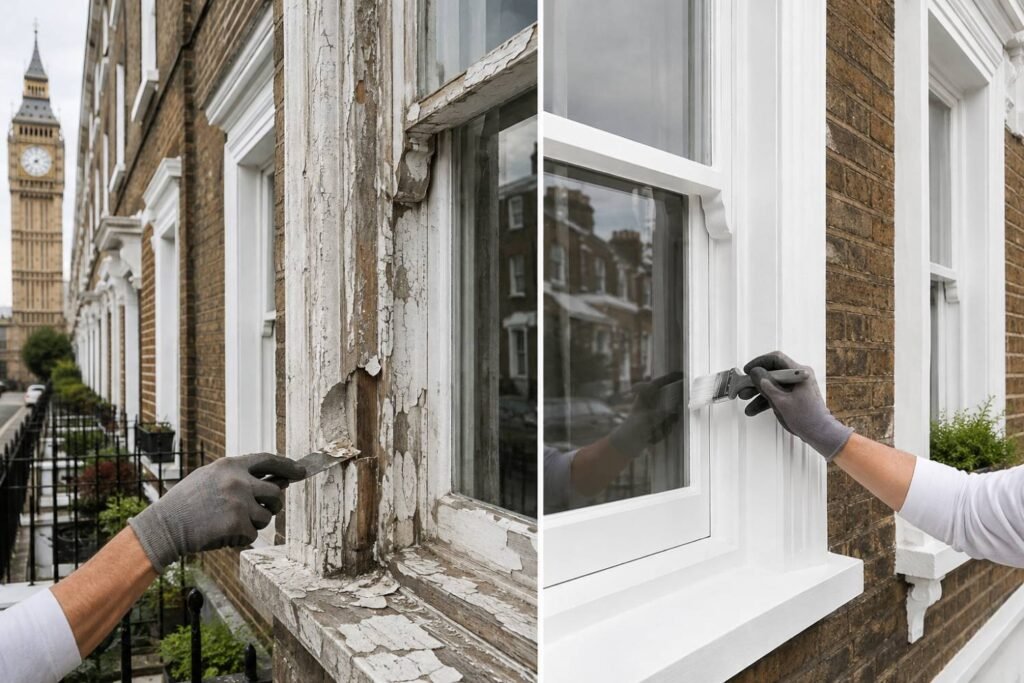
If you own or rent a property in London, you’ve probably met the problem already. Paint is flaking off a sash window. A frame feels soft when you press a screwdriver into it. There’s a cold draught around a casement, condensation between the panes, or a dark stain creeping across the inside sill after heavy rain.
London’s weather doesn’t help. Frequent rain, damp winters, pollution and sudden temperature swings all put timber, uPVC and aluminium frames under constant strain. Many of the capital’s homes, from Victorian terraces in Brixton to Edwardian flats in Hackney, still have their original timber windows, and these need regular care to last.
The good news is that most frame problems are fixable if you catch them early. This guide explains what causes frames to fail, what you can check yourself, what window frame repairs, resealing and exterior painting in London typically cost, and when it’s time to bring in a professional.
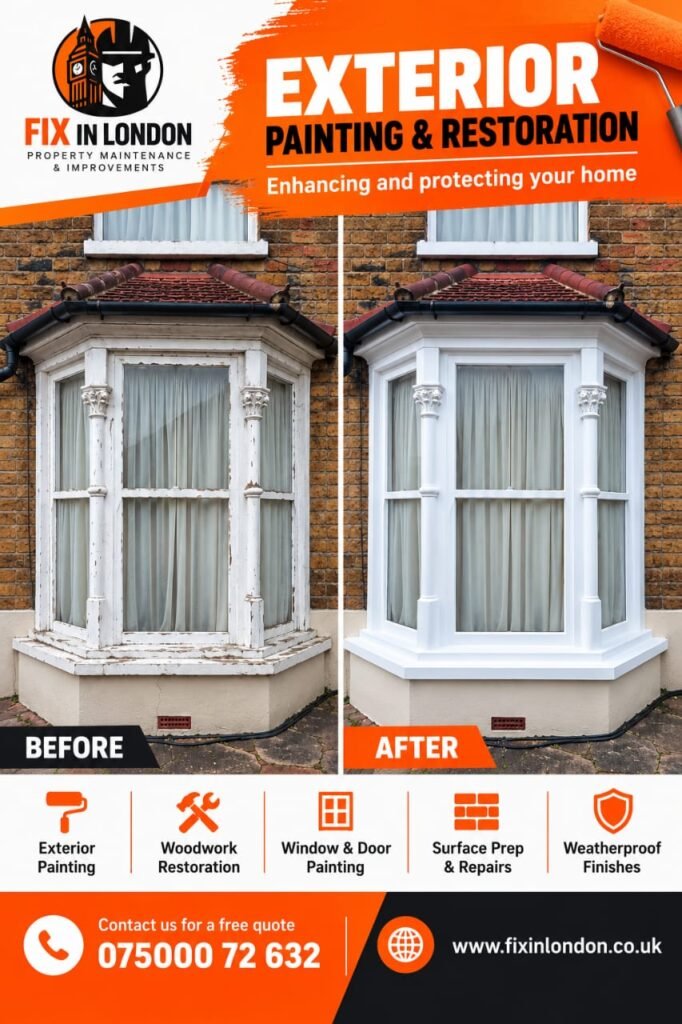
Why Window Frames Fail in London
Understanding the cause is half of the cure. These are the most common culprits.
- Worn or cracked exterior paint. Paint is the frame’s waterproof skin. Once it blisters or peels, moisture gets into the timber.
- Failed sealant or mastic. Gaps between the frame and the brickwork let rainwater in. Sealant typically needs renewing every 10 to 15 years.
- Wet rot. Timber that stays damp breaks down, usually starting at the bottom rail, sill and joints.
- Dry rot. Less common but more serious. It can spread through masonry and needs specialist treatment.
- Blocked drip grooves and weep holes. These small channels carry water away. When clogged with paint or grime, water pools on the sill.
- Poor previous repairs. Thick filler, wrong paint types or sealed-over problems often fail within a couple of years.
- Movement and settlement. Older London buildings shift, which can crack joints and sealant lines.
- Failed glazing putty or beads. Dried, cracked putty lets moisture behind the glass.
- Faulty hardware. Broken hinges, stays and sash cords can leave windows loose, so they stop seating properly.
Signs Your Window Frames Need Attention
Check your windows at least once a year, ideally in spring or early autumn. Look out for:
- Peeling, bubbling or cracked paint
- Dark or grey patches on bare timber
- Soft, spongy or crumbling wood
- Visible gaps between the frame and wall
- Draughts or whistling around closed windows
- Condensation or misting inside double glazing
- Windows that stick, rattle or won’t close fully
- Mould or damp marks on the interior reveal and plaster
- Black or cracked sealant lines
Quick DIY Checks You Can Do Today
You don’t need specialist knowledge to spot trouble. These checks take about ten minutes per window.
The Screwdriver Test
Press the tip of a flat screwdriver firmly into the bottom rail, sill and corner joints. Sound timber resists. If the tip sinks in easily or the wood crumbles, you’ve found rot.
The Water Check
On a dry day, gently run a little water from a watering can or hose over the top of the frame, with someone watching from inside. Any trickle at the corners or reveal means failed sealant or a leaking joint.
The Draught Test
Hold a lit candle or incense stick near the frame edges on a windy day, or use a smoke pen. Flickering smoke shows where air is getting in.
The Paint Inspection
Look closely at the lower third of each frame, where water collects. Hairline cracks in the paint film often appear weeks before bare wood is exposed.
The Drip Groove Check
Run a screwdriver along the underside of the sill. If the groove is full of paint or dirt, clear it so rainwater can drip clear of the wall.
DIY Fixes for Minor Window Frame Problems
Small jobs are very manageable if you have a dry week and a bit of patience.
Resealing a Window Frame (Gaps Around the Edges)
- Remove old, cracked sealant with a sealant removal tool or Stanley knife.
- Clean the area with a stiff brush and wipe with a damp cloth. Let it dry fully.
- Apply masking tape either side of the joint for a neat edge.
- Use a quality exterior-grade sealant, such as Everbuild Weather Mate, Sikaflex or a paintable decorators’ acrylic for painted timber joints.
- Gun it in one continuous line, then smooth with a wet finger or sealant tool.
- Remove the tape straight away and let it cure as the manufacturer advises.
Read more: Painting & Decorating in London
Repairing Minor Timber Damage
For small areas of damage, such as hairline cracks or surface decay, a two-part wood repair system works well. Dry out the area, remove loose material, treat with a wood hardener such as Ronseal High Performance Wood Hardener, fill with a two-part filler like Ronseal High Performance Wood Filler or Repair Care, then sand smooth.
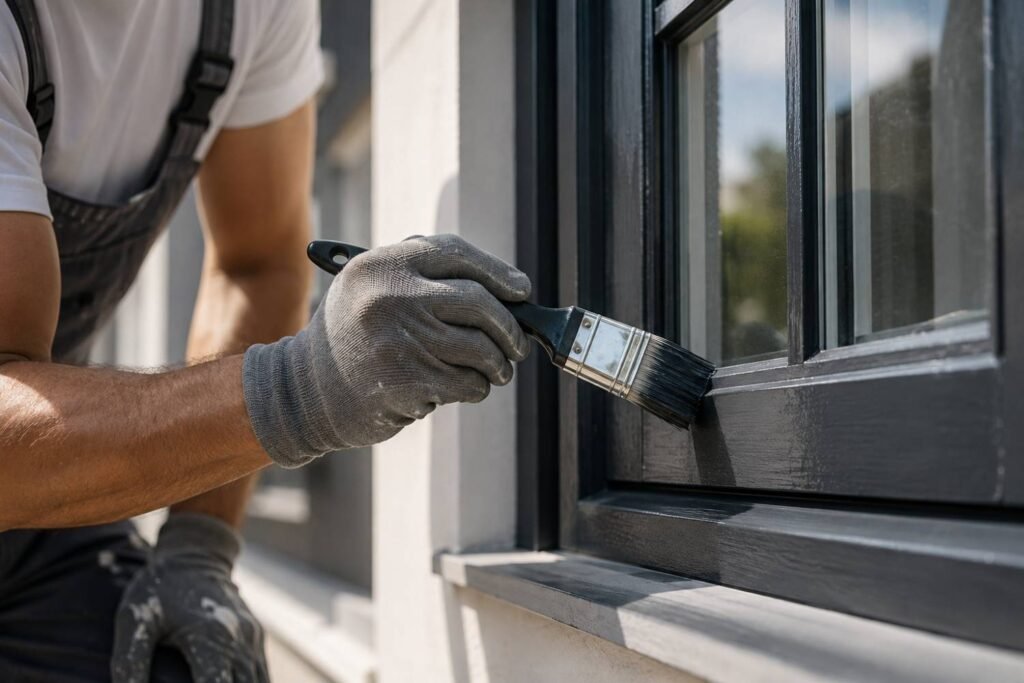
Repainting a Window Frame
Good preparation determines how long the finish lasts.
- Wash the frame with sugar soap or a mild detergent.
- Scrape off loose paint and sand back to a firm edge.
- Treat bare timber with a primer designed for exterior wood.
- Fill small holes and sand flush.
- Apply an undercoat if needed.
- Apply two thin topcoats with a quality exterior paint, such as Sadolin Superdec, Dulux Weathershield or Sikkens Rubbol.
- Paint slightly onto the glass (1 to 2mm) to seal the edge against water.
- Check weather forecasts. Paint when it’s dry, mild and not too windy.
What Not to Do
- Don’t paint over damp or rotten wood
- Don’t use cheap interior paint outside
- Don’t fill rot with ordinary filler and hope for the best
- Don’t use silicone around areas you intend to paint, because paint doesn’t stick to it
- Don’t block drainage slots or weep holes in uPVC and aluminium frames
Which Frame Type Do You Have? Care by Material
| Frame type | Common issues | Best repair or care approach |
|---|---|---|
| Timber (sash and casement) | Rot, peeling paint, failed putty | Repair or splice sections, repaint every 5 to 8 years |
| uPVC | Failed seals, discolouration, sticking hinges | Clean, replace seals and hardware, reseal externally |
| Aluminium | Corrosion, failed seals, scratches | Clean, treat corrosion, reseal and use specialist paint if needed |
| Composite | Rare problems, mostly sealant | Inspect annually, reseal joints as required |
When to Call a Professional
DIY is fine for minor maintenance. Call in a professional when:
- Rot is more than surface-deep. Structural rot needs cutting out and replacing, which requires joinery skills.
- You suspect dry rot. It’s rare but serious, and it can spread. Get an expert opinion.
- Windows are above ground-floor level. Working at height without scaffolding or a proper tower is a real safety risk.
- Sash windows are painted shut or sagging. Freeing them and restoring cords and weights takes experience.
- Condensation is trapped between panes. The sealed unit has failed and usually needs replacing.
- Water is entering the property. Damp reveals, stained plaster or mould suggest a deeper problem that must be fixed before redecoration.
- Your property is listed or in a conservation area. Many London boroughs, including Camden, Kensington and Chelsea, and Islington, restrict changes to windows. Always check before altering the appearance or materials.
- Previous repairs have failed. If paint keeps peeling, the underlying cause hasn’t been solved.
- You live in a leasehold flat. External windows are often the freeholder’s responsibility, so check your lease first.
Read more: Exterior House Painting in London
What Professional Window Frame Repair, Resealing and Painting Involves
A proper job isn’t just a coat of paint. A reliable contractor will typically:
- Inspect every frame, sill and joint, noting areas of rot, failed sealant and hardware faults
- Remove loose paint and prepare surfaces thoroughly
- Cut out and replace rotten timber with matching sections, or use a repair system for smaller areas
- Replace defective putty, beads or seals
- Re-seal around the frame with a flexible, exterior-grade sealant
- Prime, undercoat and paint in appropriate weather
- Ease and adjust windows so they open and close smoothly
- Leave the site tidy and explain how to maintain the finish
How Much Does It Cost in London?
Prices depend on the property, the number of windows, access and the extent of the damage. These are typical guide prices for London. A written quote after a survey is always the most reliable.
| Job | Typical cost (London) |
|---|---|
| Resealing one window (external) | £40 – £90 |
| Repainting one window frame (external) | £90 – £220 |
| Minor timber repair per window | £80 – £250 |
| Replacing a rotten sill or section | £180 – £450 |
| Sash window repair and overhaul | £250 – £600 |
| Full house exterior window painting (average terrace) | £600 – £1,800 |
| Scaffold or access tower (if required) | £300 – £900+ |
What Affects the Cost?
- Number and size of windows
- Height and access (scaffolding costs add up on three-storey properties)
- Extent of rot or previous poor repairs
- Material and paint system chosen
- Whether the job is combined with other external work, such as gutters or fascias, which can reduce overall cost
How Often Should You Repaint and Reseal?
- Exterior paint on timber frames: every 5 to 8 years, sooner on south-facing or exposed elevations
- Sealant around frames: inspect annually and renew about every 10 to 15 years
- Putty and glazing beads: check every couple of years
- uPVC and aluminium frames: clean annually and check seals every few years
Repairs completed early are far cheaper than waiting. A 20-minute spot repair now can prevent a £400 sill replacement later.
Why Choose Fix in London
Fix in London is a trusted London home maintenance and handyman service, covering repairs, exterior painting and general property upkeep for homeowners, landlords and property managers. When you book window frame work with us, you get:
- A thorough assessment of every frame before any quote
- Clear, itemised pricing without surprise extras
- Proper preparation, which is what makes exterior paint last
- Tidy, considerate working practices
- Honest advice on whether a repair is enough or replacement makes more sense
- Flexible booking across London, seven days a week
We handle everything from a single stubborn sash window to full exterior frame refreshes across entire properties.
Frequently Asked Questions
How much does it cost to repaint window frames in London?
Expect roughly £90 to £220 per window for professional external painting, depending on size, access and condition. Whole-house packages for an average terraced home typically range from £600 to £1,800, excluding scaffolding if needed.
Can rotten window frames be repaired, or do they need replacing?
In most cases, partial rot can be repaired. A joiner cuts out the damaged section and splices in new timber, or uses a resin repair system. Replacement is only needed when the rot is widespread or the frame is structurally unsound.
How often should window frames be resealed and repainted?
Timber frames typically need repainting every 5 to 8 years, and sealant should be checked yearly and replaced every 10 to 15 years, or sooner if it cracks, shrinks or peels away.
What is the best time of year for exterior window painting in London?
Late spring to early autumn is ideal, when it’s dry, mild and humidity is lower. Avoid painting in rain, frost or when temperatures drop below about 8°C overnight, as the paint won’t cure properly.
Conclusion: Protect Your Windows Before Small Problems Grow
Healthy window frames keep your home warm, dry and good-looking, and they protect one of your biggest investments. By spotting early signs of wear, carrying out sensible DIY maintenance, and calling in experts for rot, height work or complex timber repairs, you can avoid expensive replacements and keep your property looking its best.
If you’d like reliable window frame repairs, resealing and exterior painting in London, Fix in London is ready to help. Contact us today for a free, no-obligation quote. Tell us about your windows, and we’ll recommend the most cost-effective way to protect them.