
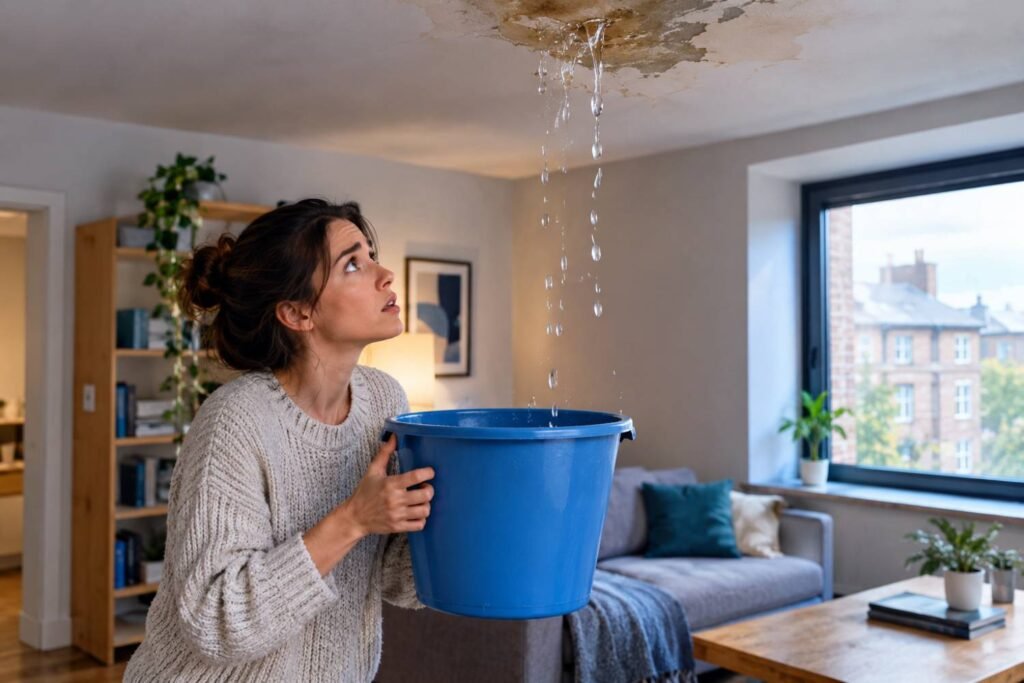
If you have suddenly noticed water coming into your flat, the first question is usually simple: why is this happening? Unfortunately, finding the answer is not always straightforward.
Water can appear around a window, ceiling, wall, bathroom, kitchen or even through the floor, but the visible water is not necessarily coming from the point where the problem started. A small damp patch on a ceiling, for example, could be caused by a leaking pipe in the flat above, a bathroom leak, a damaged roof or rainwater entering through an external wall.
This can be particularly frustrating in London properties. Older buildings, converted flats, ageing plumbing systems, flat roofs, shared drainage, neighbouring properties and weather-exposed brickwork can all create different routes for water to enter a home.
The important thing is to identify the source as quickly as possible. Ignoring a water leak can lead to damaged plaster, stained ceilings, mould growth, deteriorating flooring and, in serious cases, damage to electrical systems.
In this guide, we explain why water may be coming into your flat, what you can safely check yourself and when it is time to call a professional.
Why Is Water Coming Into My Flat?
Water can enter a London flat for several different reasons. The most common include:
A leaking water or heating pipe
A plumbing leak from the flat above
A damaged roof or roof flashing
Blocked or damaged gutters and downpipes
Failed window seals
Water penetrating through external walls
Leaking bathrooms or showers
Faulty appliances or washing-machine connections
Blocked drains
Problems with communal plumbing or drainage
Condensation that has been mistaken for a leak
The first step is determining whether the water is coming from inside the property, another property, or outside the building.
Read more: Damp and Mould Specialist London
Common Signs of a Water Leak in a London Flat
Water does not always appear as an obvious stream or puddle.
You may instead notice subtle warning signs such as:
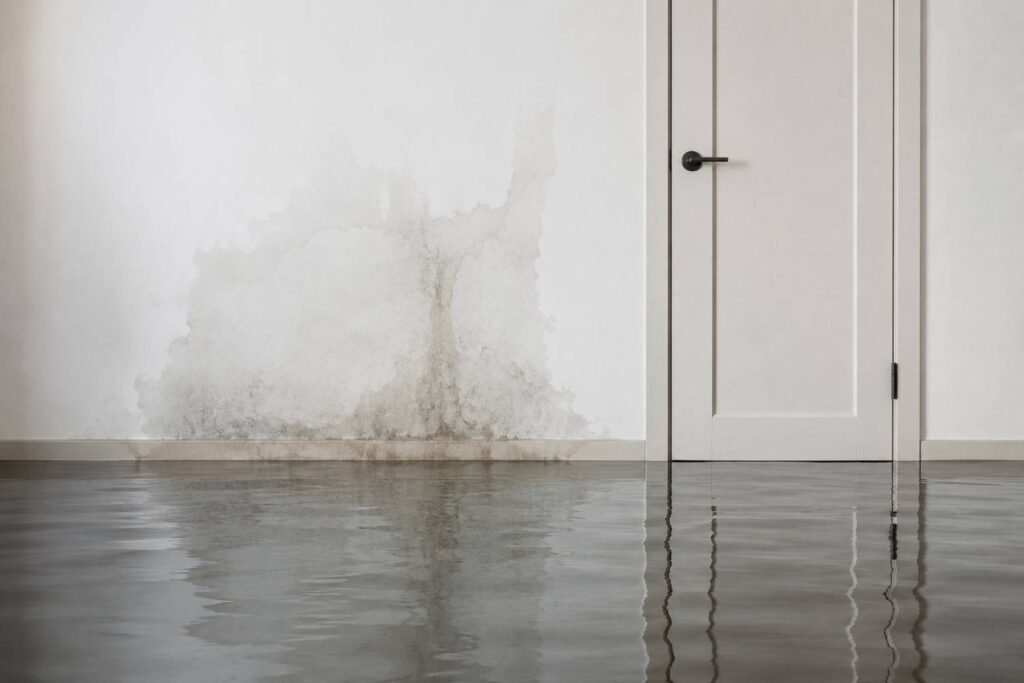
Brown or yellow ceiling stains
Bubbling or peeling paint
Damp patches on walls
A musty smell
Mould around corners or ceilings
Swollen skirting boards
Warped laminate or wooden flooring
Dripping sounds behind walls
Damp around windows
Water appearing after heavy rain
A sudden increase in water usage
Low water pressure
Cracking or discolouration around plaster
A leak can also be intermittent. For example, water may only appear when someone in the flat above takes a shower or when heavy rainfall reaches a particular section of the building.
1. A Leak From the Flat Above
For residents of London flats, a leak from the property above is one of the first possibilities to investigate.
Water can travel through floors and ceilings before becoming visible. The original leak might be underneath a bath, around a shower, beside a toilet or from a damaged pipe.
The location of the stain can therefore be misleading.
For example, water appearing above your living-room ceiling could potentially originate from plumbing in the upstairs bathroom.
If you suspect the flat above is responsible, speak to the occupier or property manager as soon as possible. Ask whether they have noticed:
A leaking tap
A leaking toilet
Problems with their shower
Water around their bath
A washing-machine leak
A plumbing problem
If water is actively entering your flat, do not wait for the damage to become more extensive before reporting it.
2. Leaking Pipes
A hidden plumbing leak can allow water to enter walls, ceilings and floors without producing an obvious visible leak.
Pipework can leak because of:
Age and deterioration
Damaged joints
Corrosion
Loose connections
Accidental damage
Excessive pressure
Frozen and subsequently damaged pipes
Older London buildings can contain plumbing systems that have been modified or replaced at different times, making the layout more complicated than it appears.
A plumber may need to trace the source rather than simply repair the area where the water is visible.
3. Roof Leaks
If water appears on an upper floor or beneath a roof, rainwater penetration should be considered.
Roof-related leaks can occur because of:
Damaged tiles or slates
Deteriorated roofing materials
Damaged flashing
Failed roof membranes
Blocked roof drainage
Damaged chimney flashing
Poorly sealed roof penetrations
A useful clue is timing.
If the water appears or becomes significantly worse after heavy rainfall, an external source such as the roof, guttering, flashing or masonry may be involved.
However, you should not climb onto a roof to investigate the problem yourself. Roof inspections can be hazardous, particularly during wet or windy weather.
4. Blocked or Damaged Gutters
Gutters are designed to move rainwater away from the building.
When gutters become blocked with leaves, moss, dirt or other debris, rainwater may overflow against walls or windows.
Over time, this can contribute to dampness and water penetration.
Look from ground level for obvious signs such as:
Water overflowing from the gutter
Vegetation growing in the gutter
A leaking gutter joint
A damaged or sagging section
Water running down an external wall
Do not attempt to access high gutters from an unsafe ladder position. A professional can inspect difficult-to-reach areas more safely.
5. Damaged or Poorly Sealed Windows
Water coming into a flat around a window does not necessarily mean the window itself is leaking.
Possible causes include:
Failed sealant
Damaged window frames
Cracked surrounding masonry
Defective flashing
Gaps around the window opening
Blocked drainage channels
Water penetrating the external wall above the window
If dampness appears around a window mainly during heavy rain, an external inspection may be necessary.
Simply applying new sealant to the inside may hide the symptom without fixing the underlying source.
6. Water Penetrating Through External Walls
London’s brick-built properties can be particularly exposed to rain and wind.
Masonry can allow water to enter when there are defects such as:
Cracked mortar joints
Damaged brickwork
Failed pointing
Cracks around windows
Defective render
Poorly sealed penetrations
Damaged external finishes
This type of problem can be difficult to diagnose from inside the flat.
A damp patch may appear several feet away from the actual point where rainwater entered the building because water can travel through masonry and other building materials.
7. Bathroom and Shower Leaks
Bathrooms are another common source of water problems.
A shower can leak through failed seals, damaged grout or problems around the shower tray or bath.
Potential warning signs include:
Dampness on the ceiling below a bathroom
Mould around shower joints
Loose or cracked tiles
Water escaping around the bath
Soft flooring near a shower
Persistent damp smells
Grout itself is not a substitute for proper waterproofing. If water is repeatedly escaping from a shower area, replacing visible grout may not solve the underlying problem.
8. Washing Machine and Dishwasher Leaks
Appliances can introduce significant amounts of water into a property very quickly.
A washing machine or dishwasher may leak because of:
Loose hose connections
Damaged inlet hoses
Failed waste connections
Blocked filters
Damaged seals
Movement or vibration
Incorrect installation
If water appears near a kitchen appliance, check the visible connections without dismantling the appliance.
If there is active water leakage, turn off the appliance and, where safe, isolate its water supply.
9. Blocked Drains and Overflowing Waste Pipes
A blocked waste pipe can cause water to back up and escape through sinks, baths, showers or other fixtures.
Common signs include:
Slow-draining sinks
Water pooling in the shower
Gurgling sounds
Unpleasant smells
Water backing up when another fixture is used
If several fixtures are draining slowly at the same time, the problem may be further down the drainage system rather than at an individual plughole.
10. Condensation vs a Genuine Water Leak
Not every damp patch is caused by water entering the property.
Condensation occurs when warm, moisture-laden indoor air comes into contact with a colder surface.
It is particularly common around:
Windows
External walls
Cold corners
Behind furniture
Poorly ventilated rooms
Condensation often produces black mould or moisture around windows, particularly during colder months.
A plumbing or building leak is more likely to produce a localised damp patch, staining or water marks, although the distinction is not always obvious.
If you cannot determine the cause, professional inspection can help prevent you from treating the wrong problem.
Read more: Plumping Services in London
What Should You Do If Water Is Coming Into Your Flat?
If you discover active water ingress, act promptly.
1. Identify the immediate source
Check whether the water appears to be coming from:
A ceiling
A wall
A window
A bathroom
A kitchen
An appliance
A pipe or radiator
Do not assume the visible location is the actual source.
2. Protect your belongings
Move furniture, electronics and other valuables away from the affected area.
If water is dripping from a ceiling, place a suitable container underneath it where safe.
3. Turn off the water if appropriate
If you believe the leak is coming from your own plumbing and you know where your internal stopcock is, shutting off the water supply may help limit damage.
If you are unsure which valve controls the supply, do not force unfamiliar fittings.
4. Be careful around electricity
This is particularly important.
If water is near:
Sockets
Light fittings
Electrical appliances
Extension leads
Consumer units
avoid touching electrical equipment while standing in wet areas.
If it is safe to do so, switch off the relevant electrical supply. If there is any doubt, contact a qualified electrician or emergency professional.
5. Photograph the damage
Take photographs and videos showing:
The affected area
Water staining
Visible leaks
Damaged furniture
Flooring
Ceiling damage
This can be useful when dealing with landlords, managing agents, insurers or contractors.
DIY Checks You Can Safely Try
Some basic checks can help narrow down the cause.
Check your stopcock
Knowing where your internal stopcock is can be useful during a plumbing emergency.
It is commonly located near where the mains water supply enters the property, although the exact position varies.
Check visible pipe connections
Look underneath sinks and around visible plumbing connections for signs of moisture.
Do not dismantle pipework unless you know what you are doing.
Check the bathroom
Look for water around:
The toilet
Bath
Shower
Basin
Visible pipe connections
Pay attention to whether the problem occurs only when a particular fixture is being used.
Read more: Bathroom Renovations in London
Check after rainfall
If the problem only occurs during or shortly after heavy rain, record when it happens.
This information can help a professional determine whether the source may be related to the roof, windows, gutters or external walls.
When Should You Call a Professional Plumber?
A professional should be contacted when the source of the leak is unclear, the leak is significant or you cannot safely resolve the problem yourself.
Call a plumber promptly if:
Water is continuously leaking
A pipe has burst
You cannot locate the source
Water is coming through a ceiling
You suspect a concealed pipe leak
Your stopcock does not stop the flow
A bathroom leak is causing damage downstairs
Several plumbing fixtures are affected
The problem keeps returning after a temporary repair
For major water ingress, the appropriate professional may not always be a plumber. Roof leaks, damaged gutters, failed external seals and masonry problems can require other trades.
The key is identifying the source before carrying out unnecessary repairs.
Who Should You Call for Water Coming Into Your Flat?
The right professional depends on where the water is coming from.
| Likely Cause | Professional to Contact |
|---|---|
| Burst or leaking pipe | Plumber |
| Bathroom plumbing leak | Plumber |
| Leaking radiator or heating pipe | Plumber/heating professional |
| Roof leak | Roofer |
| Blocked or damaged gutter | Gutter/roofing professional |
| Window water ingress | Window or building specialist |
| External wall penetration | Building maintenance specialist |
| Electrical equipment affected by water | Qualified electrician |
| Leak from another flat | Occupier, landlord or managing agent, plus appropriate contractor |
| Communal plumbing problem | Managing agent/freeholder or building maintenance team |
In a rented flat, you should also notify your landlord or managing agent as soon as possible, particularly where the problem may involve communal building infrastructure or another property.
Why London Flats Can Be Particularly Complicated
Water ingress in a flat is sometimes more difficult to diagnose than a problem in a detached house.
There may be multiple properties stacked vertically, shared pipes, communal roofs, neighbouring walls and building-management responsibilities.
For example, the water appearing on your ceiling could originate from:
Your own plumbing.
The flat above.
A communal pipe.
The roof.
An external wall.
A neighbouring part of the building.
This is why repeatedly repairing the visible damp patch without identifying the source can be ineffective.
How to Prevent Water Problems in Your Flat
You cannot prevent every leak, but regular maintenance can reduce the risk of avoidable problems.
Consider the following checks:
Inspect visible plumbing connections periodically.
Check seals around baths and showers.
Keep gutters and drainage systems clear where accessible.
Look for damaged external pointing or masonry.
Monitor areas around windows for recurring dampness.
Check washing-machine hoses for visible deterioration.
Do not ignore small water stains.
Keep ventilation systems functioning properly.
Deal with blocked drains before they become serious.
Know where your stopcock is located.
Early intervention can prevent a relatively small problem from becoming extensive water damage.
What Not to Do When Water Is Entering Your Flat
When faced with a sudden leak, it can be tempting to start repairing whatever you can see.
Avoid:
Painting over damp stains
Sealing a suspected leak without finding its source
Drilling into a wet ceiling or wall
Removing electrical fittings
Climbing onto a roof without suitable equipment
Ignoring recurring damp patches
Assuming condensation is the cause without checking
Using excessive force on plumbing valves
A temporary cosmetic fix can sometimes make later diagnosis more difficult.
Get Professional Help With Plumbing and Property Repairs in London
Finding water in your flat can be stressful, particularly when you cannot immediately see where it is coming from.
The most important step is to establish whether the source is plumbing, drainage, another property, the roof or the building exterior. Once the cause has been identified, the appropriate repair can be arranged.
If you are dealing with a plumbing-related problem or need help with property maintenance, Fix in London can help London homeowners and residents arrange practical repair and maintenance services.
When contacting a professional, provide as much information as possible. Explain where the water is appearing, when you first noticed it, whether it gets worse after rainfall or when another fixture is used, and whether the problem is ongoing.
Conclusion: Don’t Ignore Water Coming Into Your Flat
If you have been asking “Why is water coming into my flat?”, the answer could be anything from a leaking pipe or bathroom seal to a roof defect, blocked gutter or water penetrating through an external wall.
The location of the damp patch does not always reveal the true source, particularly in multi-storey London properties. Acting quickly can help limit damage to ceilings, plaster, flooring, furniture and other parts of your home.
Start with simple, safe checks and document what you find. If water is actively leaking, the source is hidden or the problem continues, getting professional help is usually the sensible next step.
For London homeowners and residents who need assistance with plumbing-related problems and wider property maintenance, Fix in London is available to discuss the issue and help arrange the appropriate service.
Frequently Asked Questions
1. Why is water coming through my ceiling?
Water coming through a ceiling can be caused by a leak from the flat above, a concealed pipe, a bathroom, a heating system, a roof or communal building infrastructure. The visible location of the water may not be the exact source.
2. How can I tell if water is coming from my flat or the one above?
Check whether the water appears when your own plumbing fixtures are used and speak to the occupants of the flat above if possible. If the source remains unclear, a professional inspection may be required to trace the leak.
3. What should I do if water is leaking into my flat?
Move valuables away from the affected area, contain dripping water where safe, isolate your water supply if the leak is from your own plumbing and you know how to do so, and keep water away from electrical equipment. Contact the appropriate professional promptly if the leak continues.
4. Can heavy rain cause water to come into a London flat?
Yes. Heavy rain can expose problems with roofs, gutters, windows, flashing, external walls and other parts of a building envelope. If water ingress repeatedly occurs after rainfall, an external inspection may be necessary to identify the source.