If you’ve noticed your heating system isn’t performing as it should, or you’ve found yourself repeatedly topping up the pressure on your boiler, you’re not alone. Losing pressure of boiler systems is one of the most common issues faced by homeowners across London.
A boiler that continually loses pressure can lead to poor heating performance, higher energy bills, and in some cases, complete system breakdowns. While a minor pressure drop over time can be normal, frequent or significant pressure loss usually indicates an underlying problem that needs attention.
In this guide, we’ll explain why your boiler keeps losing pressure, how to identify the cause, what you can safely check yourself, and when it’s time to contact the experts at Fix in London.
What Does Boiler Pressure Mean?
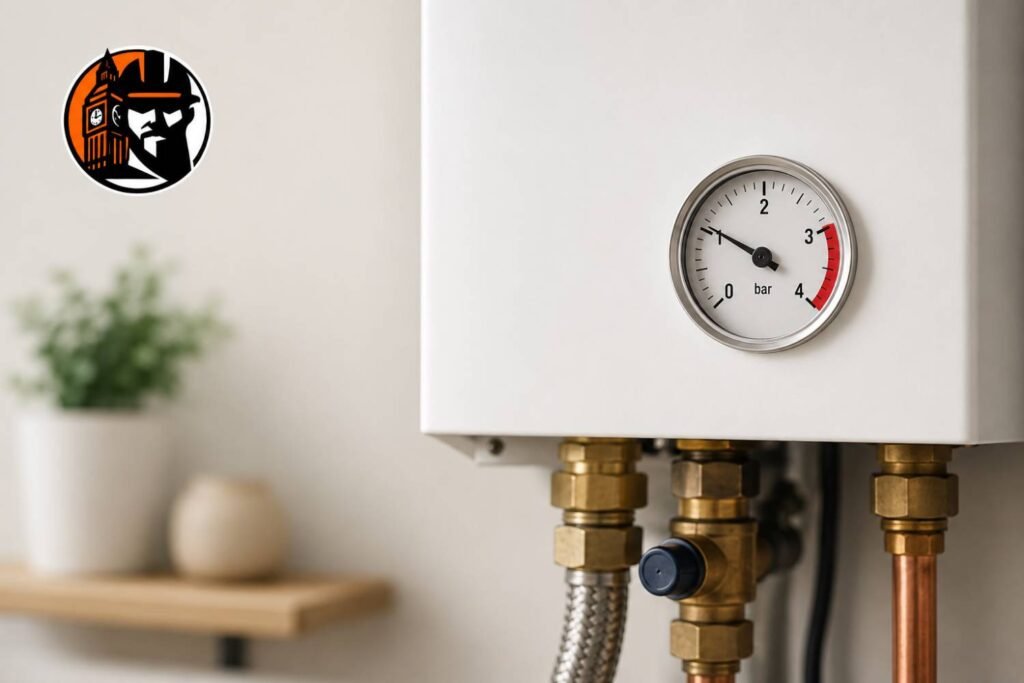
Boiler pressure refers to the water pressure within your central heating system. Most modern combi and system boilers operate efficiently when the pressure gauge reads between:
1.0 and 1.5 bar when the system is cold
When the heating is running, the pressure may rise slightly, typically reaching around:
1.5 to 2.0 bar
If the pressure falls below the recommended range, your boiler may struggle to heat your home effectively or may even shut down completely as a safety precaution.
Quick Answer: Why Is My Boiler Losing Pressure?
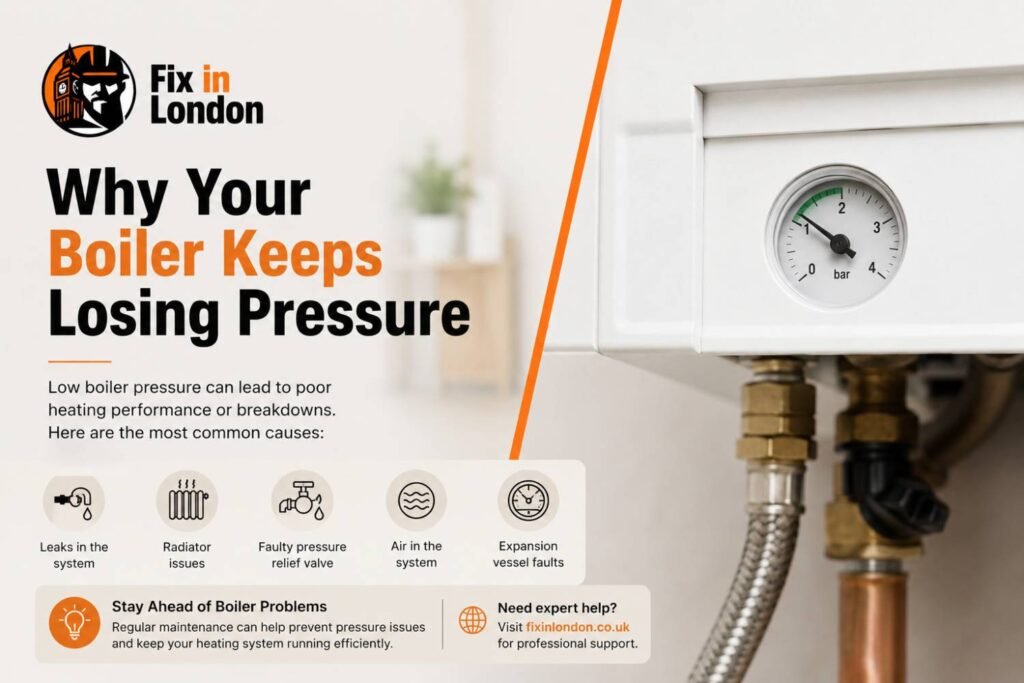
The most common reasons for losing pressure of boiler systems include:
- Water leaks in the heating system
- A faulty pressure relief valve (PRV)
- A damaged expansion vessel
- Bleeding radiators too frequently
- Leaks beneath floors or inside walls
- Faulty boiler components
- Recently installed or repaired heating systems
Identifying the exact cause is essential before attempting any repairs.
Common Causes of Boiler Pressure Loss
- Hidden Leaks in the Central Heating System
One of the leading causes of pressure loss is a leak somewhere within the heating system.
Even a tiny leak can gradually reduce pressure over time. Because heating pipes are often hidden under floors, behind walls, or within ceilings, leaks may not always be obvious.
Look out for:
- Damp patches on walls
- Water stains on ceilings
- Wet carpets
- Warped flooring
- Corrosion around pipe joints
Small leaks can continue for months before becoming visible, causing ongoing pressure problems.
- Faulty Pressure Relief Valve (PRV)
The pressure relief valve is designed to protect your heating system if the pressure becomes too high.
When pressure exceeds safe limits, the valve releases excess water through a discharge pipe.
However, if the valve becomes faulty or gets stuck open, it may continue releasing water even when pressure levels are normal.
Signs of a faulty PRV include:
- Water dripping from the external overflow pipe
- Regular pressure drops
- Frequent need to repressurise the boiler
This issue usually requires professional repair or replacement.
- Expansion Vessel Problems
The expansion vessel absorbs pressure changes that occur as water heats and cools.
Over time, the vessel may lose its air charge or develop internal damage.
When this happens:
- Pressure rises excessively during heating
- The pressure relief valve activates
- Water is discharged
- System pressure subsequently falls
A faulty expansion vessel is a common reason for repeated pressure fluctuations.
- Bleeding Radiators
Bleeding radiators removes trapped air from your heating system, helping radiators heat evenly.
However, every time air is released, some system pressure is lost.
After bleeding radiators, it is normal to:
- Check the boiler pressure.
- Repressurise the system if necessary.
- Monitor the pressure over the following days.
If pressure continues to fall after bleeding, another issue may be present.
- Leaking Radiator Valves
Radiator valves can deteriorate over time due to wear, corrosion, or damaged seals.
Check around:
- Thermostatic radiator valves
- Lockshield valves
- Pipe connections
Even a slow drip can gradually reduce system pressure.
Signs include:
- Rust around fittings
- Small puddles
- Green or white residue around joints
- Recently Installed Heating Systems
Newly installed systems sometimes experience minor pressure fluctuations during the first few weeks.
This can happen because:
- Air is still being released from the system
- Connections are settling
- Components are adjusting to operating conditions
A slight pressure drop may be normal initially, but ongoing losses should be investigated.
- Heat Exchanger Issues
The heat exchanger is one of the most important components within a boiler.
Although less common, a damaged heat exchanger can contribute to pressure problems and may eventually require major repairs.
Symptoms may include:
- Boiler leaks
- Unusual noises
- Reduced efficiency
- Frequent pressure loss
Because this component is complex and expensive, professional diagnosis is essential.
Boiler Pressure Loss Causes at a Glance
Cause | Typical Symptoms | DIY Check Possible? | Professional Required? |
Pipe leak | Damp patches, pressure drop | Yes | Often |
Faulty PRV | Water from overflow pipe | Limited | Yes |
Expansion vessel fault | Pressure rises then falls | No | Yes |
Radiator bleeding | Pressure falls after bleeding | Yes | No |
Valve leaks | Drips around radiators | Yes | Sometimes |
Heat exchanger issue | Boiler leaks, faults | No | Yes |
New system settling | Minor pressure changes | Yes | Usually not |
How to Check If Your Boiler Is Losing Pressure
If you suspect your boiler is losing pressure, follow these simple steps:
Step 1: Check the Pressure Gauge
Locate the pressure gauge on your boiler.
Record the pressure when:
- The heating is off
- The heating is running
Significant fluctuations can indicate expansion vessel problems.
Step 2: Inspect Visible Pipework
Check accessible pipes for:
- Water droplets
- Corrosion
- Dampness
- Staining
Pay close attention to joints and fittings.
Step 3: Examine Radiators
Walk around your property and inspect every radiator.
Look for:
- Damp spots
- Rust
- Leaking valves
Read more: Damp and Mould Specialist London
Step 4: Check the External Overflow Pipe
Outside your property, locate the discharge pipe connected to the pressure relief valve.
If water is dripping regularly, the PRV may be faulty.
DIY Troubleshooting Tips
Before calling an engineer, there are a few safe checks you can perform.
Repressurise the Boiler
Most modern boilers allow homeowners to repressurise the system using the filling loop.
General process:
- Turn off the boiler.
- Locate the filling loop.
- Slowly open the valves.
- Increase pressure to approximately 1.2–1.5 bar.
- Close the valves securely.
Always follow the manufacturer’s instructions.
Check for Obvious Leaks
Inspect:
- Radiators
- Visible pipework
- Boiler casing area
Addressing small visible leaks early can prevent larger problems.
Monitor Pressure for Several Days
After repressurising:
- Check pressure daily.
- Record readings.
- Note any rapid drops.
This information can help an engineer diagnose the issue more quickly.
Read more: Summer Home Repair Checklist 2026
When Should You Call a Professional?
While some basic checks are safe, many pressure-related faults require specialist knowledge and Gas Safe expertise.
You should contact a professional if:
- Pressure keeps falling after repressurising
- You find a leak beneath floors
- Water is escaping from the overflow pipe
- The boiler repeatedly shuts down
- The pressure relief valve appears faulty
- The expansion vessel requires attention
- You notice signs of corrosion or internal leaks
Attempting complex boiler repairs yourself can be dangerous and may invalidate warranties.
Why Ignoring Boiler Pressure Problems Can Be Expensive
Many homeowners delay repairs because the boiler still appears to be working.
Unfortunately, ongoing pressure loss can lead to:
- Higher energy consumption
- Poor heating performance
- Premature component failure
- Water damage
- Emergency breakdowns
- Costly repairs later
Fixing the root cause early is usually far cheaper than waiting for a complete boiler failure.
How Fix in London Can Help
At Fix in London, we regularly assist homeowners across London with boiler pressure issues, heating system faults, and emergency plumbing repairs.
Our experienced engineers can:
- Diagnose recurring pressure loss
- Locate hidden leaks
- Replace faulty pressure relief valves
- Repair expansion vessel problems
- Inspect central heating systems
- Restore boiler efficiency
We understand how disruptive heating issues can be, especially during colder months, which is why we focus on providing fast, reliable solutions that address the underlying cause rather than simply treating the symptoms.
Preventing Future Boiler Pressure Problems
Regular maintenance is the best way to prevent recurring pressure issues.
Consider the following:
Annual Boiler Servicing
A yearly service helps identify small problems before they become expensive repairs.
Check Pressure Monthly
A quick glance at the pressure gauge can help you spot developing issues early.
Address Small Leaks Immediately
Even minor leaks can eventually cause significant damage.
Keep Radiators Maintained
Proper bleeding and maintenance improve system efficiency and reduce strain on components.
Upgrade Aging Components
Older valves, vessels, and pipework are more prone to failure and may benefit from replacement.
Conclusion
Losing pressure of boiler systems is a common problem, but it should never be ignored. While occasional pressure drops can occur naturally, repeated pressure loss usually indicates an underlying issue such as a leak, faulty pressure relief valve, damaged expansion vessel, or worn heating components.
By performing a few basic checks, you may be able to identify the source of the problem. However, persistent pressure loss often requires professional diagnosis to prevent further damage and restore reliable heating performance.
If your boiler keeps losing pressure and you need expert assistance, contact Fix in London today. Our experienced team can quickly identify the cause, carry out effective repairs, and ensure your heating system operates safely and efficiently all year round.
Frequently Asked Questions
Why does my boiler keep losing pressure but there are no visible leaks?
Hidden leaks beneath floors, inside walls, or within the boiler itself are common causes. A faulty expansion vessel or pressure relief valve may also be responsible.
Is it normal for boiler pressure to drop slightly over time?
Yes. A small pressure drop over several months can be normal. Frequent or rapid pressure loss usually indicates a fault that requires investigation.
Can I keep repressurising my boiler?
Occasional repressurising is generally acceptable. However, if you regularly need to top up the pressure, there is likely an underlying issue that should be repaired.
How much should boiler pressure be when cold?
Most domestic boilers operate best at around 1.0 to 1.5 bar when cold. Always check your manufacturer’s recommendations for specific guidance.