A door that refuses to close properly might seem like a small annoyance, but for many London homeowners it quickly becomes a daily frustration. Whether it’s a front door that won’t latch, a bedroom door that sticks, or a bathroom door that drags on the floor, the problem can affect your home’s comfort, security, and energy efficiency.
In busy London properties—especially older Victorian and Edwardian homes—door alignment issues are extremely common due to natural building movement, humidity changes, and long-term wear and tear. Even in modern flats, poor installation or seasonal expansion can cause doors to misbehave.
The good news is that many of these issues can be diagnosed and fixed with simple tools and a bit of patience. In this guide, we’ll explain exactly how to fix a door that won’t close properly, the most common causes, step-by-step DIY solutions, and when it’s time to call a professional service like Fix in London.
Quick Answer: Why Won’t My Door Close Properly?
A door that won’t close properly is usually caused by one of the following:
- Misaligned hinges
- Swollen wood due to humidity
- Loose screws or fittings
- A warped door frame
- Obstructions in the latch or strike plate
- Foundation or building movement
- Poor installation
Identifying the exact cause is the key to fixing the issue permanently.
Common Causes of a Door That Won’t Close Properly
- Misaligned Hinges
Hinges are the most common culprit. Over time, screws can loosen or shift, causing the door to sag. Even a few millimetres of movement can stop the latch from lining up correctly.
Signs include:
- Door scraping the floor
- Gaps at the top or bottom
- Difficulty closing without lifting the door
- Swollen Wood (Humidity & Weather Changes)
Wood naturally expands in humid conditions and contracts in dry air. In London, where weather changes are frequent, this is a major issue.
This can cause:
- Sticking doors during summer
- Tight frames in winter
- Increased friction when closing
- Loose or Damaged Screws
If hinge screws become loose, the door will gradually shift out of alignment.
Common symptoms:
- Door feels heavy or uneven
- Hinges visibly pulling away
- Clicking or creaking sounds
- Faulty Latch or Strike Plate Alignment
Sometimes the door itself is fine, but the latch doesn’t align with the strike plate.
This can happen due to:
- Small frame shifts
- Incorrect installation
- Wear over time
- Warped Door or Frame
Older properties in London often experience structural movement over time. This can lead to a warped frame or bent door.
Signs include:
- Visible gaps when closed
- Uneven door edges
- Door rubbing on one side only
- Obstructions or Paint Build-Up
Multiple layers of paint or debris in the frame can prevent proper closing.
Look for:
- Thick paint around edges
- Dirt or debris in latch area
- Obstructed hinges
DIY Checklist: Before You Start Fixing the Door
Before attempting repairs, check the following:
- Is the door rubbing the frame or floor?
- Does it close if lifted slightly?
- Are hinges tight and secure?
- Is the latch aligned with the strike plate?
- Are there visible signs of swelling or warping?
Step-by-Step Guide: How to Fix a Door That Won’t Close Properly
Step 1: Tighten All Hinge Screws
Start with the simplest fix.
- Use a screwdriver to tighten all hinge screws
- Check both door and frame sides
- Replace any stripped screws with longer ones
💡 Tip: If screws keep spinning, insert a matchstick or wooden filler before refitting.
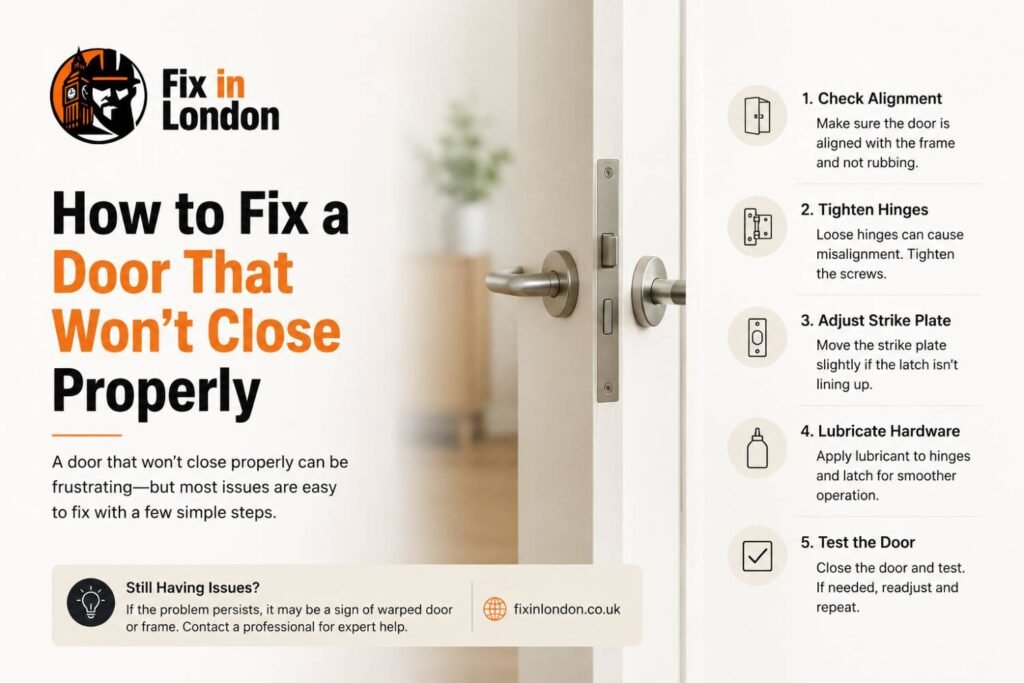
Step 2: Check Door Alignment
Close the door slowly and observe where it sticks.
- If it sticks at the top → hinge issue
- If it sticks at the bottom → sagging door
- If it sticks on the side → frame misalignment
Step 3: Sand Down Tight Areas (If Swollen)
If the door is rubbing due to expansion:
- Mark the tight area with chalk
- Remove the door from hinges
- Lightly sand the affected edge
- Reinstall and test
⚠️ Only remove small amounts at a time to avoid over-sanding.
Read more: Why Use a Professional Door Fitter?
Step 4: Adjust the Hinges
If the door is sagging:
- Loosen the top hinge slightly
- Tighten the bottom hinge
- Add a thin cardboard shim behind hinges if needed
This helps realign the door within the frame.
Step 5: Realign the Strike Plate
If the latch doesn’t catch properly:
- Loosen the strike plate screws
- Move it slightly up/down or left/right
- Retighten and test
If needed, enlarge the opening slightly using a file.
Step 6: Lubricate Moving Parts
Sometimes the issue is friction rather than alignment.
Use:
- Silicone spray
- Graphite powder
Avoid heavy oils as they attract dust.
DIY vs Professional Fix: What You Should Know
While many minor door issues can be fixed at home, some require professional attention—especially in older London properties where structural movement is common.
DIY Fix is Suitable When:
- Hinges are loose
- Minor swelling is present
- Strike plate needs adjustment
- Door needs light sanding
Call a Professional When:
- Door remains misaligned after adjustments
- Frame appears warped or damaged
- Structural movement is suspected
- Multiple doors in the property are affected
- You’ve already attempted repairs without success
Common Door Problems and Solutions Table
Problem | Likely Cause | DIY Fix | Professional Needed |
Door sticks at top | Sagging hinges | Yes | Sometimes |
Door won’t latch | Misaligned strike plate | Yes | Rare |
Door rubs frame | Swelling wood | Yes | No |
Door won’t close fully | Warped frame | No | Yes |
Loose door movement | Hinge failure | Yes | Sometimes |
Multiple affected doors | Structural movement | No | Yes |
Why Doors Commonly Fail in London Homes
London properties face unique challenges that affect door alignment:
- Ageing Victorian and Edwardian structures
- Seasonal humidity changes
- Settling foundations
- High-density housing vibrations
- Previous DIY or poor installations
These factors make door misalignment far more common than in newer builds.
Read more: Door Fitting with Fire Strips in London
Preventing Door Problems in the Future
Here are simple maintenance steps to avoid recurring issues:
- Tighten hinges every 6–12 months
- Avoid excessive paint build-up
- Check alignment during seasonal changes
- Lubricate hinges annually
- Address small issues early before they worsen
Preventative care is far cheaper than full repairs.
When to Call Fix in London
If your door still won’t close properly after basic troubleshooting, it may be time to bring in professionals.
Fix in London provides expert handyman and repair services across London, helping homeowners resolve:
- Persistent door alignment issues
- Warped or damaged frames
- Complex hinge replacements
- Structural door fitting problems
- Multi-door alignment repairs
Our experienced team ensures your doors close smoothly, securely, and quietly—restoring both comfort and security to your home.
Conclusion
A door that won’t close properly is more than just an inconvenience—it can affect security, insulation, and daily comfort. In many cases, the issue comes down to simple hinge adjustments, swelling wood, or misaligned strike plates that can be fixed with basic DIY tools.
However, if the problem persists or involves structural movement, it’s important not to ignore it. Professional assessment ensures the issue is resolved correctly and prevents further damage.
If you’re struggling with a door that won’t close properly in your London home, Fix in London is here to help with fast, reliable, and professional repair services.
Get your doors working smoothly again—without the stress.
Frequently Asked Questions (FAQs)
- Why won’t my door close even after tightening hinges?
If tightening hinges doesn’t help, the issue may be a warped frame, swollen wood, or misaligned strike plate that requires deeper adjustment.
- Can humidity cause doors not to close properly?
Yes. Wooden doors expand in humid conditions, especially in summer, causing them to stick or rub against the frame.
- How do I fix a door that is scraping the floor?
You can tighten hinges, adjust alignment, or lightly sand the bottom edge. If the problem continues, the frame may be uneven.
- Should I replace a door that won’t close properly?
Not always. Most issues can be repaired. Replacement is only needed if the door or frame is severely warped or damaged.