
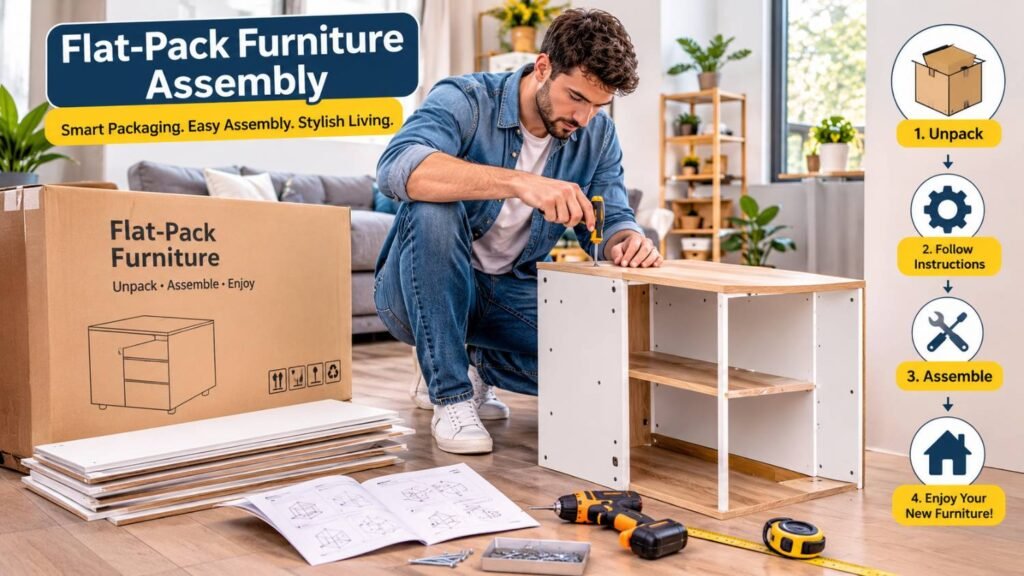
Flat-pack furniture is one of the great conveniences of London life. It is affordable, it fits through narrow doorways and it arrives in boxes that can be carried up a Victorian staircase without a removals team. But anyone who has spent a Sunday afternoon on the hallway floor with a bag of cam locks, a half-built wardrobe and instructions that seem to be missing a page knows the other side of the story. That is why flat-pack furniture assembly in London has become one of the most requested home services in the capital.
This guide explains what professional flat-pack assembly involves, why London homes make the job trickier than it looks, how long different items take, what affects the price and how to get a safe, solid result. Whether you are furnishing a rented studio in Zone 2 or kitting out a family house, it should help you decide when to DIY and when to call in a professional.
What Is Flat-Pack Furniture Assembly?
Flat-pack furniture assembly is the service of unpacking, building and positioning furniture that arrives as separate panels, fittings and hardware. A professional assembler works from the manufacturer’s instructions, checks every part against the inventory, builds the piece square and stable, and secures it where necessary so it is safe to use from day one.
The service typically covers:
- Wardrobes, including sliding-door and hinged-door systems
- Beds, bed frames, ottoman beds and bunk beds
- Chests of drawers, bedside tables and dressing tables
- Desks, office storage and shelving units
- Bookcases, TV units and sideboards
- Shoe racks, hallway furniture and storage benches
- Kitchen and utility units supplied in flat-pack form
- Children’s furniture, such as cots, changing units and toy storage
- Garden furniture and outdoor storage
Many people also ask an assembler to disassemble furniture before a move and rebuild it at the new address, which is often the point at which DIY attempts go wrong.
Why Assembling Flat-Pack Furniture in London Is Different
The instructions are the same wherever you live, but the conditions are not. London properties create a set of challenges that rarely appear in the manual.
Tight access. Period conversions often have narrow stairwells, awkward turns and small lifts. Large flat-pack boxes can be heavy and difficult to manoeuvre, so many pieces are assembled in the room where they will live rather than carried upstairs in one piece.
Limited space. In a compact flat there may be barely enough floor space to lay out a double wardrobe’s panels. Working in a cramped room makes mistakes, scratches and scuffed paintwork far more likely.
Uneven floors and walls. Older London buildings are rarely perfectly level or square. A tall wardrobe built as if the room were a perfect box can lean, rub against the ceiling or leave doors that will not close properly. Experienced assemblers adjust feet, shims and fixings to compensate.
Mixed wall types. One wall may be solid brick, another plasterboard on timber studs, and a third a lath-and-plaster partition. Each needs a different fixing for securing tall furniture safely.
Deliveries and parking. Courier windows, controlled parking zones and lift bookings all affect when furniture can arrive and when work can begin. Planning around them saves a surprising amount of time.
Renting. A large share of Londoners rent, so drilling, marking walls or damaging flooring can put a deposit at risk. Care and protection matter as much as speed.
DIY or Professional Assembly: Which Makes Sense?
Building a small bookcase or bedside table yourself is usually perfectly reasonable. Professional help becomes worthwhile when:
- The piece is large or complex. Floor-to-ceiling wardrobes, corner units and multi-drawer systems can involve hundreds of parts and several hours of careful work.
- Safety is at stake. Tall, heavy units must be anchored to the wall. A badly secured wardrobe or chest of drawers is a tip-over risk, particularly in homes with young children.
- You are short of time. A full day of building rarely feels like a good use of a weekend, especially when you have just moved.
- You are building several pieces at once. A new bedroom or home office often means a whole set of furniture arriving together.
- You want a clean, square finish. Misaligned doors, wobbly frames and chipped edges are far harder to fix after the piece has been assembled incorrectly.
- You lack tools. A cordless drill, a stud and pipe detector, a spirit level and the right fixings make a visible difference to the finished result.
How Long Does Assembly Take?
Times vary with the brand, the design and the room, but as a rough guide:
- Small items such as a bedside table, shoe rack or simple shelf: around 30 to 60 minutes
- A bookcase, desk or TV unit: roughly one to two hours
- A double bed frame: typically one to two hours, longer for storage or ottoman designs
- A chest of drawers: often two to three hours
- A large wardrobe or fitted-style system: anywhere from three to six hours or more
A professional will usually be quicker than a first-time builder because they recognise the construction systems, know where manuals tend to be unclear and have the right tools to hand.
What Happens During a Professional Assembly Visit
A good assembly visit follows a clear process, and knowing what to expect helps you judge the quality of the work.
- Inspection. The assembler checks boxes for damage and confirms that all panels, fittings and hardware are present before starting. Missing or faulty parts are far easier to report to the retailer straight away.
- Protection. Floors, carpets and walls are covered or protected, which matters especially in rented flats.
- Preparation. Panels are laid out in a logical order and the instructions are followed carefully, including the small details that are easy to miss, such as the direction of a panel or the position of a hinge.
- Assembly. Cam locks, dowels and screws are tightened correctly. Over-tightening can split chipboard and strip threads, while under-tightening leaves a piece that slowly loosens.
- Positioning and levelling. The finished piece is moved into place, levelled and checked for square. Doors and drawers are adjusted so they open smoothly and sit evenly.
- Wall fixing. Tall or heavy furniture is secured to the wall with fixings suited to the wall type, after checking for hidden pipes and cables.
- Tidy-up. Packaging is gathered up, leaving the room clear and ready to use.
Why Wall Fixing Matters
Of all the steps in flat-pack furniture assembly, wall fixing is the one most often skipped by DIY builders, and it is arguably the most important. Wardrobes, tall bookcases and chests of drawers are top-heavy once loaded, and they can tip forward if a child climbs on them or a drawer is pulled out too far.
Using the right fixing for the wall is essential. Brick and masonry need appropriate plugs and screws, plasterboard needs cavity fixings or must be fixed into the timber behind it, and old lath-and-plaster walls need extra care. Before drilling anywhere, a detector should be used to check for pipes and electrical cables.
If you rent, ask your landlord or letting agent before drilling, as many tenancy agreements restrict alterations to walls. Anti-tip straps and brackets are usually small, discreet and easy to fill when you move out.
Think About Where the Furniture Will Go
Placement affects how long furniture lasts, so it is worth considering the room before the building starts.
Near windows. Wardrobes and shelving placed close to windows are exposed to draughts, condensation and sunlight. If the frames are warped, the seals are failing or the paint is flaking, tackle the problem first. Guidance on Window Frame Repairs, Resealing and Exterior Painting explains the signs of a failing frame and how repairs are carried out.
Against external walls. Flat-pack furniture is typically made from chipboard or MDF, and these materials absorb moisture. A wardrobe pushed up against a cold, damp wall can develop mould on the back panel and a musty smell. If you spot tide marks, bubbling paint or a persistent damp patch, find the cause before you build. This guide to Why Is Water Coming Into My Flat? Common Causes in London Properties (and Who to Call) explains the most common sources and who is responsible for fixing them.
Near radiators and heat sources. Heat can dry out and warp panels, so leave a gap around radiators and avoid placing veneered or foil-wrapped furniture directly in front of them.
Under sloping ceilings and eaves. Loft conversions are popular across London, and standard wardrobes rarely fit under a sloping ceiling. Measure carefully before you order, and consider low-level or made-to-measure storage for awkward spaces.
Furnishing New Space After a Renovation
Flat-pack furniture is especially popular after a building project, when a new room needs to be filled quickly and sensibly. If you are adding space through House Extensions in London, you will probably need a new set of wardrobes, shelving, desks or storage once the building work is complete. Scheduling assembly after the plastering, painting and flooring are finished avoids dust, damage and double handling.
It also helps to measure the finished room rather than the plans, since small differences in wall thickness and floor finish can change which furniture will fit.
Common Flat-Pack Mistakes to Avoid
Even experienced DIYers run into the same problems again and again:
- Skipping the inventory check. Discovering a missing part halfway through means starting again later.
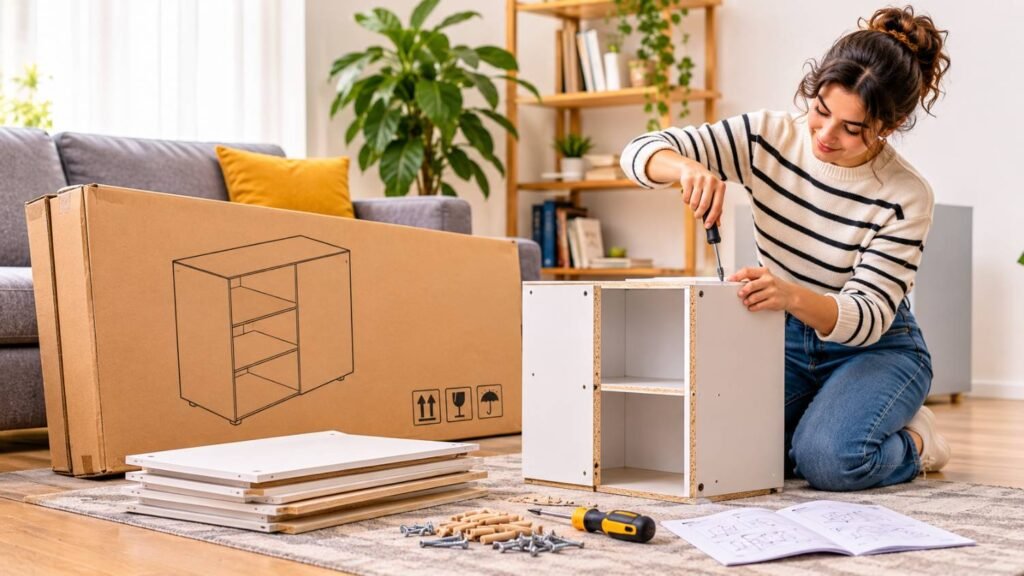
- Building on carpet. Panels shift, edges chip and fittings get lost in the pile. Work on a hard, protected surface.
- Fitting panels the wrong way round. Pre-drilled holes look similar on both sides, but a reversed panel often cannot be corrected without taking the piece apart.
- Over-tightening cam locks. This can crack the board or round off the fitting.
- Fixing the back panel carelessly. The thin back panel keeps the frame square. If it is nailed on crookedly, doors will not align.
- Ignoring wall fixings. Anti-tip fixings are included in many boxes for a reason.
- Rushing the final adjustments. Doors, drawers and hinges almost always need a final tweak to sit properly.
What Affects the Cost of Flat-Pack Assembly in London?
Prices vary between providers, so it is sensible to ask for a clear quote before any work begins. The main factors are:
- The size and complexity of the item. A large wardrobe takes much longer than a bedside table.
- The number of items. Building several pieces in one visit is often more efficient than booking separate appointments.
- Floor level and access. Stairs, narrow corridors and lack of a lift can add time.
- Wall fixing and extras. Securing furniture to the wall, adjusting doors or removing packaging may be included or priced separately.
- Disassembly and reassembly. Taking furniture apart for a move and rebuilding it is a different job from a first-time assembly.
- Timing. Evening, weekend and short-notice appointments can be priced differently.
Ask whether the quote is hourly or per item, and whether parts, tools and clearing away packaging are included.
How to Choose a Flat-Pack Assembler in London
When comparing providers, look for:
- Relevant experience with the type of furniture you own, whether that is a sliding-door wardrobe or a bunk bed.
- Their own tools and fixings for different wall types, so that the job does not stop for a missing drill bit.
- Clear communication about arrival times, access requirements and what to prepare.
- Transparent pricing with no vague extras at the end of the job.
- Genuine, recent reviews that mention reliability, tidiness and finish.
- Care in rented homes, including floor protection and respect for tenancy rules.
A good assembler will also tell you honestly when a piece is damaged, when a part is missing or when a unit will not suit the space, which can save you from a frustrating return later.
Preparing for Your Assembly Appointment
A little preparation makes the visit smoother:
- Clear a working area around the spot where the furniture will go.
- Make sure all boxes are in the property and unopened, or opened with all parts kept together.
- Keep the instruction manuals and hardware bags with each piece.
- Arrange parking permits or visitor bays if access is restricted.
- Book lift access in advance if you live in a block.
- Tell the assembler about pets, young children and any areas to avoid.
- Check the wall behind the furniture for known pipes, cables or damp.
Final Thoughts
Flat-pack furniture gives London homes a practical and affordable way to make the most of limited space, but good results depend on careful assembly, correct wall fixing and sensible placement. Take time to check the walls, windows and floors before the first panel is unboxed, and be realistic about how much time and skill a large piece will need.
If you would rather hand the job to a professional, Fix in London provides flat-pack furniture assembly for homes and flats across the capital, so you can enjoy the finished room instead of a weekend with an Allen key.
Frequently Asked Questions
How long does flat-pack furniture assembly take in London?
It depends on the item. A small table or shelf may take under an hour, a bed or desk usually takes one to two hours, and a large wardrobe can take half a day or more. Access, such as stairs and parking, and the condition of the walls can also affect the time needed.
Do I need to be at home while the furniture is assembled?
Usually, yes, at least at the start and the end. It helps to confirm where each piece should go, answer any questions about fixings and check the finished result. If you cannot be present, arrange access in advance and agree the details clearly with the assembler.
Can furniture be assembled from any retailer, or moved and rebuilt?
Yes. Professional assemblers can usually build furniture bought from a wide range of retailers, as long as all the parts and instructions are available. Many also disassemble furniture before a house move and reassemble it at your new address, although older pieces with worn fittings may need replacement hardware.
What affects the price of flat-pack assembly in London?
The main factors are the size and complexity of each piece, how many items need building, how easy the property is to access, whether wall fixing is needed and when the appointment takes place. Always ask for a clear quote in advance so you know what is included.