
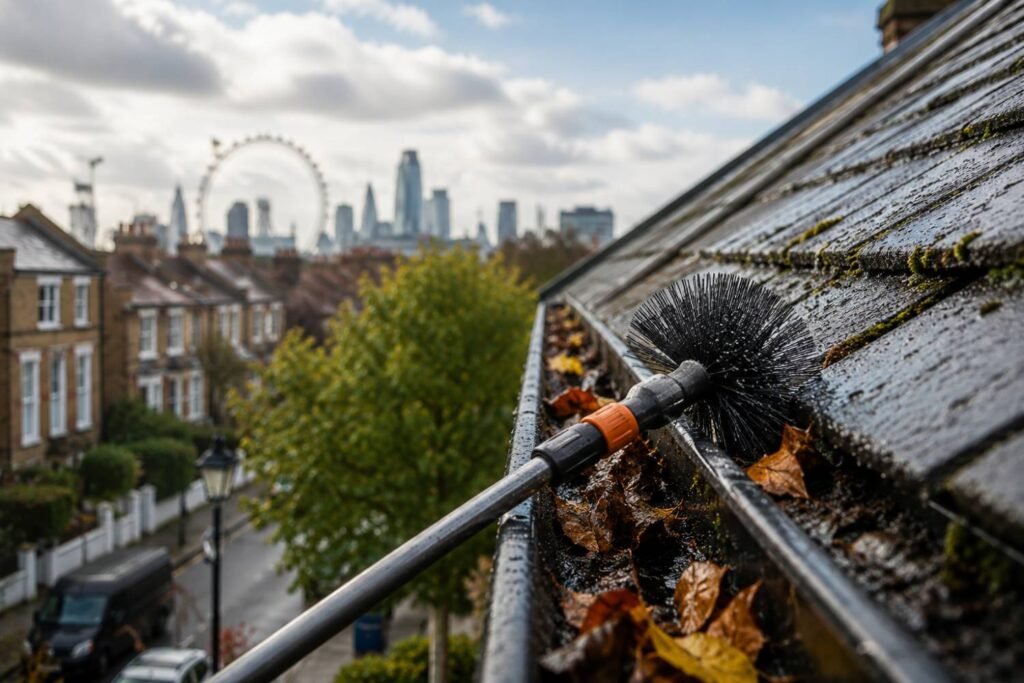
Blocked gutters are one of those household problems that can seem minor until they start causing expensive damage. In London, where heavy rainfall, mature trees, fallen leaves, moss and urban debris are common, gutters can become blocked surprisingly quickly. Many homeowners only notice the problem when water begins overflowing during a downpour, damp patches appear on external walls, or water starts affecting the roofline.
The good news is that regular maintenance can prevent most of these problems. With the right approach, you can keep your gutters flowing freely, identify early warning signs and know when a job is suitable for DIY maintenance and when it is safer to call a professional.
This guide provides practical Gutter Cleaning Tips for London Homes, including the most common causes of blocked gutters, a step-by-step cleaning process, preventative maintenance advice and guidance on when professional help is the best option.
Why Is Gutter Cleaning So Important for London Homes?
London properties face a combination of environmental conditions that can put gutters under pressure. Periods of persistent rain, strong winds, falling leaves and the growth of moss can all contribute to blocked drainage systems.
Gutters are designed to collect rainwater from the roof and direct it safely away from the property. When this system becomes blocked, water can overflow and travel down walls, into roof structures or towards the foundations of the building.
Ignoring blocked gutters may eventually contribute to problems such as:
- Water damage to external walls
- Damp and mould problems
- Rotting fascia boards and roofline timber
- Damage to brickwork and pointing
- Water pooling near the property’s foundations
- Leaks around the roofline
- Blocked or overflowing downpipes
- Increased maintenance and repair costs
Regular gutter maintenance is therefore not simply about making your property look tidy. It is an important part of protecting your London home from unnecessary water damage.
What Causes Gutters to Become Blocked?
Understanding why gutters become blocked can make it easier to prevent the problem. In most cases, blockages develop gradually rather than overnight.
1. Fallen Leaves
Fallen leaves are among the most common causes of blocked gutters. This is particularly common for properties located near parks, gardens or tree-lined streets. Leaves can collect inside the gutter, become wet and compacted, eventually creating a dense blockage that prevents rainwater from flowing towards the downpipe.
2. Moss Growing on Roof Tiles
Moss is extremely common on older roofs, particularly where properties receive limited sunlight. Over time, moss can become detached from roof tiles and wash directly into the gutters.
Once wet, moss can become heavy and compacted. It may also combine with leaves and dirt, creating a stubborn blockage that is difficult to remove.
3. Twigs and Organic Debris
Strong winds can carry small branches, twigs and other organic material onto a roof. These materials often collect near gutter outlets or downpipe openings, where even a relatively small amount of debris can restrict water flow.
4. Urban Dirt and Airborne Debris
London homes can also accumulate dust, dirt and airborne debris. Over time, this material mixes with rainwater and organic matter, creating a layer of sediment inside the gutter.
5. Bird Nests
Birds may occasionally build nests near rooflines, particularly in quieter areas of the property. Nesting materials can block gutters and downpipes, so it is important to take care and check for wildlife before beginning any cleaning work.
6. Blocked Downpipes
Sometimes the gutter itself looks relatively clear, but water is still overflowing. In this situation, the blockage may be located inside the downpipe.
Common signs of a blocked downpipe include water backing up in the gutter, overflowing near the outlet and very slow drainage during rainfall.
How Often Should You Clean Your Gutters?
For most homes, gutters should be inspected and cleaned at least twice a year. However, some London properties require more frequent attention.
| Property Situation | Recommended Gutter Cleaning Frequency |
|---|---|
| Typical urban property with few nearby trees | At least twice a year |
| Property surrounded by trees | Three or more times a year if necessary |
| Heavy moss growth on the roof | Regular inspections throughout the year |
| Older property with drainage issues | Inspect after periods of heavy rainfall |
For many homeowners, the best times to clean gutters are:
- Late spring: to remove debris accumulated during the wetter months
- Late autumn: after the majority of leaves have fallen
It is also sensible to carry out a visual inspection after severe storms or prolonged periods of heavy rainfall.
Signs That Your Gutters Need Cleaning
You do not always need to climb a ladder to identify a potential gutter problem. There are several warning signs that can be spotted safely from ground level.
- Water overflowing from the gutter during rainfall
- Plants or weeds growing from the gutter
- Visible leaves and moss near the roofline
- Water running down exterior walls
- Damp patches near the top of internal or external walls
- Sagging gutters
- Water collecting around the base of the property
- Drips or leaks from gutter joints
If you notice any of these signs, it is best to investigate the issue before prolonged rainfall makes the problem worse.
DIY Gutter Cleaning Tips for London Homes
Cleaning gutters can be a manageable DIY task for some homeowners, but safety should always come first. Working at height carries risks, and not every property is suitable for DIY gutter maintenance.
Tools You May Need
- A sturdy and suitable ladder
- Protective gloves
- A bucket or debris bag
- A small gutter scoop or plastic trowel
- A garden hose
- A soft brush
- Protective footwear with good grip
Step 1: Choose a Safe Day
Avoid cleaning gutters during rain, strong winds or icy conditions. The ground should be as dry and stable as possible before positioning a ladder.
Step 2: Inspect the Area from Ground Level
Before climbing, walk around the property and look for obvious damage, loose gutter sections, overflowing water marks and heavy accumulations of debris.
If you notice cracked guttering or loose roofline components, avoid putting additional pressure on the system until it has been properly assessed.

Step 3: Remove Loose Debris
Carefully remove leaves, moss, twigs and other debris. Start near the downpipe and work along the gutter in manageable sections.
Place the debris directly into a bucket or bag rather than dropping it onto the ground below.
Step 4: Flush the Gutter with Water
Once the larger debris has been removed, use a garden hose to flush the gutter. This helps remove smaller particles and allows you to check whether water is flowing freely towards the downpipe.
If water begins backing up, the downpipe may be partially or fully blocked.
Step 5: Check the Downpipe
Run water through the downpipe and observe whether it exits properly at the bottom. If the water drains slowly or backs up into the gutter, there may be a blockage.
Minor obstructions can sometimes be cleared using water pressure, but stubborn blockages may require professional equipment.
Step 6: Inspect Gutter Joints and Brackets
Cleaning provides a useful opportunity to inspect the condition of the guttering. Look for:
- Cracks
- Loose brackets
- Leaking joints
- Sagging sections
- Rust or corrosion on older metal gutters
Cleaning a gutter will not solve structural damage, so repairs may be necessary if you notice these issues.
How to Prevent Gutters from Blocking Again
The best gutter maintenance strategy is prevention. Regular inspections can help you deal with small accumulations of debris before they develop into major blockages.
Trim Back Overhanging Branches
If tree branches extend directly over the roof, leaves and twigs are more likely to enter the gutter. Where appropriate and safe, trimming back overhanging branches can reduce the amount of debris that reaches the roofline.
Deal with Roof Moss
Heavy moss growth on roof tiles can create a constant supply of debris for your gutters. If moss is a recurring problem, consider having the roof assessed and cleaned using an appropriate method for its condition and materials.
Install Suitable Gutter Guards
Gutter guards can reduce the amount of leaves entering the system, although they are not completely maintenance-free. Some types may still allow small particles to enter or may require occasional cleaning themselves.
The right option depends on the property, the type of surrounding trees and the gutter design.
Carry Out Regular Visual Checks
A quick inspection from ground level after heavy rain can reveal drainage problems early. Look for overflowing water and unusual streams running down the side of the property.
Can Blocked Gutters Cause Damp and Mould?
Yes, blocked or overflowing gutters can contribute to damp problems. When rainwater repeatedly flows over the edge of a blocked gutter, the exterior walls may be exposed to excessive moisture.
Over time, this can affect the building fabric, particularly where there are existing cracks, damaged pointing or other weaknesses.
Of course, damp and mould can have several different causes, including condensation, leaks and poor ventilation. If you are dealing with recurring moisture issues, it is important to identify the underlying cause rather than assuming that the gutter is the only problem.
For more practical guidance on protecting your property, you may also find our article on How to Prevent Damp and Mould Problems in London Properties useful.
When Should You Call a Professional?
DIY gutter cleaning is not always the safest or most effective solution. You should consider professional help if any of the following situations apply.
Your Property Is More Than One Storey High
Working at greater heights significantly increases the risk of falls. Professional technicians have appropriate equipment and experience for accessing difficult rooflines safely.
The Gutter Is Damaged or Sagging
A heavily blocked gutter may also be carrying additional weight from water and debris. If brackets are loose or the gutter is visibly sagging, attempting to lean on or work around it could cause further damage.
The Downpipe Is Severely Blocked
A deep blockage inside a downpipe may be difficult to remove with standard household equipment. Professionals can inspect the system and use suitable tools to clear the obstruction.
There Are Signs of Water Damage
If overflowing gutters have already caused damp patches, damaged brickwork or water penetration, cleaning alone may not be enough. The property should be inspected for any repairs that may be required.
You Cannot Safely Access the Gutter
Safety should never be compromised simply to save money on a maintenance task. If the ground is uneven, access is restricted or the roofline is difficult to reach, professional help is often the better option.
Do You Need a Plumber for Gutter Problems?
Homeowners often ask whether a blocked gutter requires a plumber. The answer depends on the exact problem.
Routine gutter cleaning and repairs are often handled by property maintenance or drainage specialists rather than a plumber. However, a professional plumber may be appropriate if the issue is connected to wider drainage systems, internal water damage or pipework problems.
You should consider calling a professional plumber when:
- The drainage issue extends beyond the gutter and downpipe
- You suspect a problem with connected underground drainage
- There are leaks affecting internal plumbing or pipework
- Water damage has an unclear source
- A drainage blockage cannot be identified or safely cleared
For general gutter maintenance, cleaning, repairs and other household maintenance requirements, a trusted local service provider can assess the issue and recommend the appropriate solution.
Professional Gutter Cleaning for London Properties
Professional gutter cleaning can be particularly useful for busy homeowners, landlords and property managers who want to keep their properties maintained without the risks associated with working at height.
Fix in London provides reliable property maintenance support for London homeowners who need help with a range of household repair and maintenance tasks. Using a professional service can save time while ensuring difficult-to-reach areas are properly inspected.
A professional assessment can also identify issues that are easy to miss during routine cleaning, such as loose brackets, damaged gutter joints or drainage problems that may require additional attention.
A Simple Seasonal Gutter Maintenance Checklist
Use the following checklist to help keep your gutter system in good condition throughout the year:
- Inspect the roofline for visible leaves and moss.
- Check gutters after periods of heavy rainfall.
- Remove accumulated debris before it becomes compacted.
- Flush gutters to check that water flows correctly.
- Inspect downpipes for slow drainage or blockages.
- Look for cracks, leaks and loose brackets.
- Check external walls for signs of water overflow.
- Arrange professional maintenance if access is unsafe.
Other Home Maintenance Issues Worth Checking
Gutter maintenance is only one part of protecting a property from avoidable damage. Regular checks of doors, walls, paintwork and other areas can help homeowners identify small problems before they become expensive repairs.
If you are experiencing problems with a misaligned or sticking door, read our guide on How to Fix a Door That Won’t Close Properly.
Maintaining exterior and interior surfaces is equally important. Before taking on a major decorating project, you may also want to explore When Should You Hire a Professional Painter? to understand when professional expertise can save time and improve the final result.
Frequently Asked Questions About Gutter Cleaning
How often should gutters be cleaned in London?
Most London homes should have their gutters cleaned at least twice a year. Properties surrounded by trees or affected by heavy roof moss may require more frequent maintenance.
What is the best time of year to clean gutters?
Late spring and late autumn are generally good times for gutter maintenance. Autumn cleaning is particularly important after leaves have fallen from nearby trees.
Can I clean my gutters myself?
Yes, some homeowners can clean accessible ground-floor gutters safely with appropriate equipment. However, if the property is difficult to access, more than one storey high or has unstable surfaces, professional help is recommended.
What happens if I do not clean blocked gutters?
Blocked gutters can overflow and contribute to damp walls, damaged roofline components, leaks and other forms of water damage. Regular cleaning helps prevent these issues.
Conclusion: Keep Your Gutters Flowing and Protect Your London Home
Regular gutter maintenance is one of the simplest ways to protect your property from unnecessary water damage. By understanding the common causes of blockages, carrying out routine inspections and dealing with debris before it builds up, London homeowners can reduce the risk of overflowing gutters and related damp problems.
However, gutter cleaning is not always a suitable DIY job. If your gutters are difficult to reach, severely blocked, damaged or causing signs of water penetration, it is important to seek professional assistance rather than taking unnecessary risks.
Whether you need help with gutter maintenance or other household repair tasks, Fix in London can provide trusted professional support for homeowners across London. Contact a qualified professional to assess the problem and help keep your property safe, well maintained and protected throughout the year.
2 Responses
This was really helpful, especially the point about checking gutters after heavy rain. If the gutters are overflowing but there doesn’t seem to be much debris in them, could the blockage be further down the downpipe?
Yes, absolutely. If the gutter itself looks relatively clear but water is still backing up or overflowing, the downpipe could be partially or fully blocked. This is quite common and can be difficult to identify from ground level. If flushing with water doesn’t clear it, professional equipment may be needed to locate and remove the blockage safely.